Venomous spines
The spines on its back can give a very painful sting. They are for defence, not for hunting.
Coral reef
Pterois volitans
A fish striped in red-brown and white, with long, feathery fins and a row of venomous spines along its back.
Drifts after you, fins fanned out. Move your pointer and see.
Good to know
The spines on its back can give a very painful sting. They are for defence, not for hunting.
It spreads its fan-like fins to corner small fish, then swallows them in one gulp.
The bold stripes tell other animals that it is dangerous to touch.
It can hang motionless in the water, even upside down under a ledge.
Lionfish released from aquariums have spread through the Caribbean, where they eat huge numbers of young reef fish.
Its stomach can stretch to thirty times its normal size.
The real thing
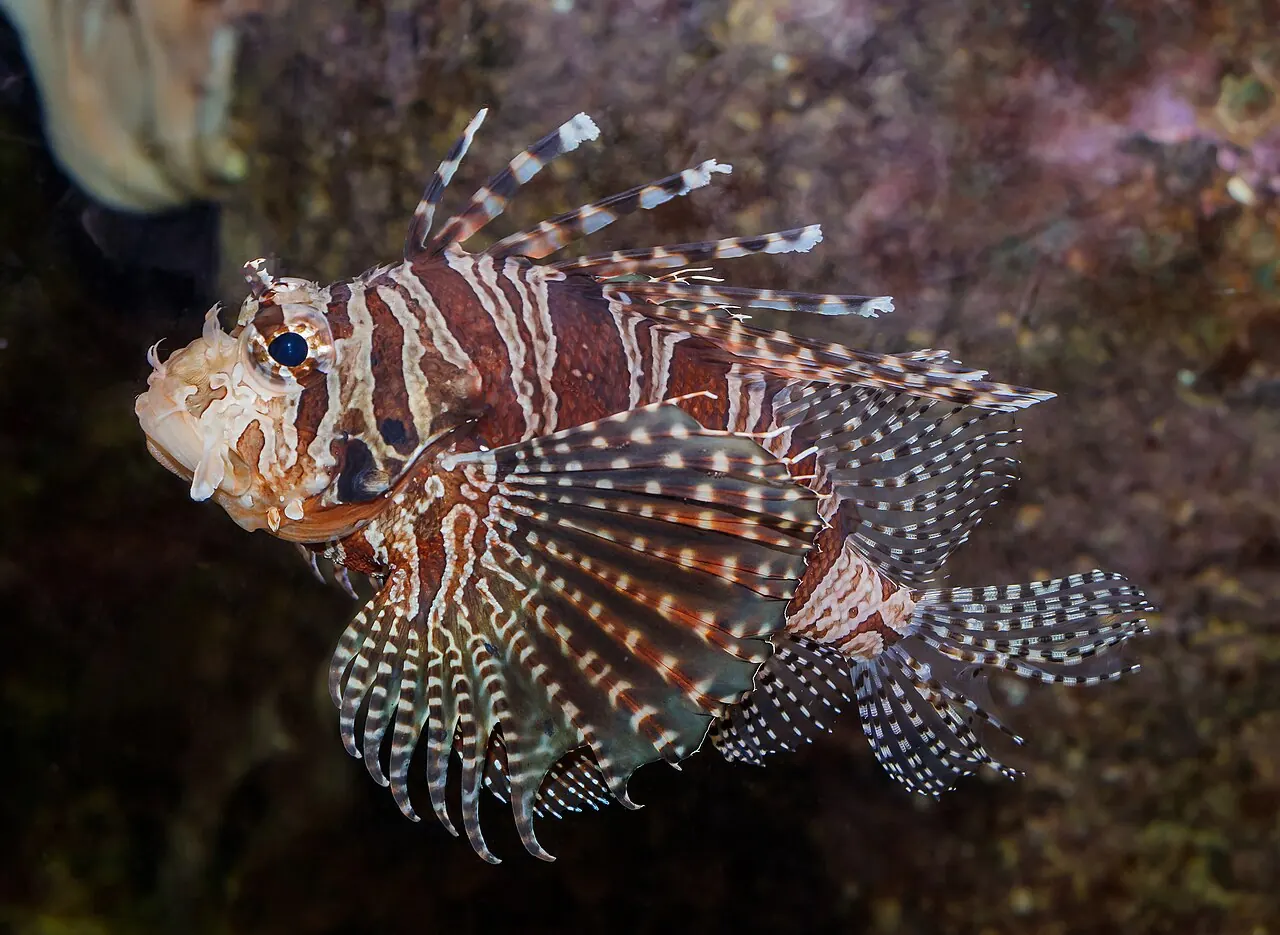
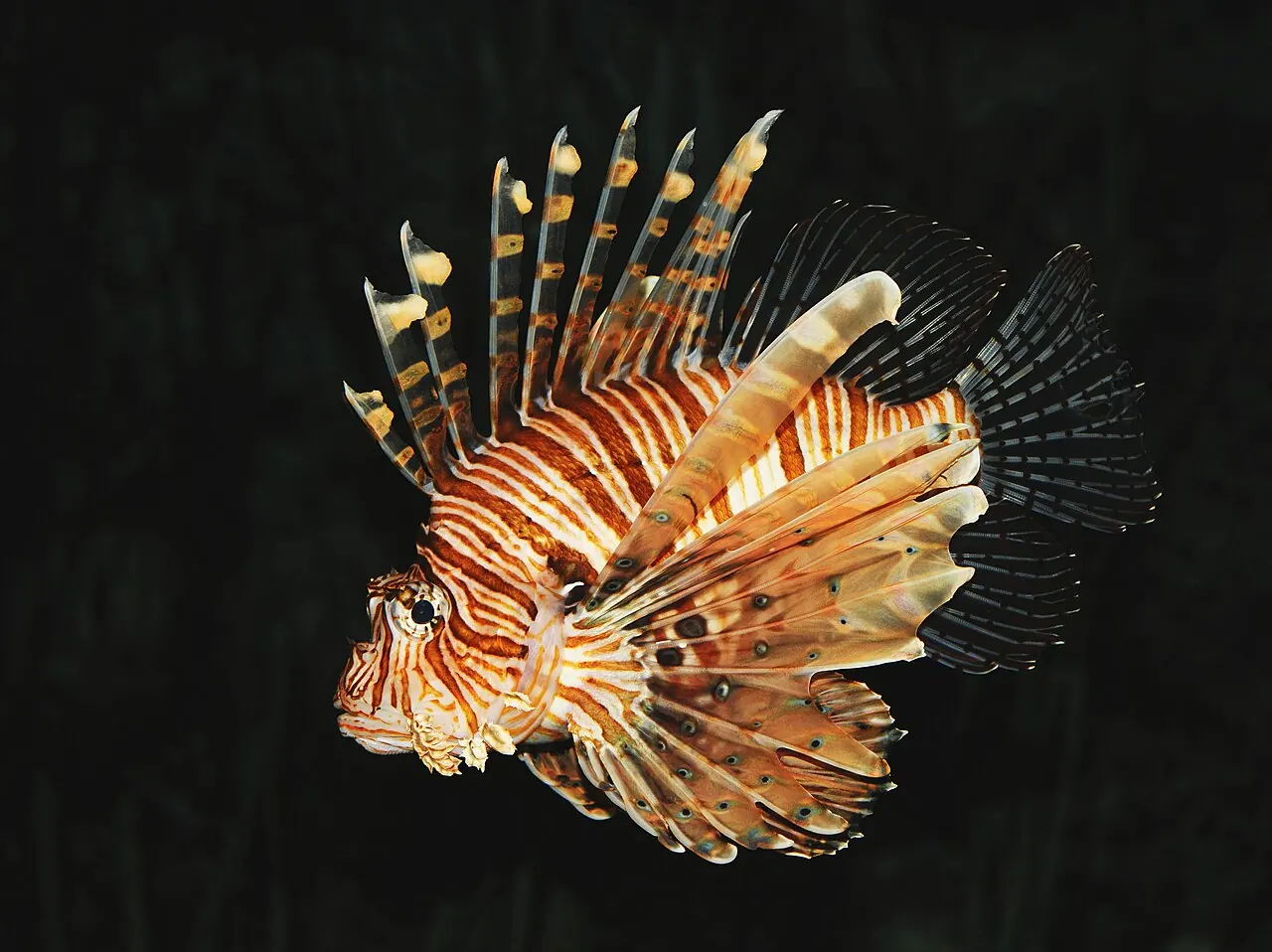
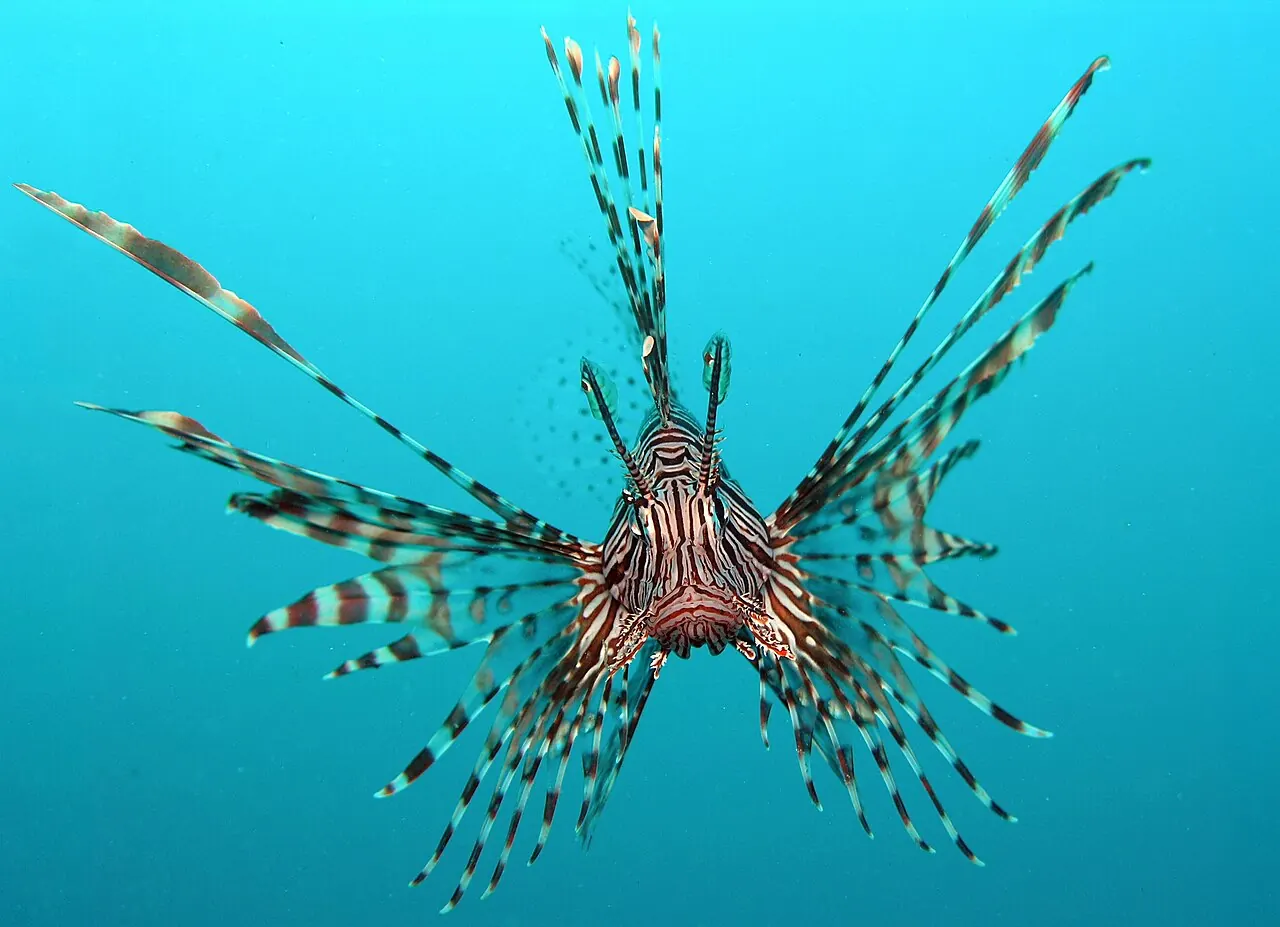
Photos are from Wikimedia Commons, used under the free licences shown. They have been resized, and cropped where they appear in link previews.
Look under ledges and in caves on the reef by day. At dusk it comes out and drifts slowly over the coral.
In the Caribbean, where they do not belong, divers catch lionfish and restaurants serve them. Never release aquarium fish into the wild.
Keep going
Open ocean animals live on the Open ocean page: choosing one takes you there.
These live somewhere else: choosing one takes you to their page.
Animals from other parts of the world live on their own pages: change area.


