Green on the inside
It is named for the green fat under its shell, coloured by the sea grass it eats.
Open ocean
Chelonia mydas
A big turtle with a smooth, heart-shaped shell and long front flippers that work like wings.
Rows after you with slow strokes of its flippers. Move your pointer and see.
Good to know
It is named for the green fat under its shell, coloured by the sea grass it eats.
A female swims hundreds of miles to lay her eggs on the very beach where she hatched.
Turtles find their way across open ocean by sensing the Earth's magnetic field.
The warmth of the sand decides whether the eggs hatch as males or females. Warmer nests make more females.
A resting turtle can stay under for several hours on one breath.
Sea turtles have been swimming the oceans for more than 100 million years.
The real thing
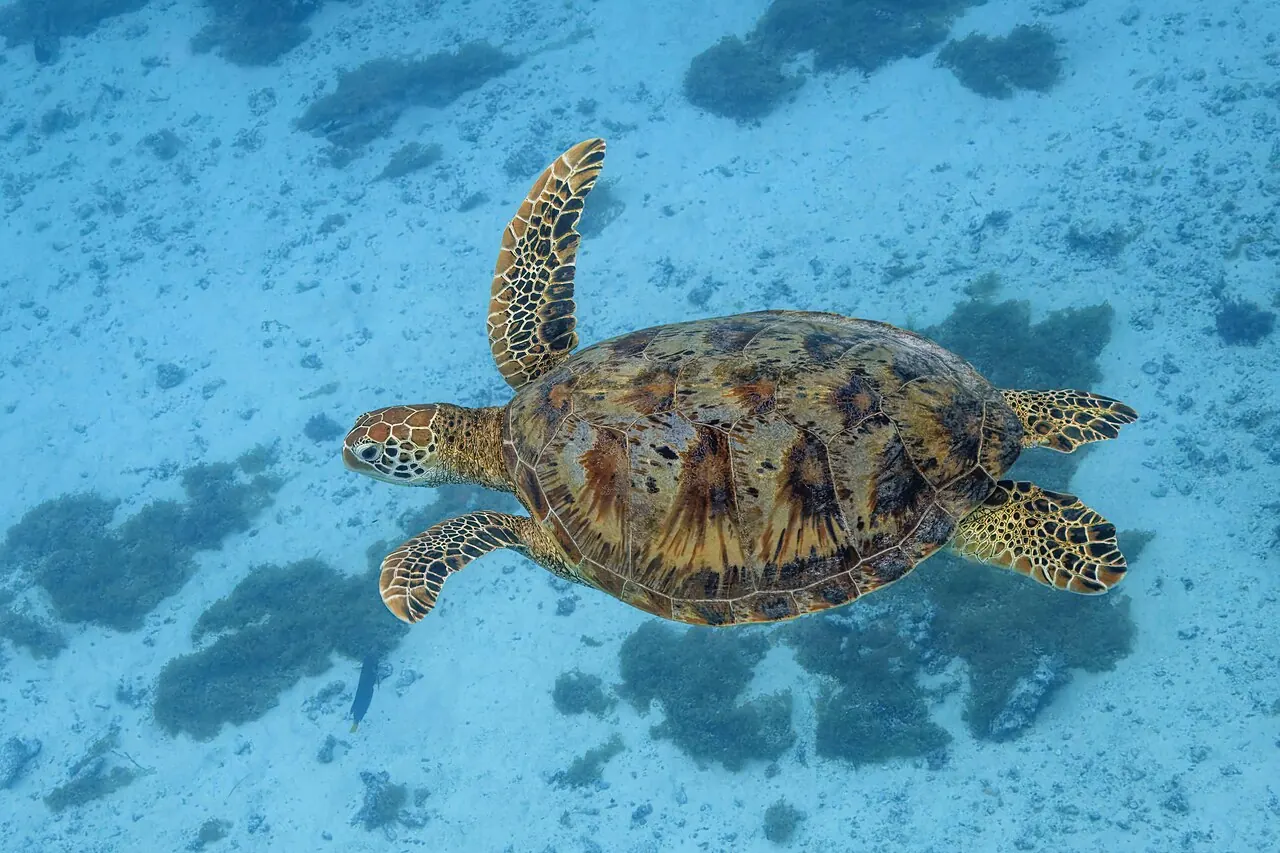
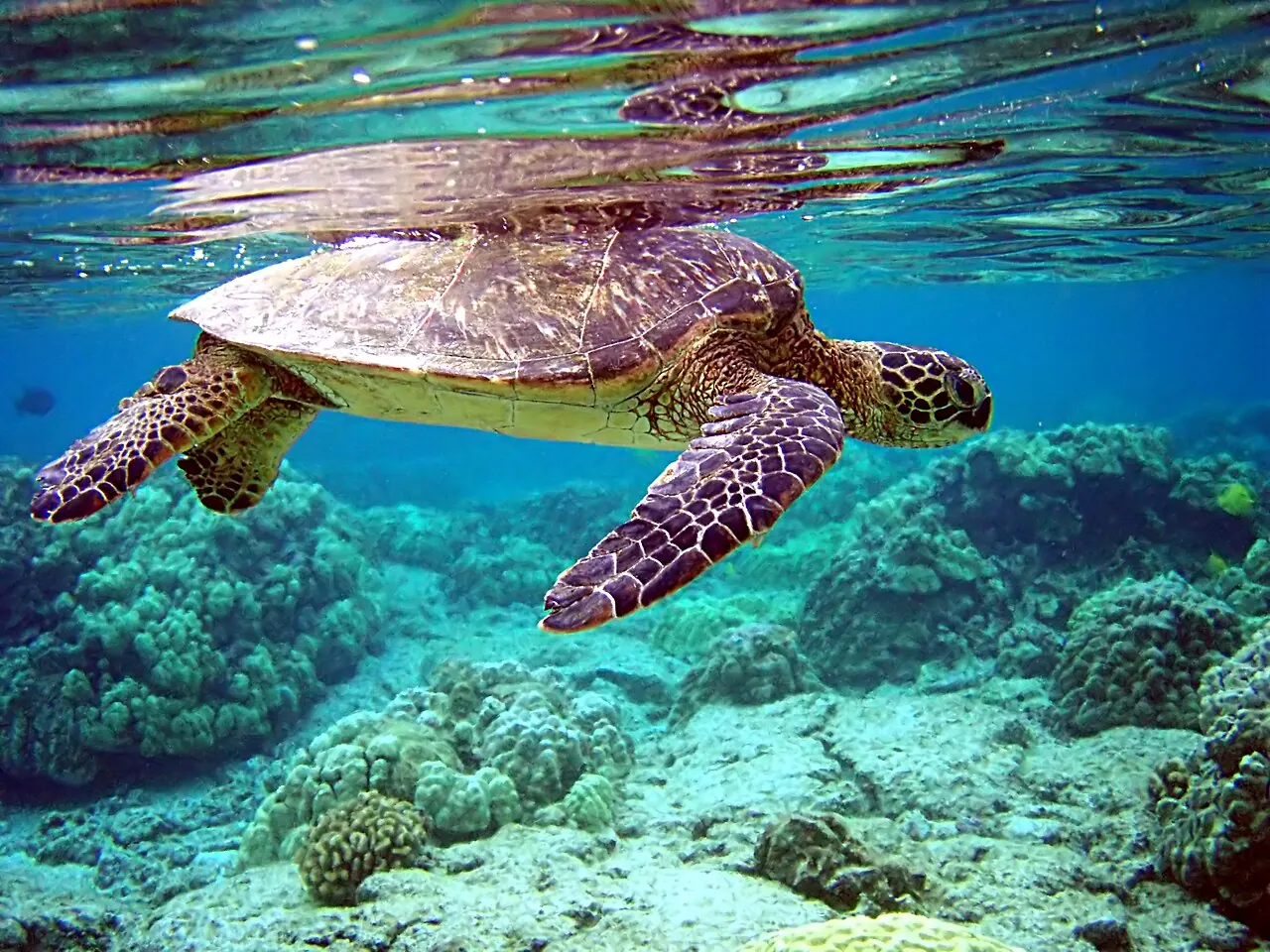
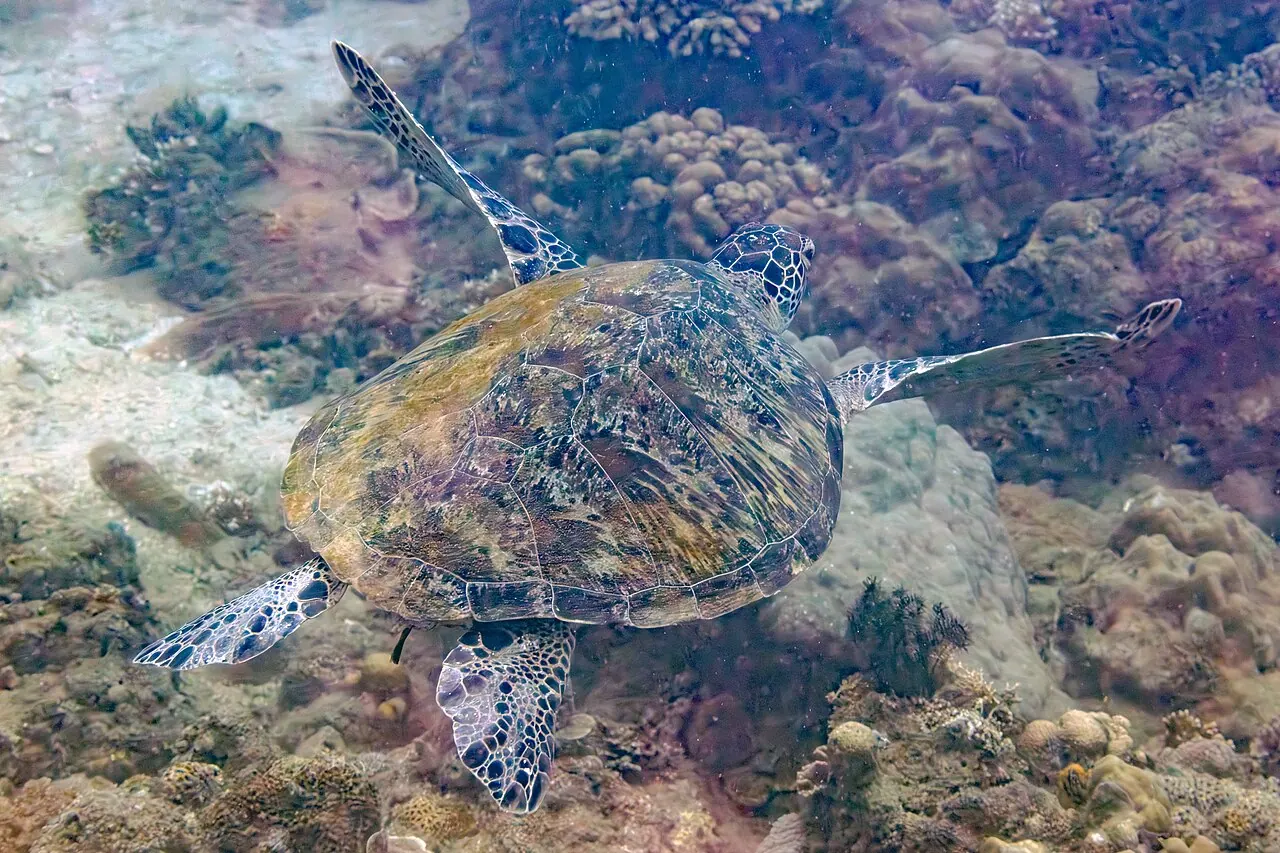
Photos are from Wikimedia Commons, used under the free licences shown. They have been resized, and cropped where they appear in link previews.
Snorkel over sea grass or a reef in the tropics and you may meet one grazing. Leatherback turtles visit British seas in summer to eat jellyfish.
Take your litter home, especially bags and balloons. On turtle beaches, lights are kept low so hatchlings can find the sea.
Keep going
Coral reef animals live on the Coral reef page: choosing one takes you there.
These live somewhere else: choosing one takes you to their page.
Animals from other parts of the world live on their own pages: change area.
_Moorea.jpg)

,_Anilao,_Filipinas,_2023-08-22,_DD_259.jpg)