Teeth on a conveyor belt
It has about 300 teeth in rows. When one breaks, the next moves forward. It may use 20,000 in a lifetime.
Open ocean
Carcharodon carcharias
A big, powerful shark, grey above and white below, with a pointed snout and a tall fin on its back.
Cruises after you, steady and unhurried. Move your pointer and see.
Good to know
It has about 300 teeth in rows. When one breaks, the next moves forward. It may use 20,000 in a lifetime.
A great white can detect a tiny trace of blood in the water from a long way off.
Jelly-filled pores on its snout pick up the tiny electric signals of a hidden animal's muscles.
Unlike most fish, it keeps its body warmer than the sea, which makes it faster.
Hunting seals off South Africa, great whites launch themselves right out of the water.
Sharks kill a handful of people a year. People kill many millions of sharks.
The real thing
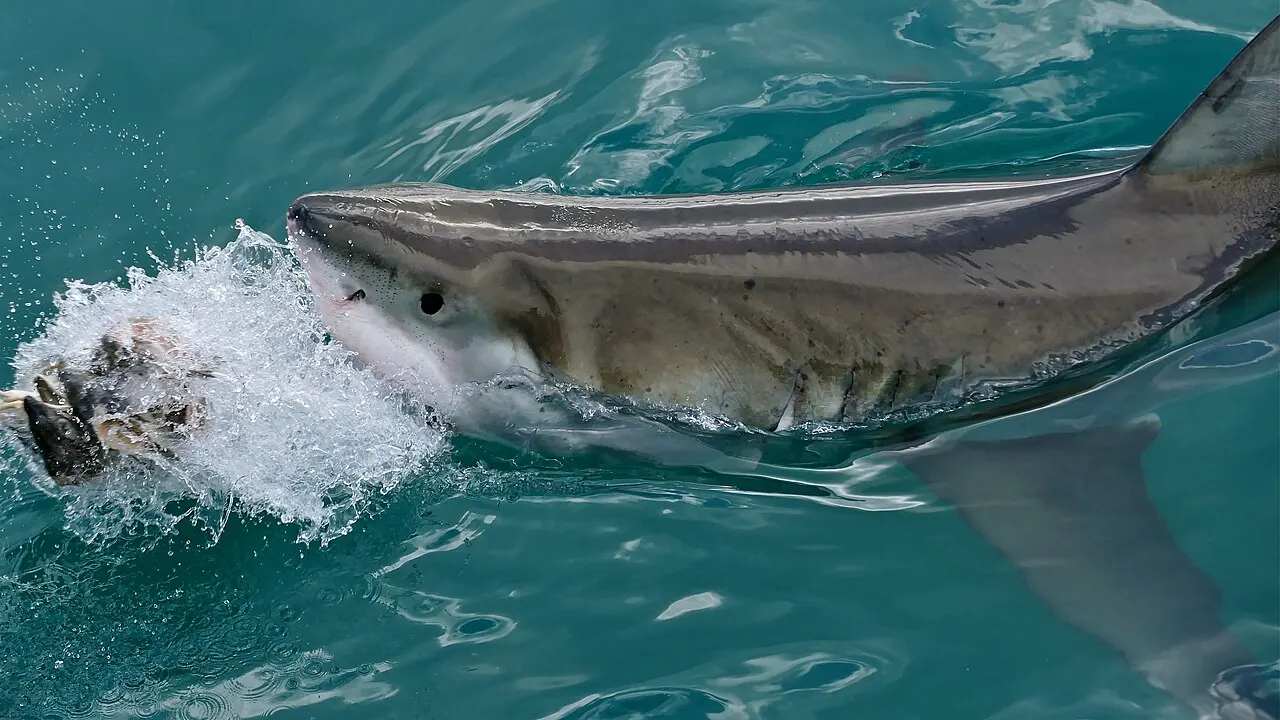
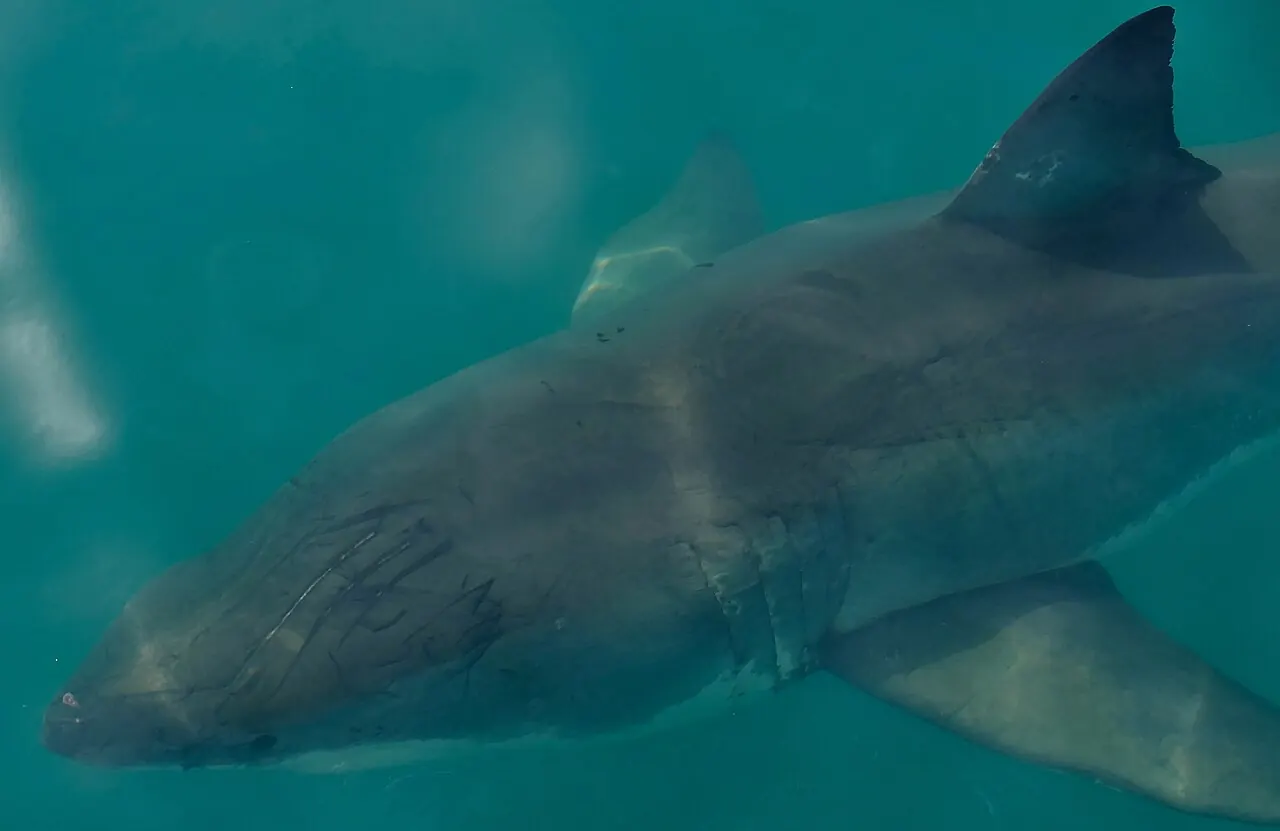
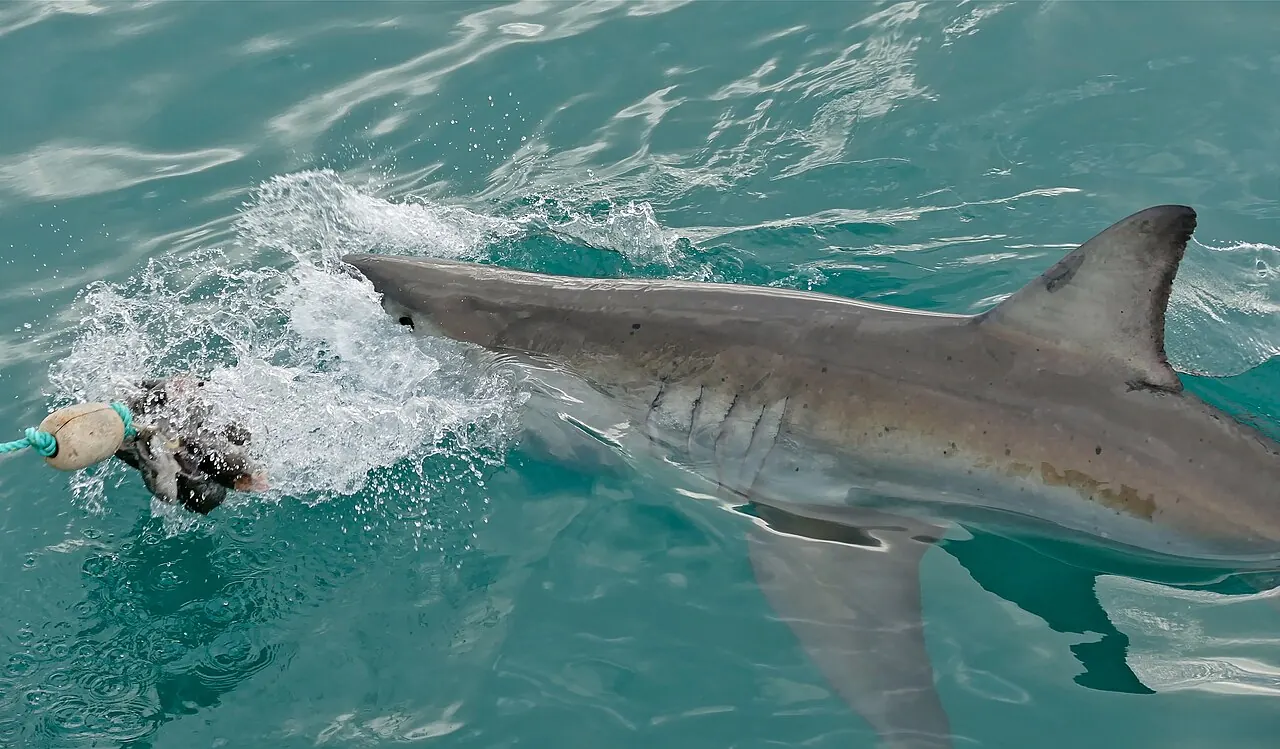
Photos are from Wikimedia Commons, used under the free licences shown. They have been resized, and cropped where they appear in link previews.
Cage-diving boats in South Africa, Australia and Mexico let people watch great whites safely. From a boat, look for a tall fin cutting the surface.
Great whites are vulnerable, and killed for fins and by nets. Never buy shark fin or shark teeth, and support marine protected areas.
Keep going
Coral reef animals live on the Coral reef page: choosing one takes you there.
These live somewhere else: choosing one takes you to their page.
Animals from other parts of the world live on their own pages: change area.
_(32912225905).jpg)
_(32872319266).jpg)
_(32096717593).jpg)