Skip to the content
African river
Hippopotamus
Hippopotamus amphibius
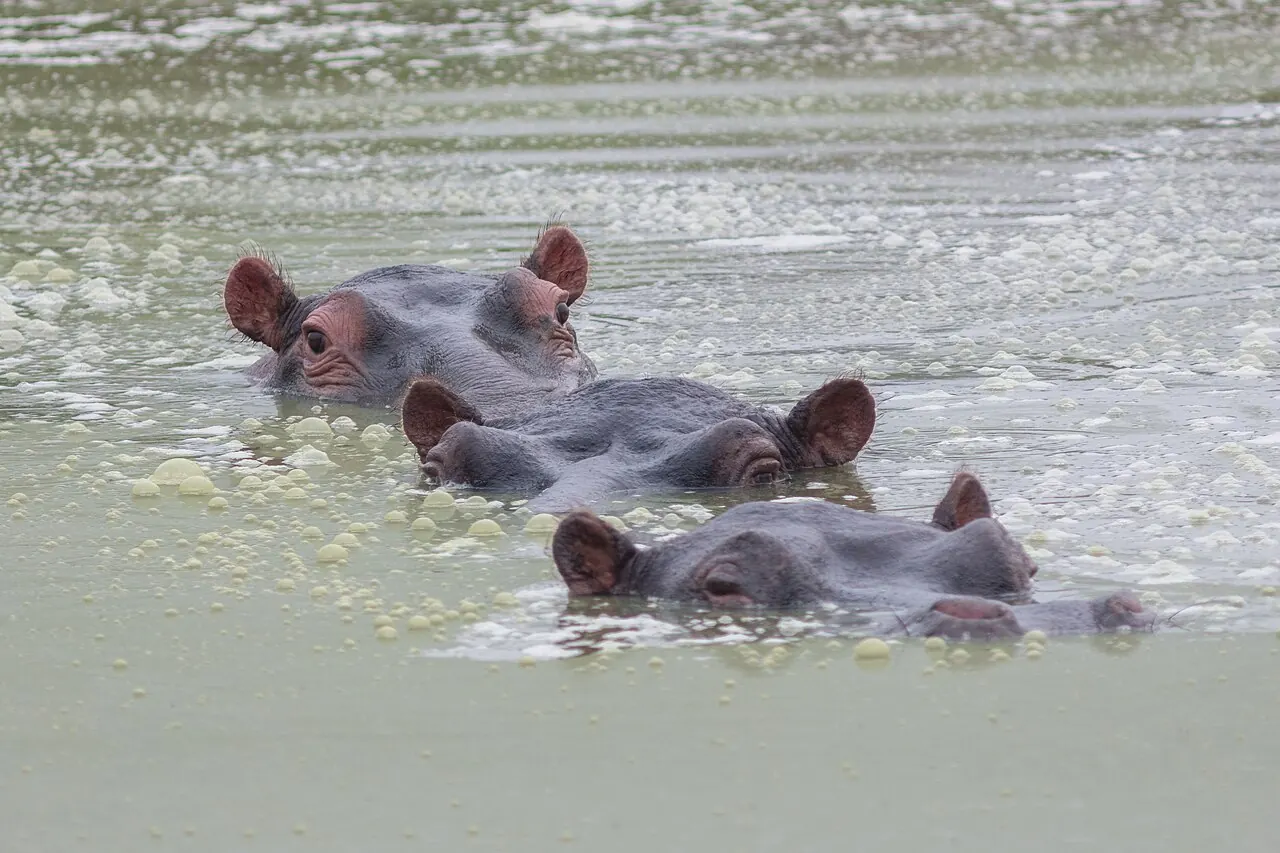
A huge, barrel-shaped animal that spends the day in the water with only its eyes, ears and nostrils showing.
- Size
- Up to 4m long, and as heavy as a small lorry
- Look for it
- All year round
- Where
- Rivers, lakes and swamps south of the Sahara
My spotter's list
Wades after you, and sinks until only its eyes, ears and nostrils show. Move your pointer and see.
Good to know
Six things about the hippo
WaterA day in the water
Hippos stay in the water all day to keep cool and stop their skin drying out, and come out at night to graze.
SwimmingIt cannot really swim
A hippo is too heavy to float. It walks or bounces along the bottom, and can hold its breath for about five minutes.
SkinIts own sunscreen
Hippo skin oozes a reddish oil that works as sunscreen and helps to keep wounds clean. People once thought it was blood.
MouthA huge yawn
A hippo can open its mouth almost 150 degrees. The yawn is a warning, showing teeth that can be half a metre long.
DangerNot as gentle as it looks
Hippos are among the most dangerous large animals in Africa, and can run faster than a person over a short distance.
FamilyA surprising cousin
The hippo's closest living relatives are whales and dolphins.
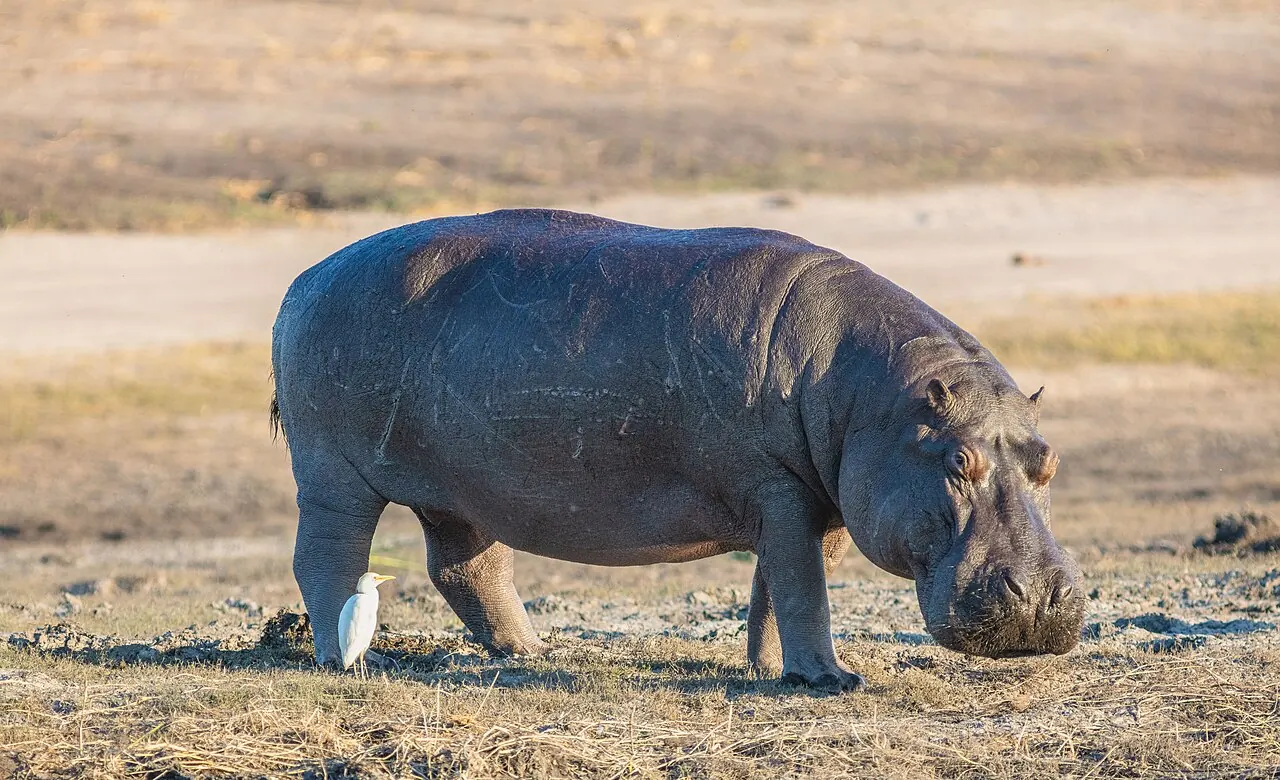
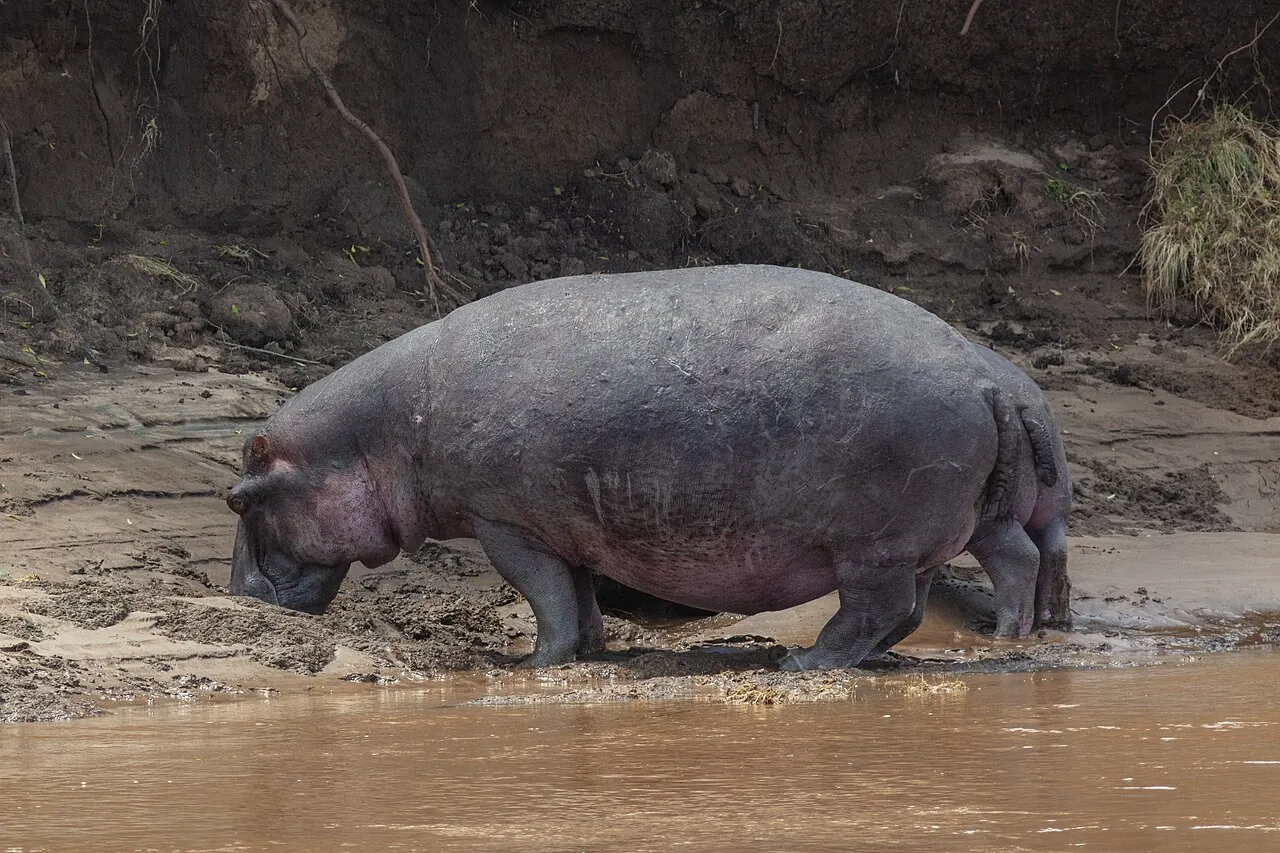
The real thing
Photos of the hippo
Photos are from Wikimedia Commons, used under the free licences shown. They have been resized, and cropped where they appear in link previews.
![]()
Out and aboutHow to spot one
Look for a row of rounded backs, or just ears and nostrils, in a deep pool by day. At dusk they climb out along well-worn paths to graze.
Lend a handHow to help
Hippos need rivers that keep flowing and grassland beside them. Support wetland conservation, and never buy hippo-ivory carvings.
Following youLadybird
Who should follow you?
These live somewhere else: choosing one takes you to their page.
African savanna
African river
These live somewhere else: choosing one takes you to their page.
African rainforest
These live somewhere else: choosing one takes you to their page.
African desert
Animals from other parts of the world live on their own pages: change area.
,_parque_nacional_de_Chobe,_Botsuana,_2018-07-28,_DD_82.jpg)
,_parque_nacional_del_Lago_Mburo,_Uganda,_2024-02-01,_DD_27.jpg)
,_reserva_natural_Mas%C3%A1i_Mara,_Kenia,_2024-05-20,_DD_74.jpg)