A pride
Lions live in a pride: several related females, their cubs, and one or a few males.
African savanna
Panthera leo
The only big cat that lives in a family group. The male has a thick mane; the females do most of the hunting.
Pads after you, then breaks into a run if you get well ahead. Move your pointer and see.
Good to know
Lions live in a pride: several related females, their cubs, and one or a few males.
A lion's roar can carry about five miles. It tells other lions whose territory this is.
Lionesses do most of the hunting, working together to surround and ambush their prey.
Lions rest or sleep for up to twenty hours a day, saving their strength for the hunt.
A dark, full mane shows a male is strong and well fed. Lionesses tend to prefer males with darker manes.
There are thought to be only around 20,000 to 25,000 lions left in the wild in Africa.
The real thing
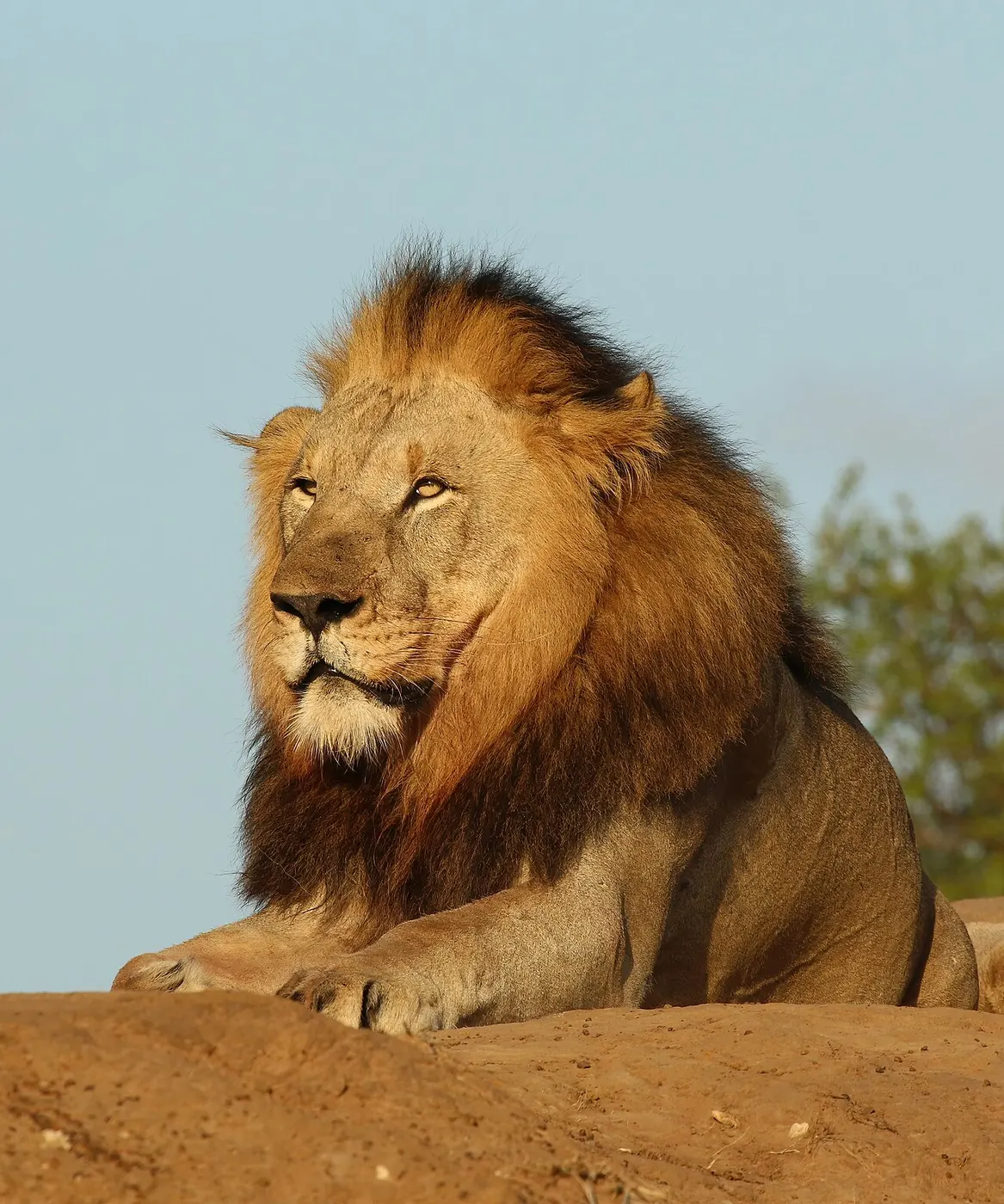
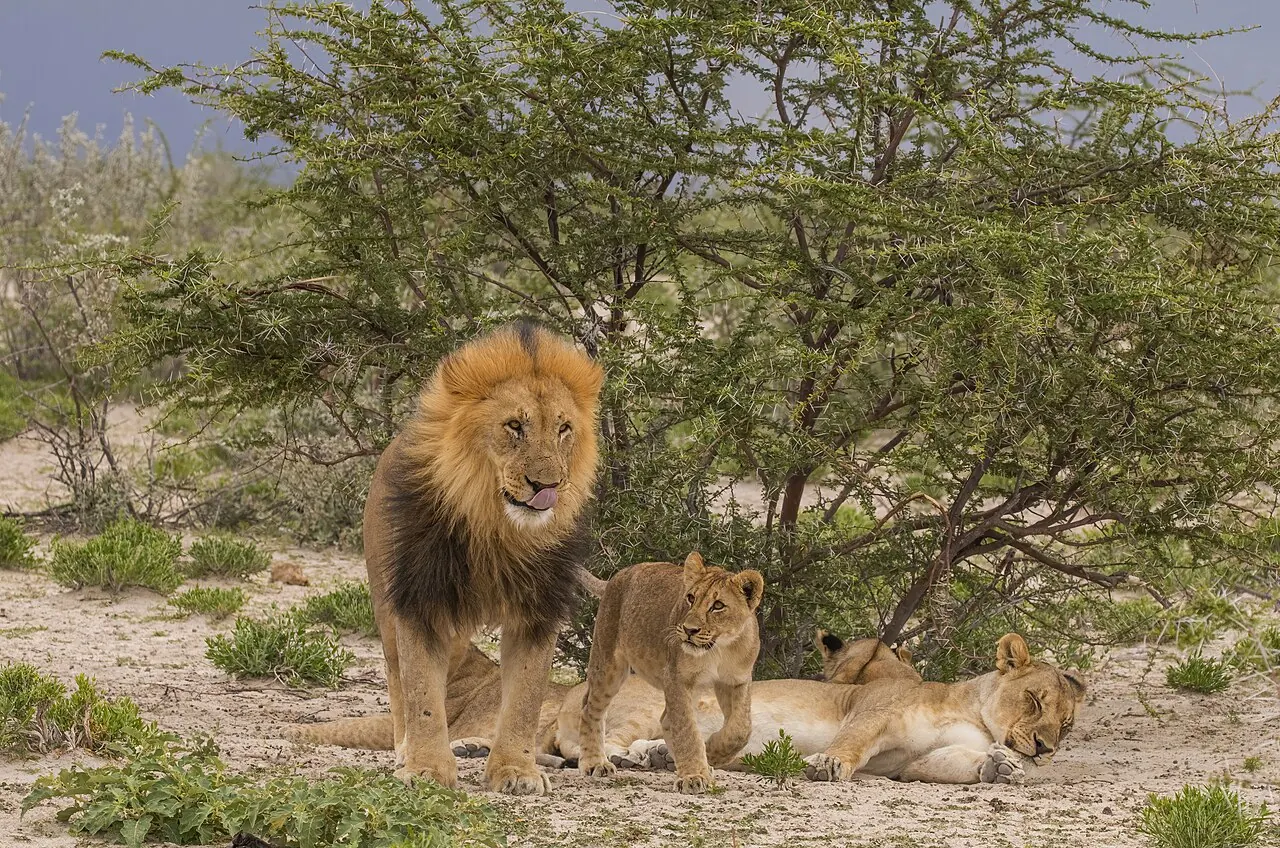
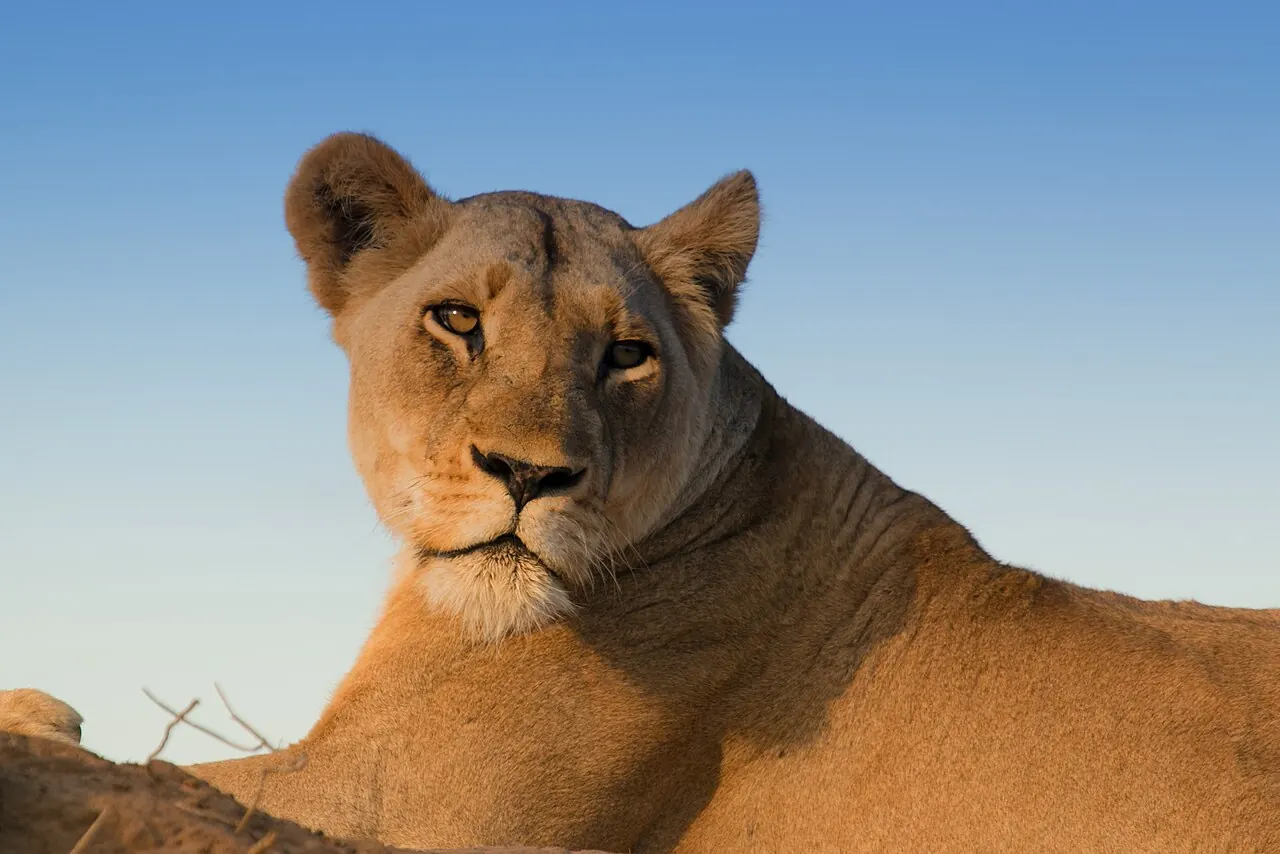
Photos are from Wikimedia Commons, used under the free licences shown. They have been resized, and cropped where they appear in link previews.
Lions rest in the shade through the heat of the day, so look under trees and on rocky outcrops. The best time to see them moving is early morning or dusk.
Lions need large, connected wild areas and enough prey. Support conservation groups that work with the herders who live alongside them.
Keep going
African river animals live on the African river page: choosing one takes you there.
Animals from other parts of the world live on their own pages: change area.
_male_6y.jpg)
_male_and_cub_Etosha.jpg)
_female.jpg)