Skip to the content
African savanna
White-backed vulture
Gyps africanus
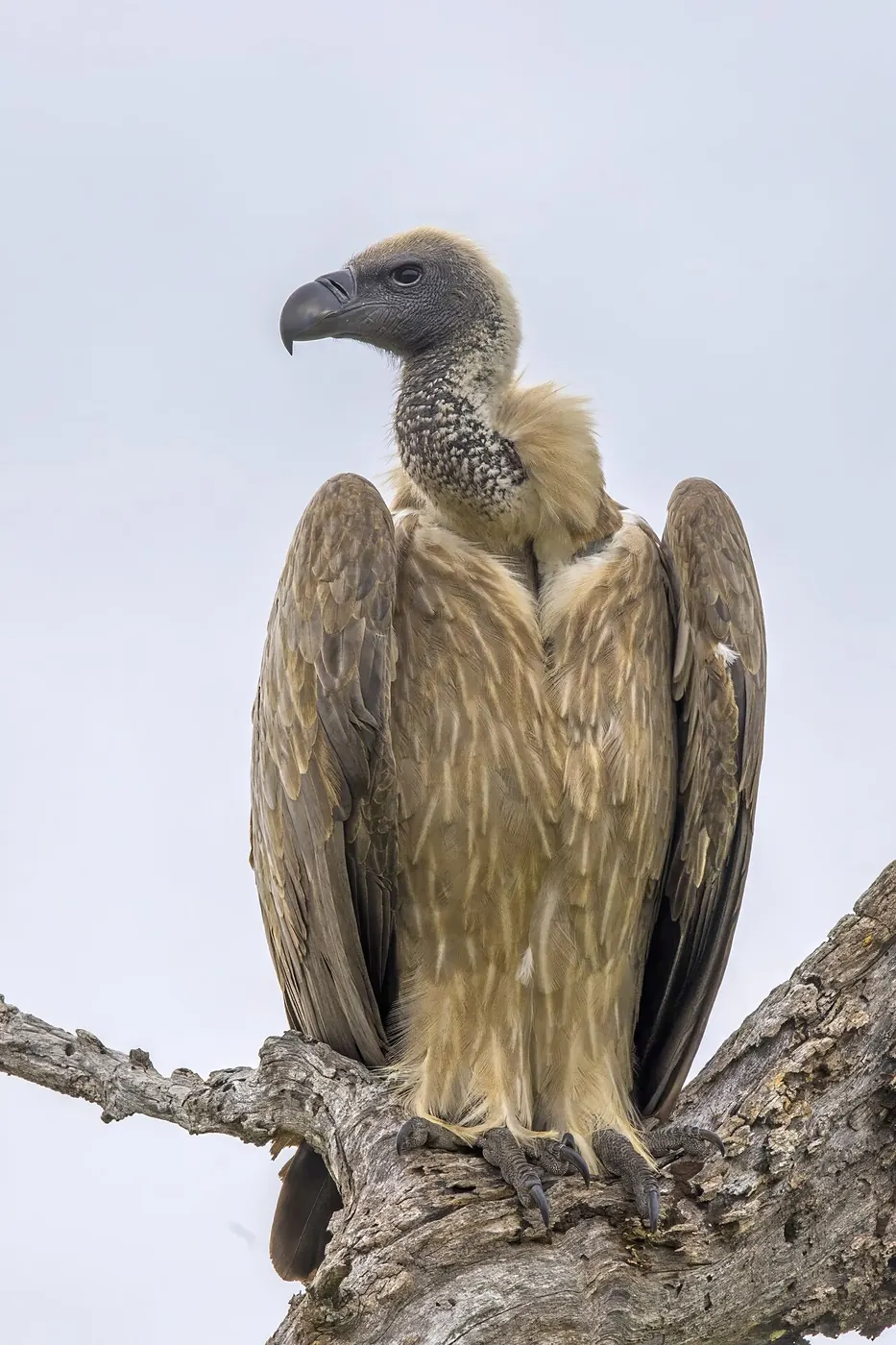
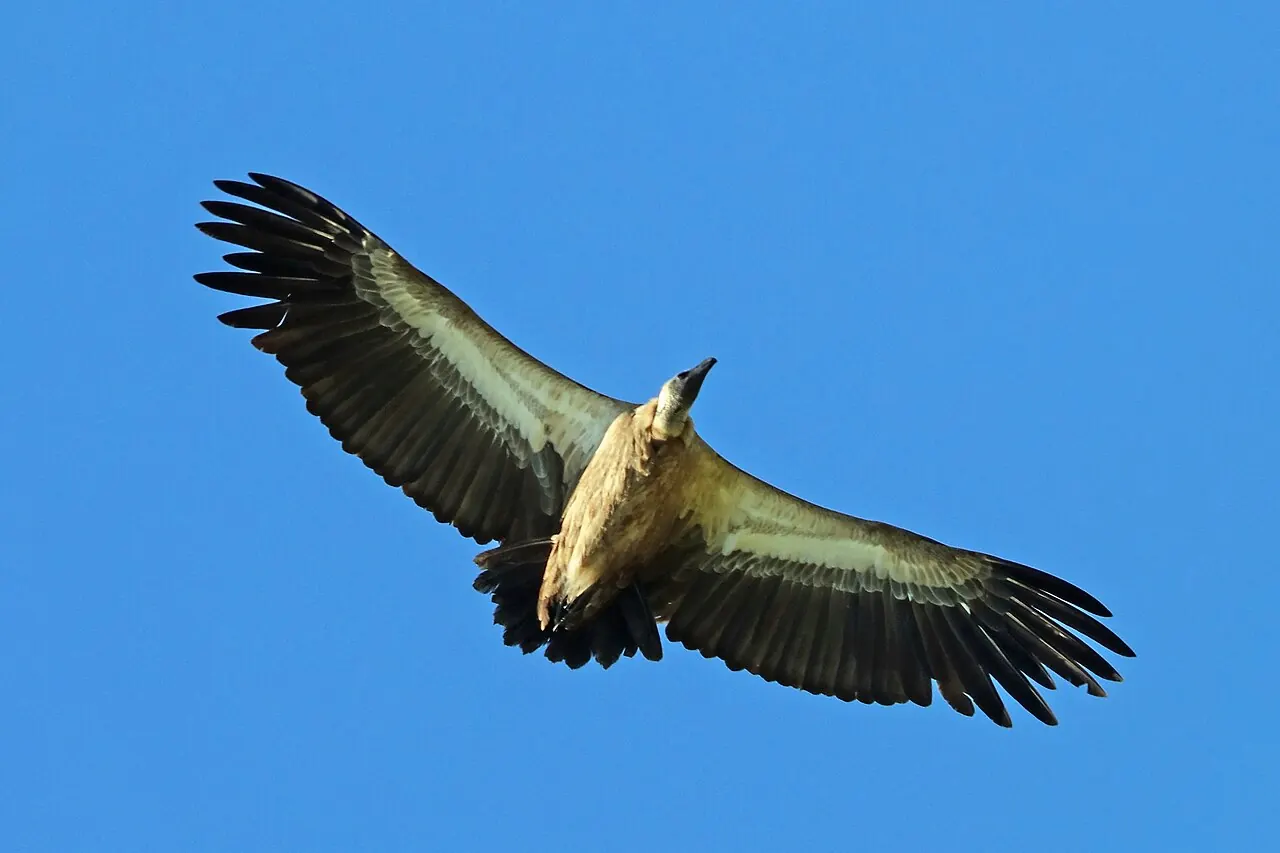
A big, brown vulture with a bare grey head, a white ruff and a pale back that shows as it banks.
- Size
- Wingspan about 2.2 metres
- Look for it
- All year round
- Where
- Open savanna with scattered tall trees, across much of Africa south of the Sahara
My spotter's list
Soars round you in slow, wide circles. Move your pointer and see.
Good to know
Six things about the vulture
JobThe clean-up crew
Vultures eat animals that are already dead. By clearing carcasses quickly they help to stop disease spreading.
FlightRiding warm air
Vultures circle upwards on rising warm air, called thermals, and can stay up for hours with barely a wingbeat.
EyesWatching each other
A vulture watches the ground and the other vultures. When one drops, the rest follow from miles around.
HeadWhy a bare head?
A head without feathers stays cleaner when feeding, and helps the bird to keep cool.
StomachA stomach like acid
A vulture's stomach is strong enough to destroy germs that would kill most other animals.
TroubleCritically endangered
White-backed vultures have declined very fast, mostly from poisoning. They are now critically endangered.
The real thing
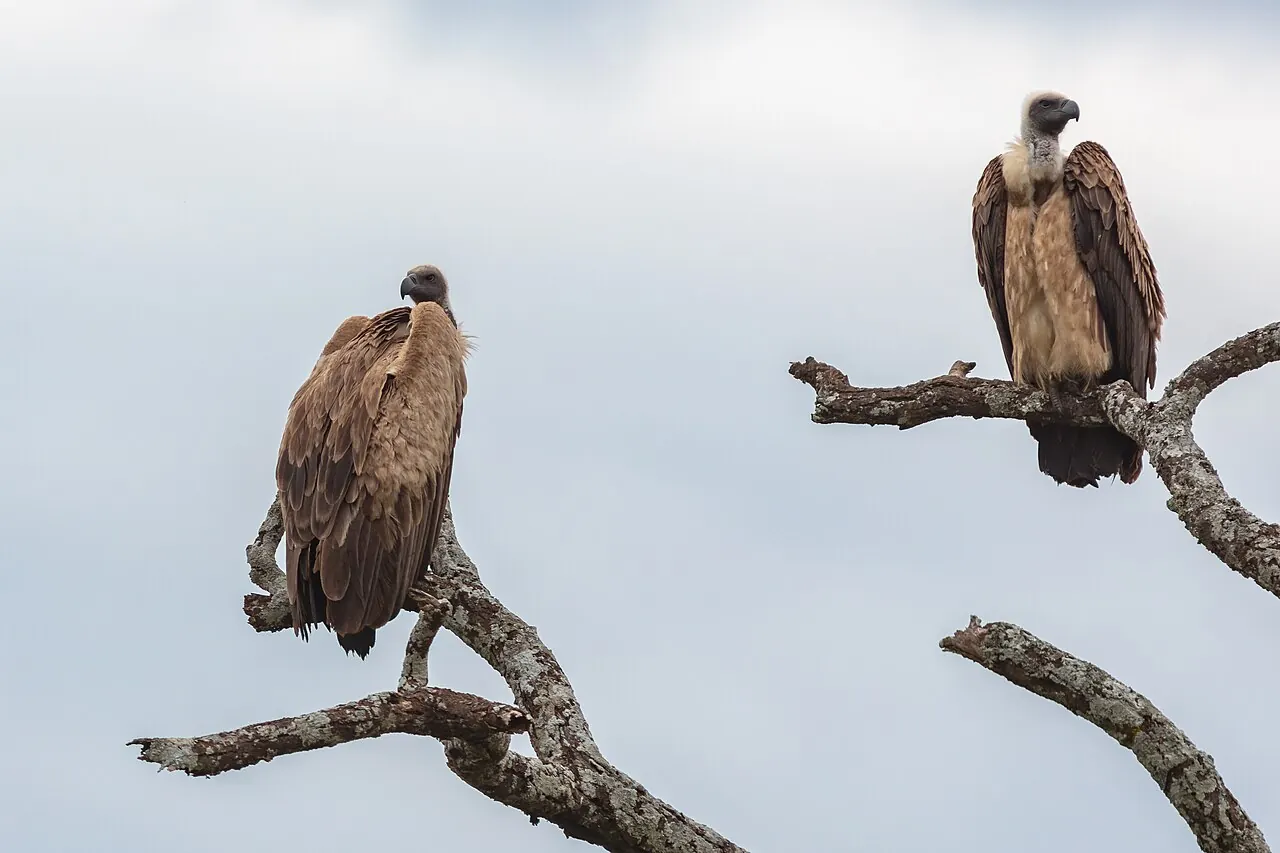
Photos of the vulture
Photos are from Wikimedia Commons, used under the free licences shown. They have been resized, and cropped where they appear in link previews.
![]()
Out and aboutHow to spot one
Look up: vultures circle high on warm air from mid-morning. A column of them spiralling down means there is a carcass below.
Lend a handHow to help
Poisoning is the biggest threat. Support vulture conservation groups, who work to stop it and to explain how much these birds do for people.
Following youLadybird
Who should follow you?
African savanna
African river animals live on the African river page: choosing one takes you there.
African river
African rainforest
African desert
Animals from other parts of the world live on their own pages: change area.
_Kruger_2.jpg)
_sub_adult_in_flight.jpg)
,_parque_nacional_Serengueti,_Tanzania,_2024-05-26,_DD_08.jpg)