A beard that turns black
When it is alarmed or showing off, it puffs out the spiny skin of its throat, which turns dark, even black.
The outback
Pogona vitticeps
A broad, flat, sandy-coloured lizard with spines along its sides and a spiky throat it can puff out like a beard.
Scurries after you, and puffs out its beard. Move your pointer and see.
Good to know
When it is alarmed or showing off, it puffs out the spiny skin of its throat, which turns dark, even black.
A bearded dragon lifts one front leg and circles it slowly, like a wave. It is a way of saying: I see you, and I am no threat.
Males bob their heads up and down quickly to show who is in charge.
It basks on a fence post, a rock or a branch to warm up in the morning, and changes shade to soak up more or less heat.
A small pale spot on top of its head senses light and shadow, which warns it of a bird overhead.
Insects, flowers, leaves and fruit all go down. Young ones eat mostly insects and adults mostly plants.
The real thing
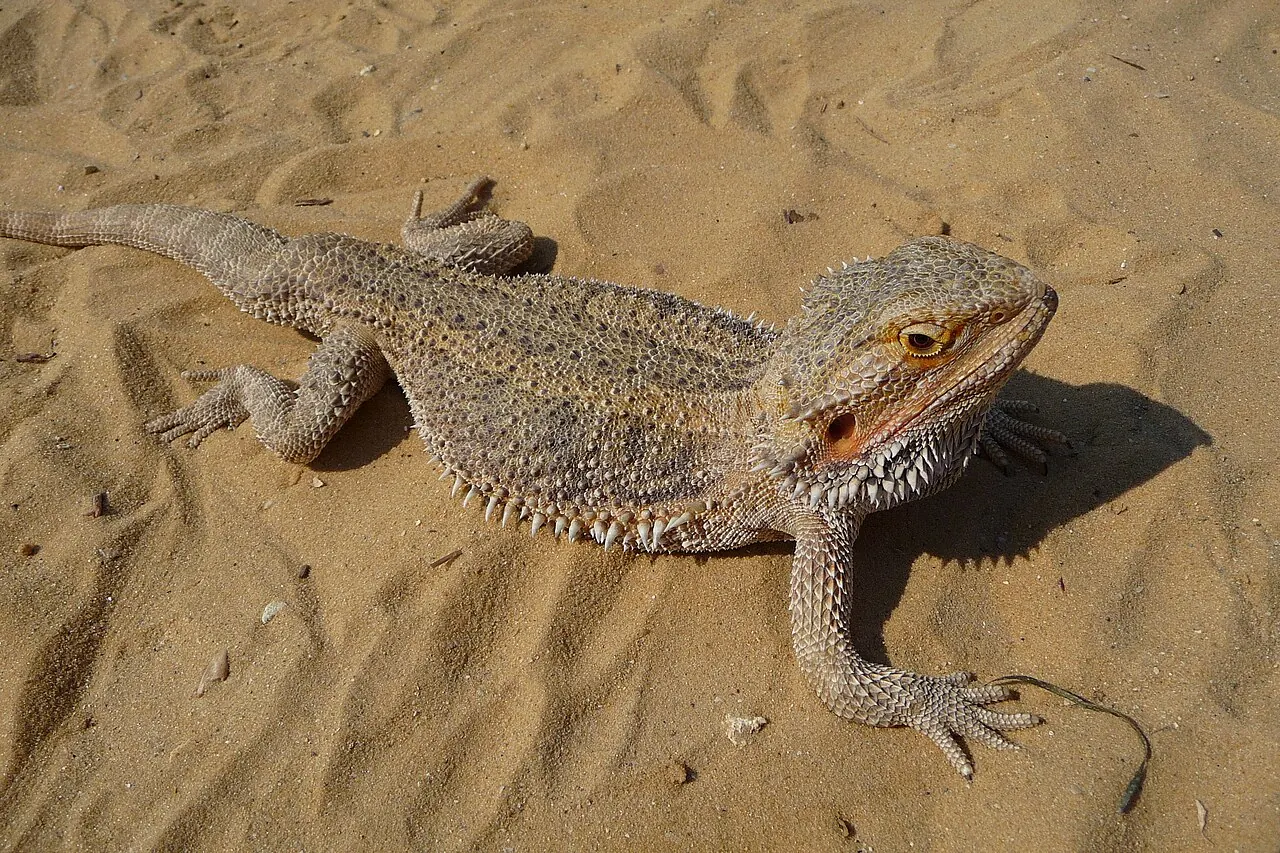
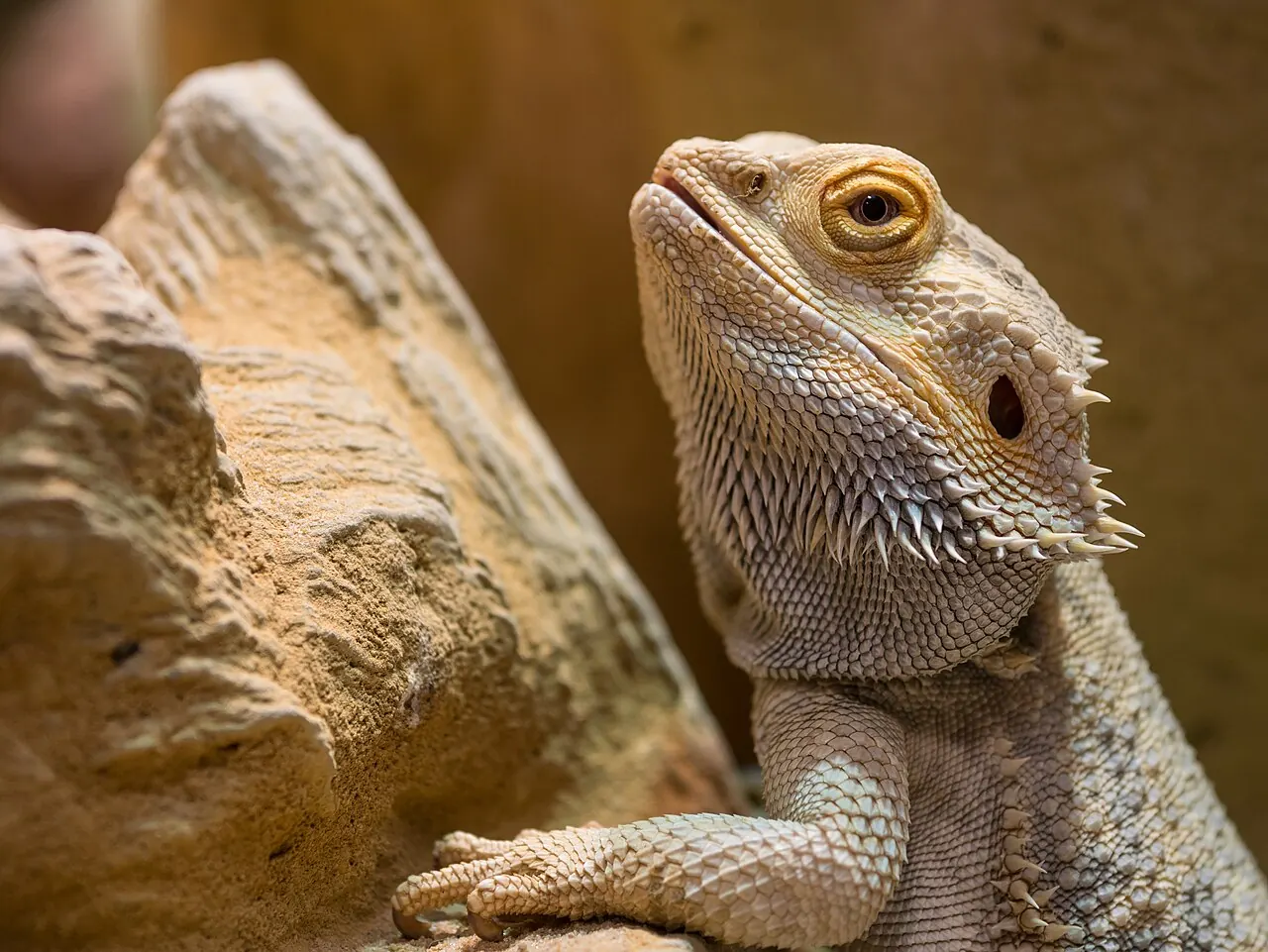
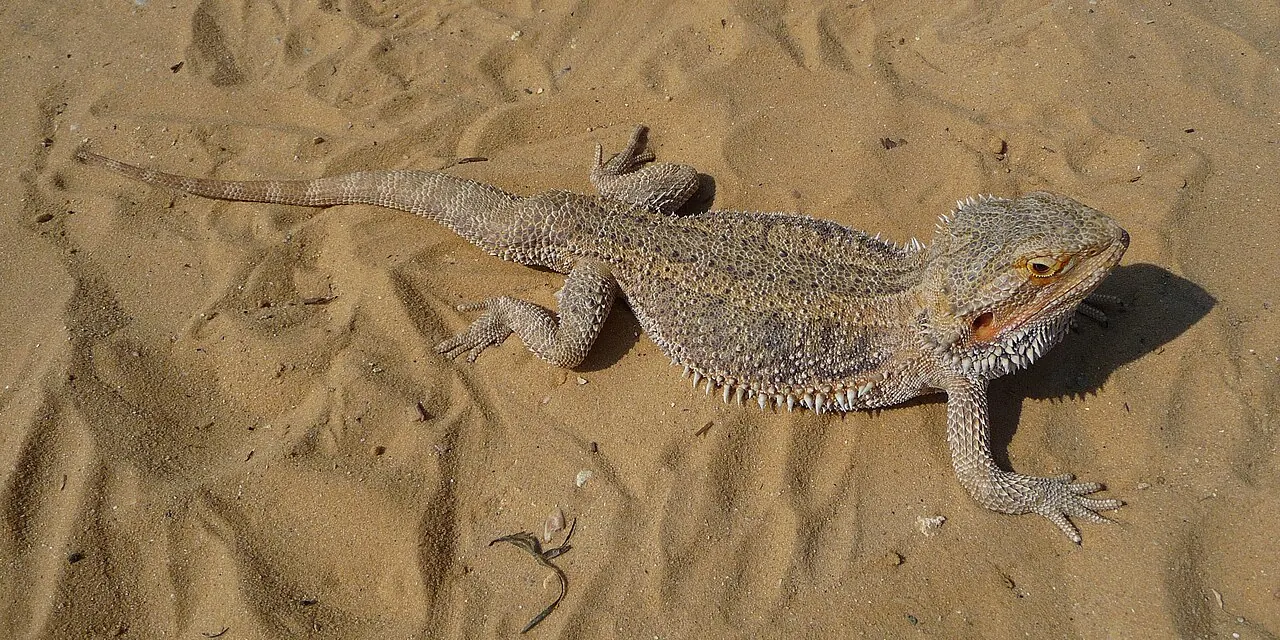
Photos are from Wikimedia Commons, used under the free licences shown. They have been resized, and cropped where they appear in link previews.
Look on fence posts, logs and roadside rocks on warm mornings in the outback. It sits very still, head up, and relies on not being noticed.
Bearded dragons are popular pets, and all of those are bred in captivity: Australia does not allow wild ones to be exported. If you keep one, it needs heat, proper lighting and space.
Keep going
The billabong animals live on the The billabong page: choosing one takes you there.
Animals from other parts of the world live on their own pages: change area.


