Skip to the content
The outback
Thorny devil
Moloch horridus
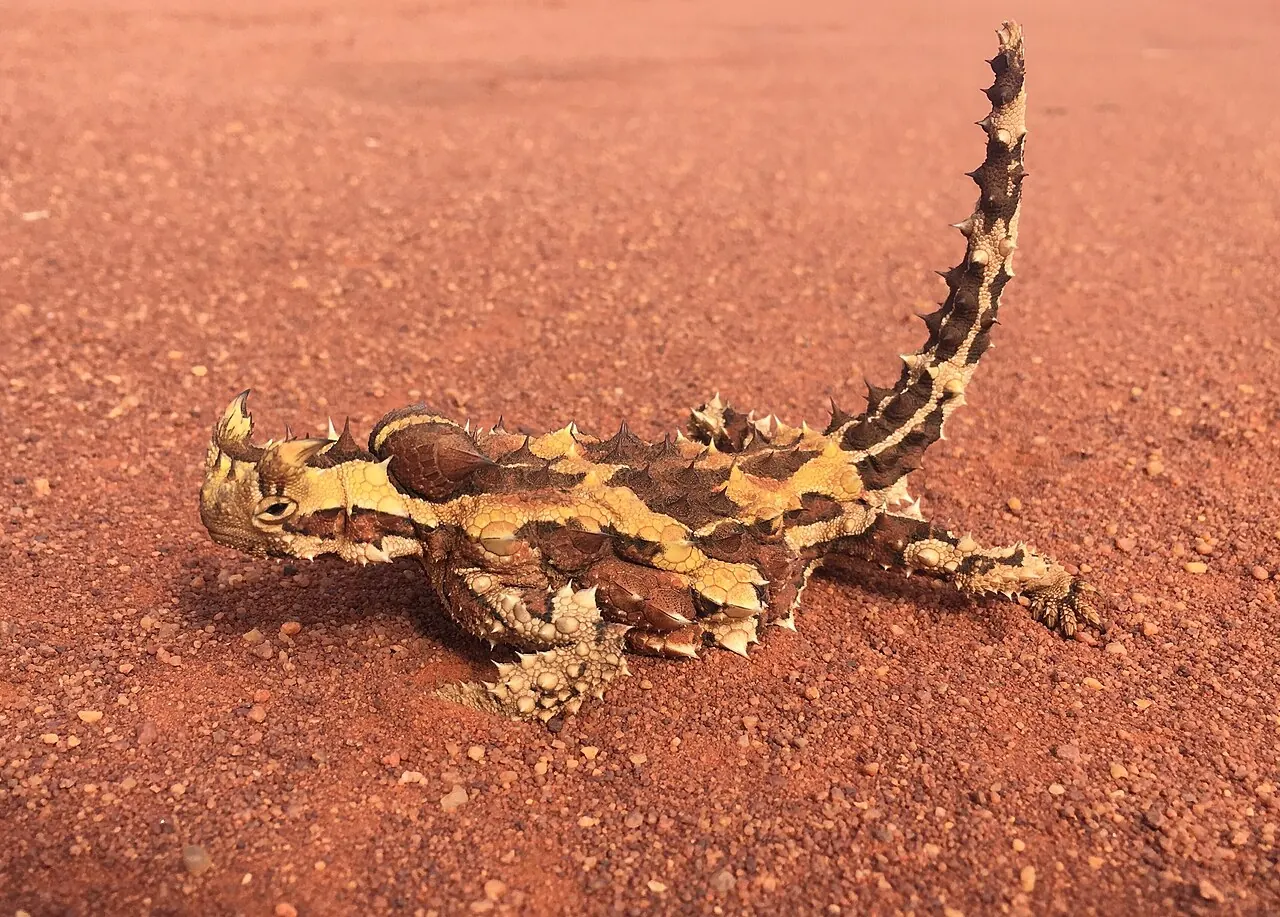
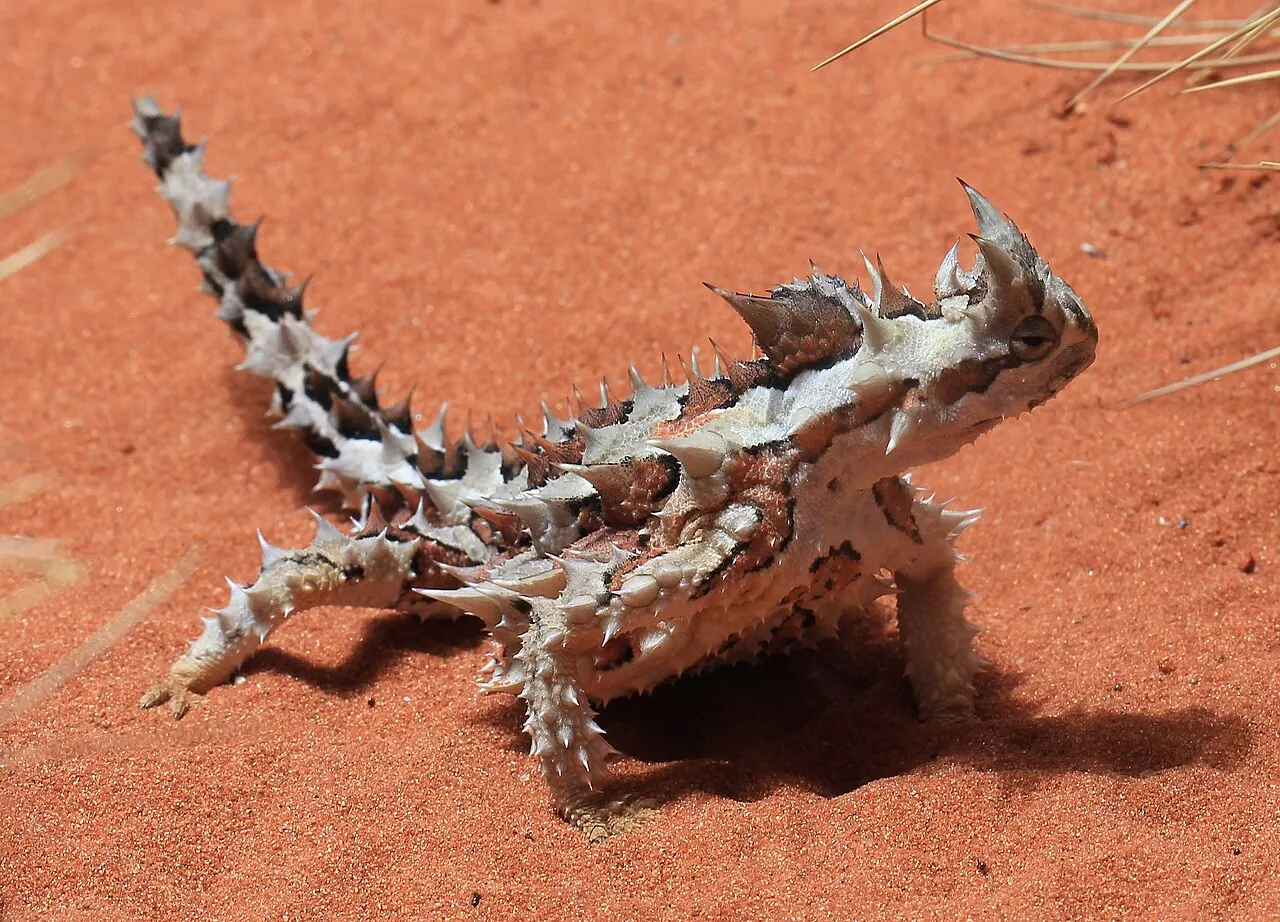
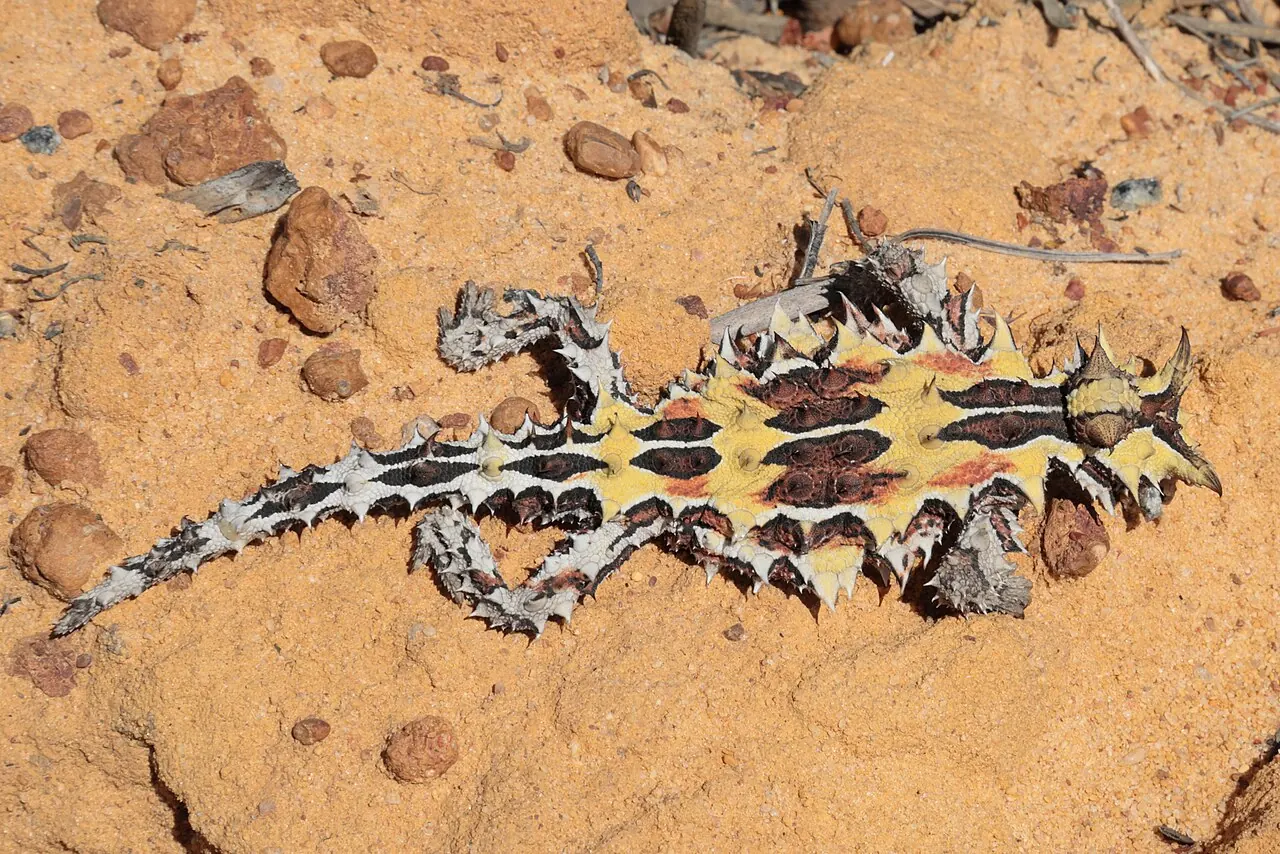
A small, slow lizard covered all over in sharp spines, patterned in gold, brown and rust.
- Size
- About 15 to 20cm long
- Look for it
- August to December, then January to April
- Where
- Sandy deserts of central and western Australia
My spotter's list
Walks after you with a jerky, rocking step. Move your pointer and see.
When to look
JFMAMJJASOND
Thorny devil
Good to know
Six things about the thorny devil
DrinkDrinking through its feet
Tiny grooves between its scales draw water up from damp sand or dew, all the way to its mouth.
HeadA false head
A spiny lump on its neck looks like a second head. It tucks its real head down and offers that.
FoodOnly ants
It eats nothing but small black ants, licking up a thousand or more in one meal.
WalkA rocking walk
It walks with a slow back-and-forth rock, which may make it look like a leaf in the wind.
ColourChanging colour
It is paler in the heat of the day and turns darker when it is cold.
HarmlessNot a devil at all
For all its spikes and its name, it is slow, gentle and completely harmless.
The real thing
Photos of the thorny devil
Photos are from Wikimedia Commons, used under the free licences shown. They have been resized, and cropped where they appear in link previews.
![]()
Out and aboutHow to spot one
Look along sandy tracks in the morning, near ant trails. It freezes when it sees you, so watch for a spiky stone.
Lend a handHow to help
Thorny devils warm up on roads and are easily run over. If you visit the outback, watch the track ahead.
Following youLadybird
Who should follow you?
The outback
The bush
The billabong animals live on the The billabong page: choosing one takes you there.
The billabong
Animals from other parts of the world live on their own pages: change area.