Swarms seen from space
A swarm can stretch for miles and turn the sea pink. The biggest can be seen by satellite.
Polar seas
Euphausia superba
Small, pink, see-through relatives of shrimps. There are more of them, by weight, than almost any other animal.
Swarm after you in a cloud. Move your pointer and see.
Good to know
A swarm can stretch for miles and turn the sea pink. The biggest can be seen by satellite.
A blue whale can eat four tonnes of krill in a day. Penguins, seals and fish depend on them too.
Krill have light organs along their bodies that give off a blue-green glow.
In winter, young krill graze on the green algae that grows on the underside of the sea ice.
All the Antarctic krill together weigh several hundred million tonnes: about the same as all the people on Earth.
When food is short, a krill can shrink in size and live off its own body until things improve.
The real thing
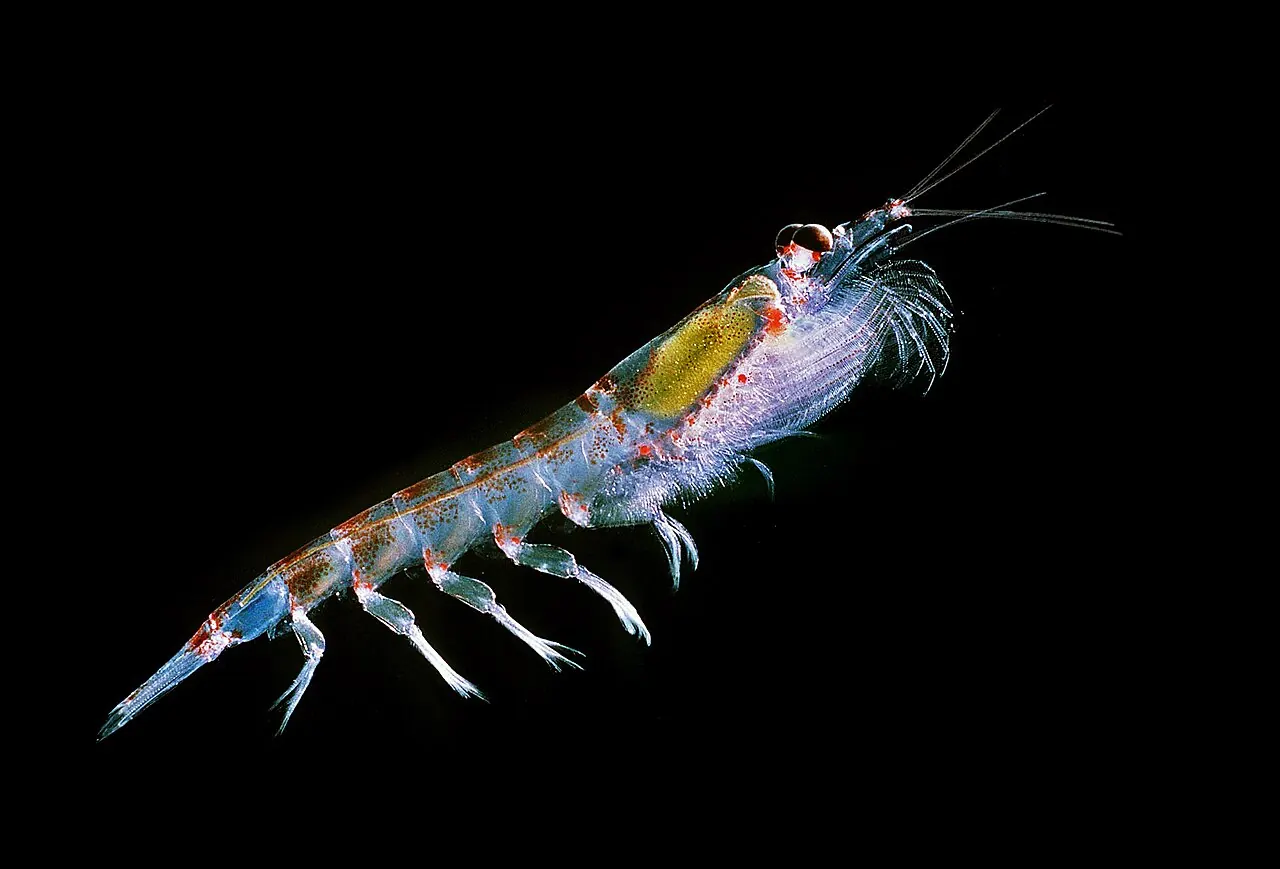
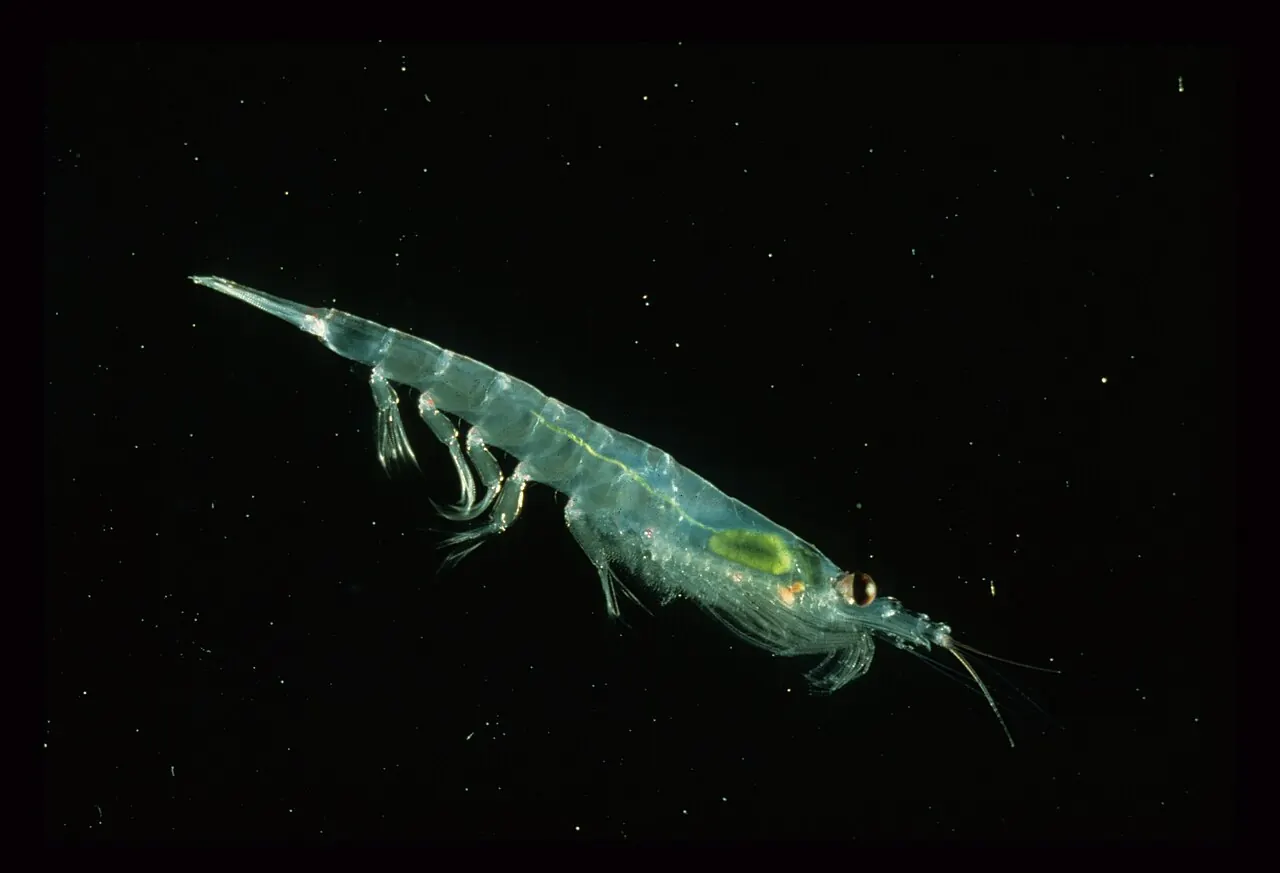
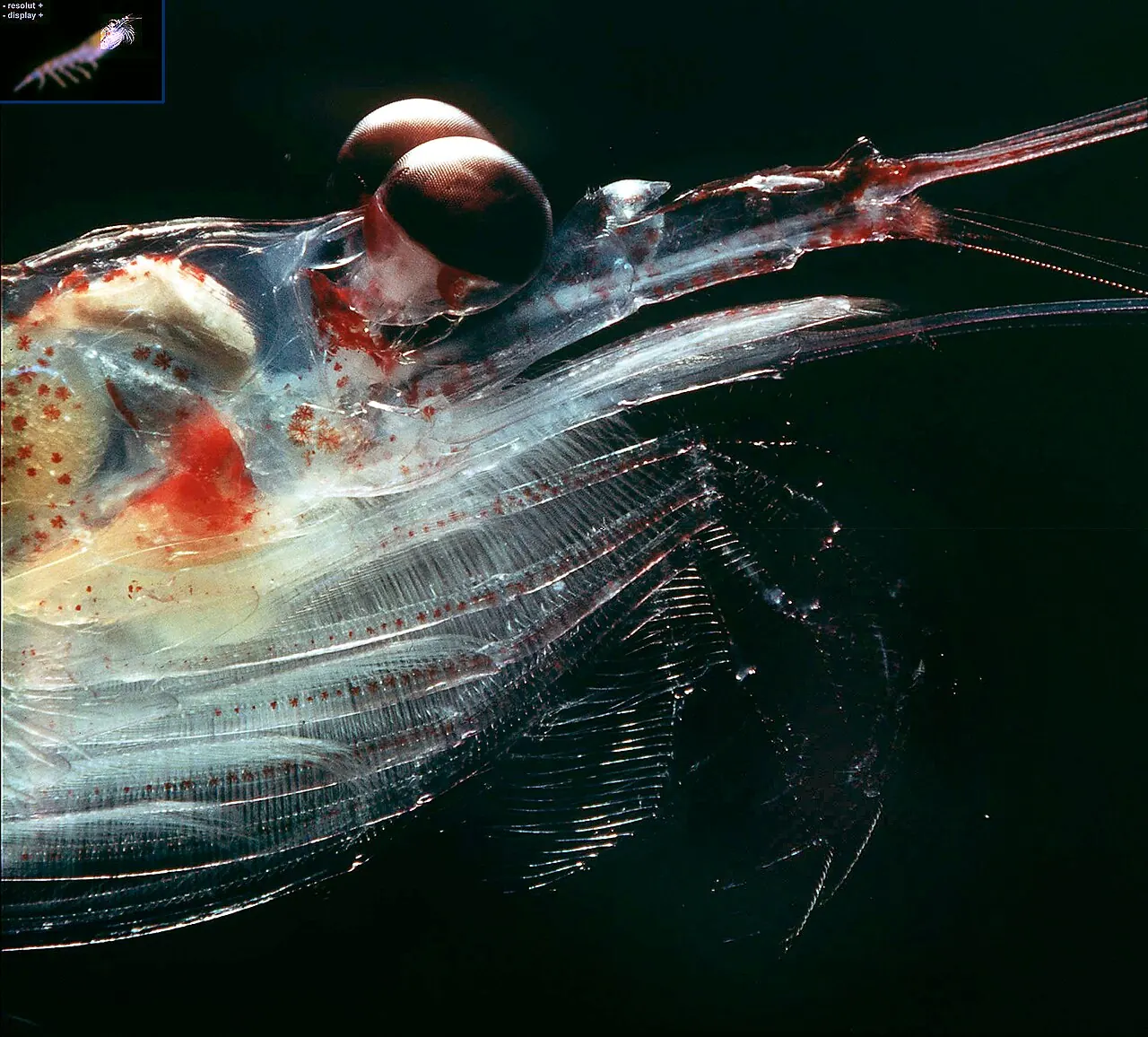
Photos are from Wikimedia Commons, used under the free licences shown. They have been resized, and cropped where they appear in link previews.
You cannot miss a swarm from a ship: a pinkish-brown stain in the water, with birds and whales feeding in it.
Krill are fished for fish food and health oils. Look for certified products, and support protected areas in the Southern Ocean.
Keep going
These live somewhere else: choosing one takes you to their page.
These live somewhere else: choosing one takes you to their page.
Animals from other parts of the world live on their own pages: change area.
.jpg)

.jpg)