A tooth, not a horn
The tusk is a tooth that grows straight out through the upper lip, in a left-handed spiral.
Polar seas
Monodon monoceros
A mottled grey Arctic whale. The male has a single long, spiralled tusk.
Swims after you, tusk first. Move your pointer and see.
Good to know
The tusk is a tooth that grows straight out through the upper lip, in a left-handed spiral.
The tusk is full of nerves. It may sense changes in the water, such as how salty it is.
Long ago, narwhal tusks were sold in Europe as unicorn horns, for more than their weight in gold.
Narwhals dive more than a mile down, under the ice, to hunt halibut and squid in the dark.
They spend the winter in cracks in thick pack ice, breathing through small gaps.
Apart from the tusk it has no working teeth. It sucks its prey in and swallows it whole.
The real thing
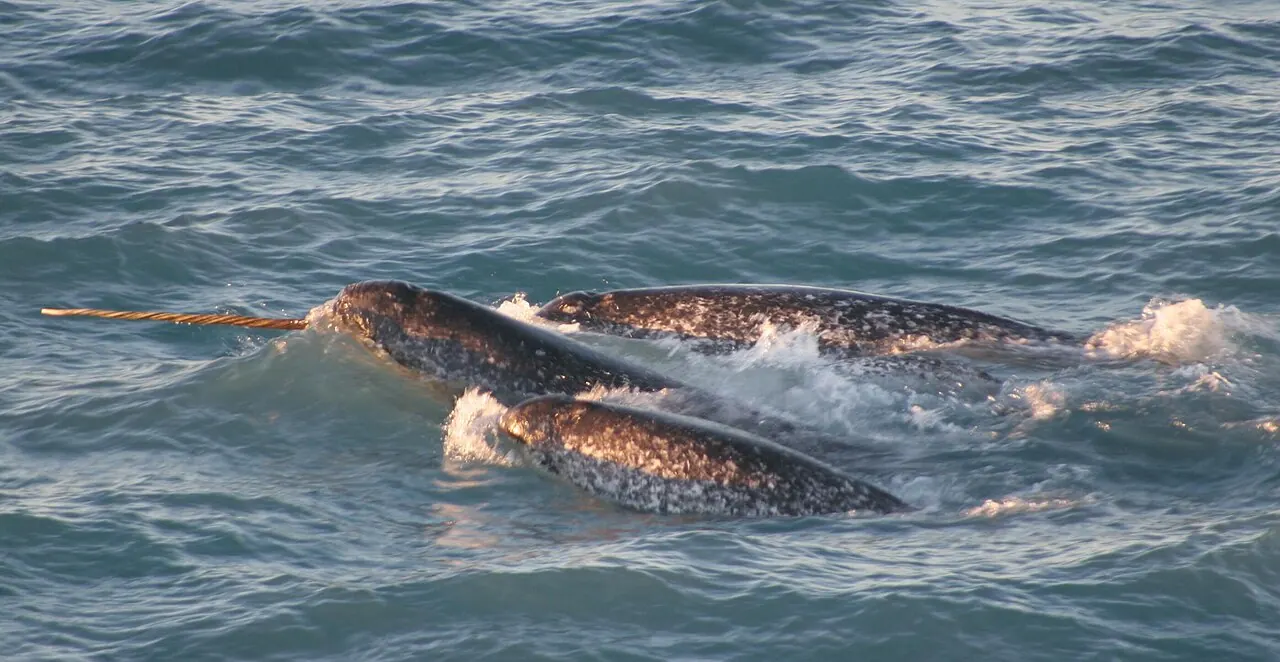

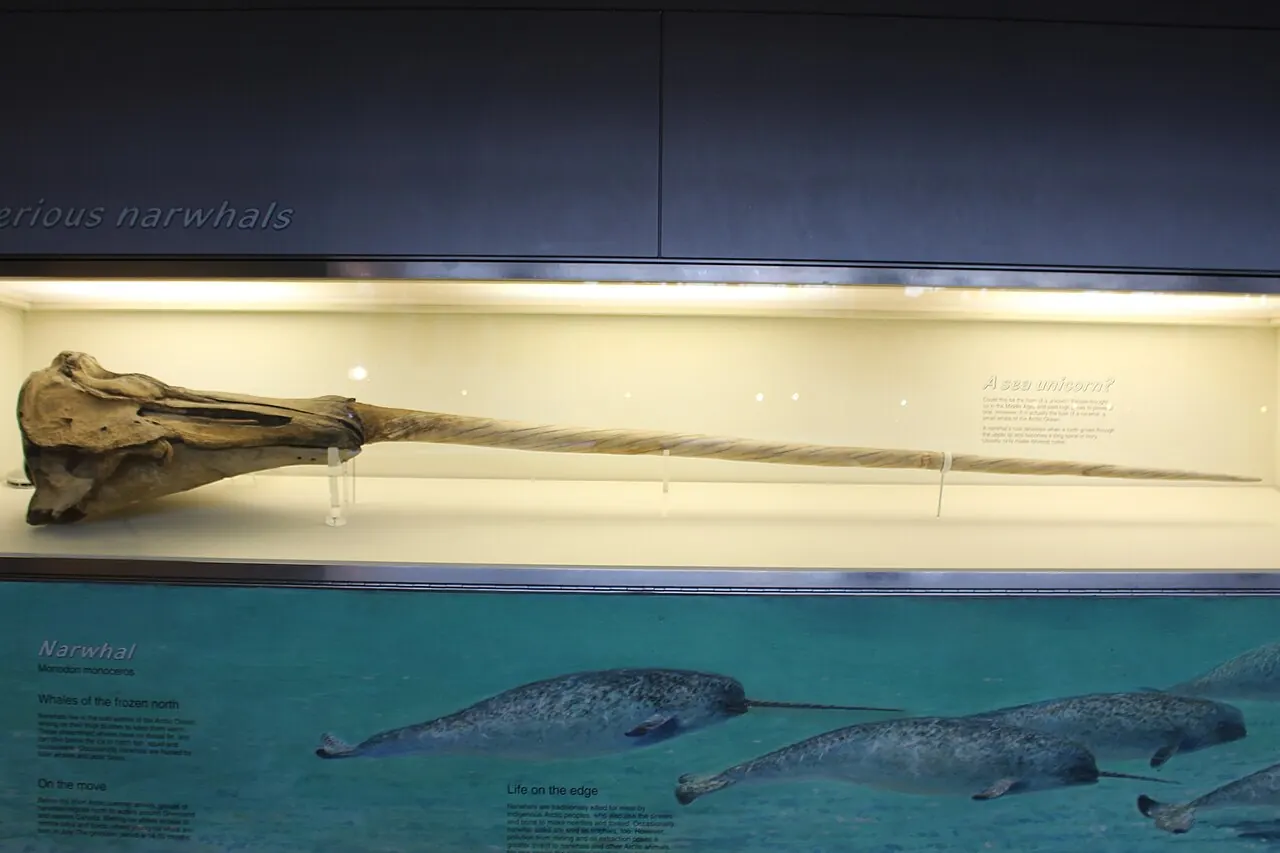
Photos are from Wikimedia Commons, used under the free licences shown. They have been resized, and cropped where they appear in link previews.
Narwhals are shy and live far from towns. A few trips to Arctic Canada and Greenland watch them at the ice edge in early summer.
Narwhals are very sensitive to noise from ships. Quiet, protected seas in the Arctic matter more as the ice opens up.
Keep going
These live somewhere else: choosing one takes you to their page.
These live somewhere else: choosing one takes you to their page.
Animals from other parts of the world live on their own pages: change area.


