The biggest rodent
A capybara can weigh as much as a grown person. It is a close relative of the guinea pig.
Amazon river
Hydrochoerus hydrochaeris
A barrel-shaped, brown animal like a giant guinea pig, with a blunt square head and no tail.
Paddles after you, calm as ever. Move your pointer and see.
Good to know
A capybara can weigh as much as a grown person. It is a close relative of the guinea pig.
Its toes are partly webbed, and it can stay under water for five minutes.
Like a hippo, it can keep watch with just the top of its head above water.
Birds, monkeys and even caimans are seen sitting calmly on or beside capybaras.
It eats some of its own droppings in the morning, to get more goodness out of tough grass.
They live in groups of ten to twenty, and bark like dogs when they are alarmed.
The real thing
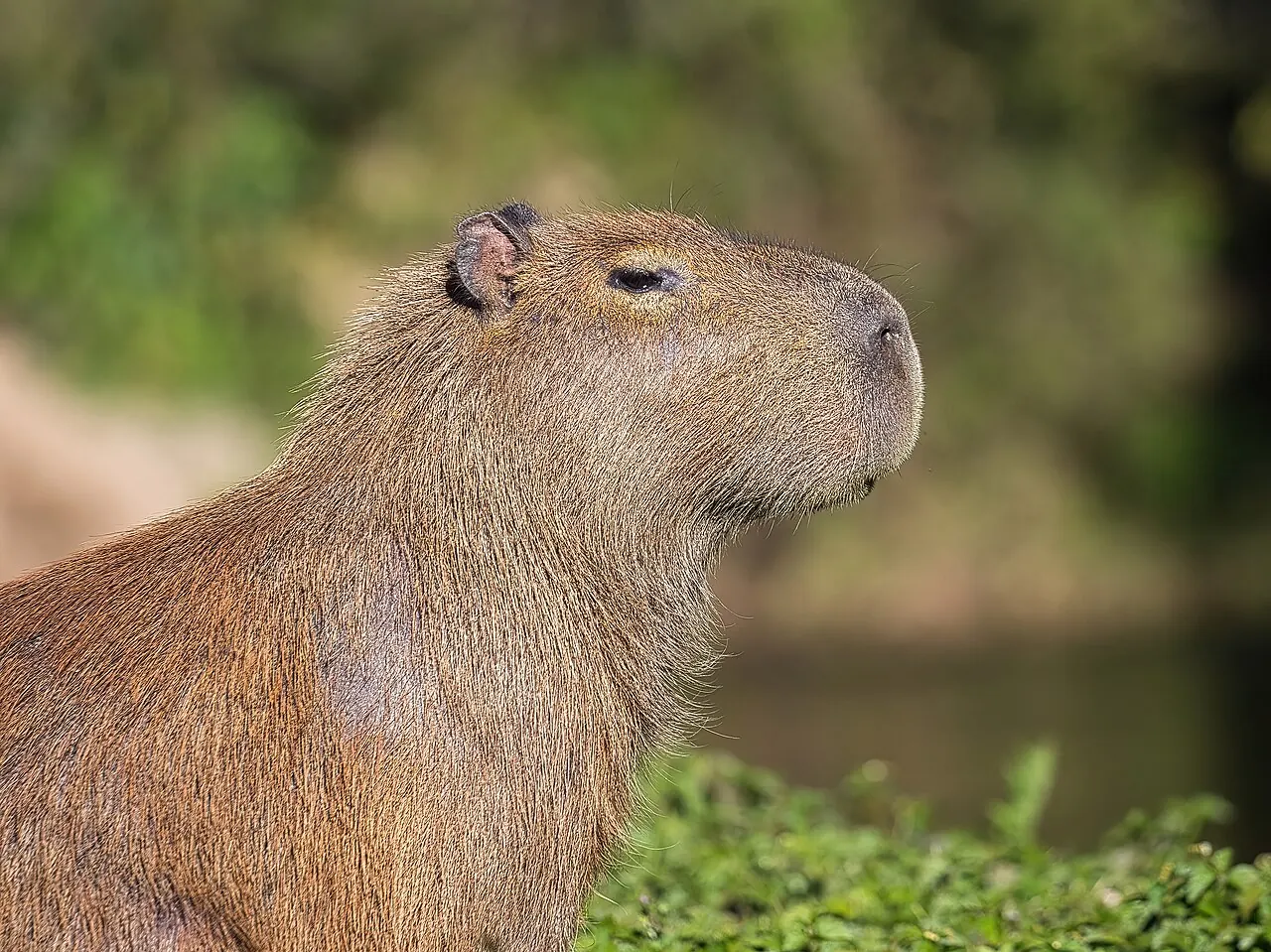
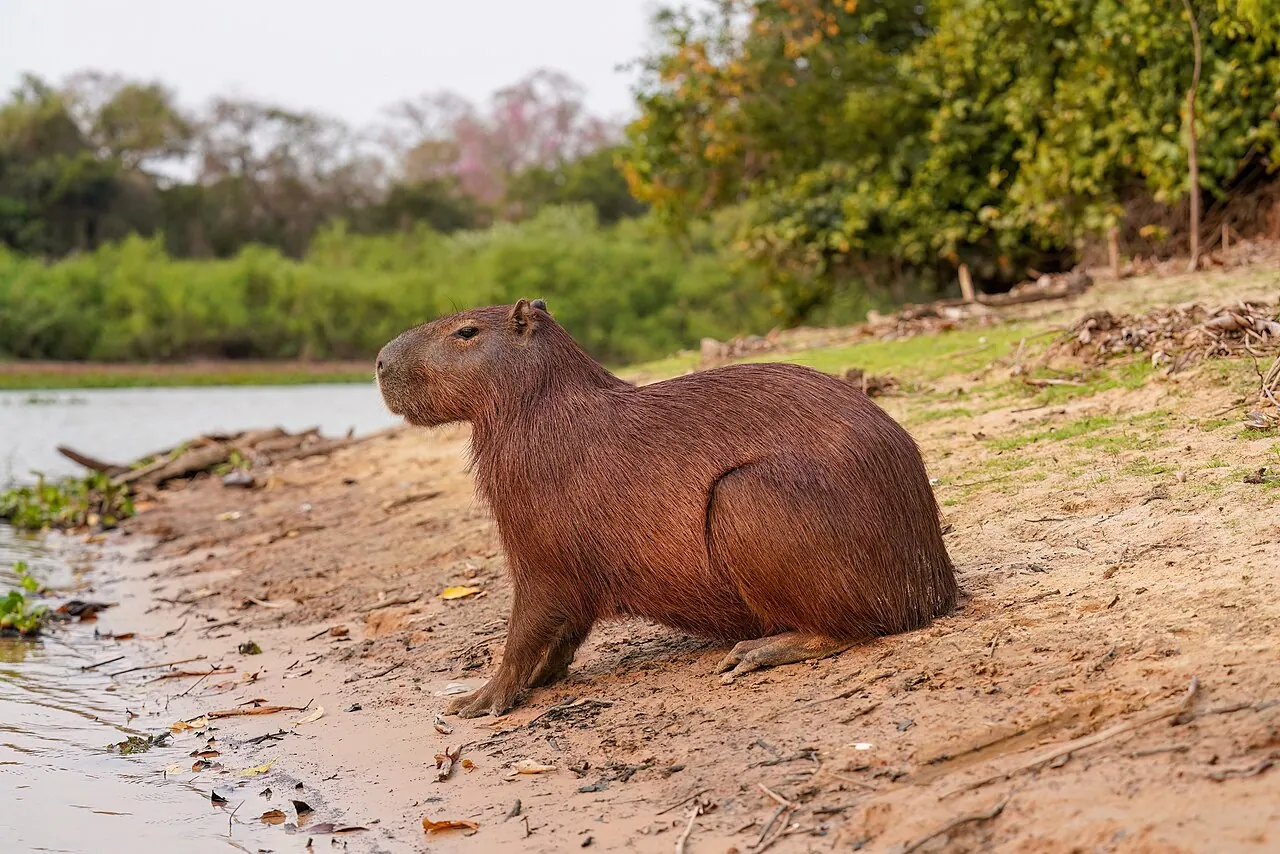
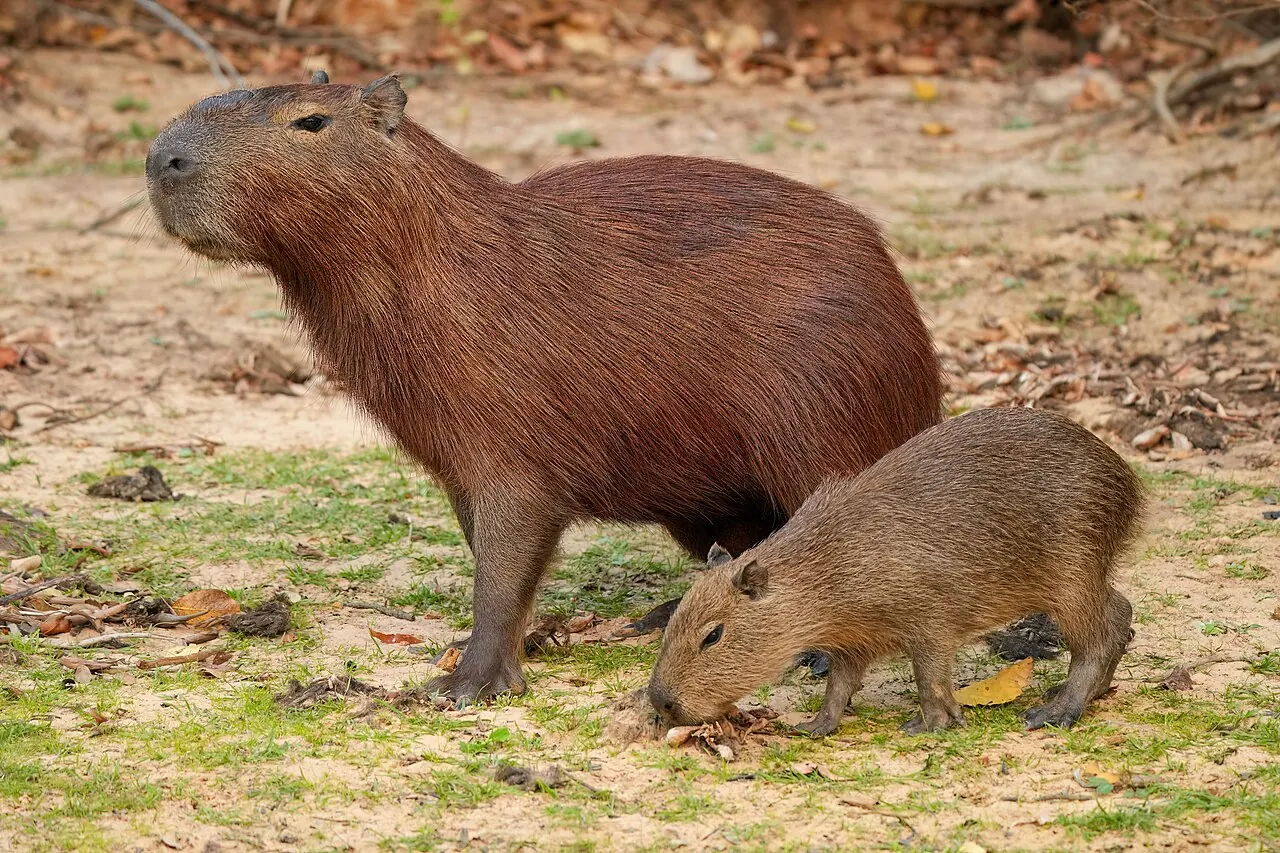
Photos are from Wikimedia Commons, used under the free licences shown. They have been resized, and cropped where they appear in link previews.
Capybaras are easy to see, lying about in groups on riverbanks and lake shores. In some South American cities they graze in the parks.
Capybaras are common. Keeping wetlands wet, and not draining them for farmland, keeps it that way.
Keep going
These live somewhere else: choosing one takes you to their page.
These live somewhere else: choosing one takes you to their page.
Animals from other parts of the world live on their own pages: change area.
.jpg)

