At home anywhere
After people, rhesus macaques live in a wider range of places than any other primate, from hot plains to snowy hills.
Asian mountains
Macaca mulatta
A sandy-brown monkey with a bare pink face, living in big, noisy troops.
Scampers after you on all fours. Move your pointer and see.
Good to know
After people, rhesus macaques live in a wider range of places than any other primate, from hot plains to snowy hills.
A troop can have more than a hundred monkeys, with the females in charge of who ranks where.
It stuffs food into pouches in its cheeks to eat later, somewhere safer.
Macaques swim well, and young ones dive and play in water.
Many live in towns and temples, where they are fed, and have learned to steal food and open bags.
The rhesus factor in human blood, the plus or minus in your blood group, was first found in these monkeys.
The real thing
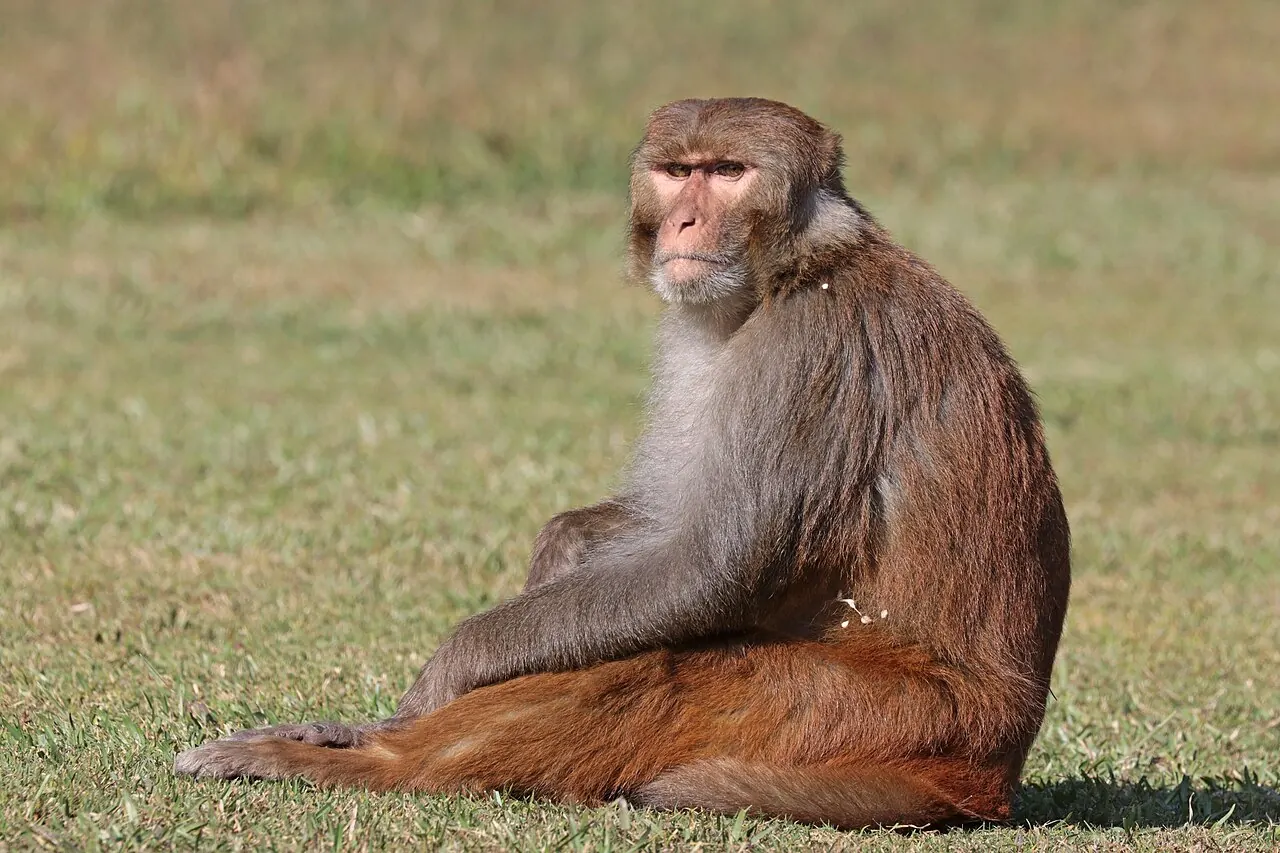
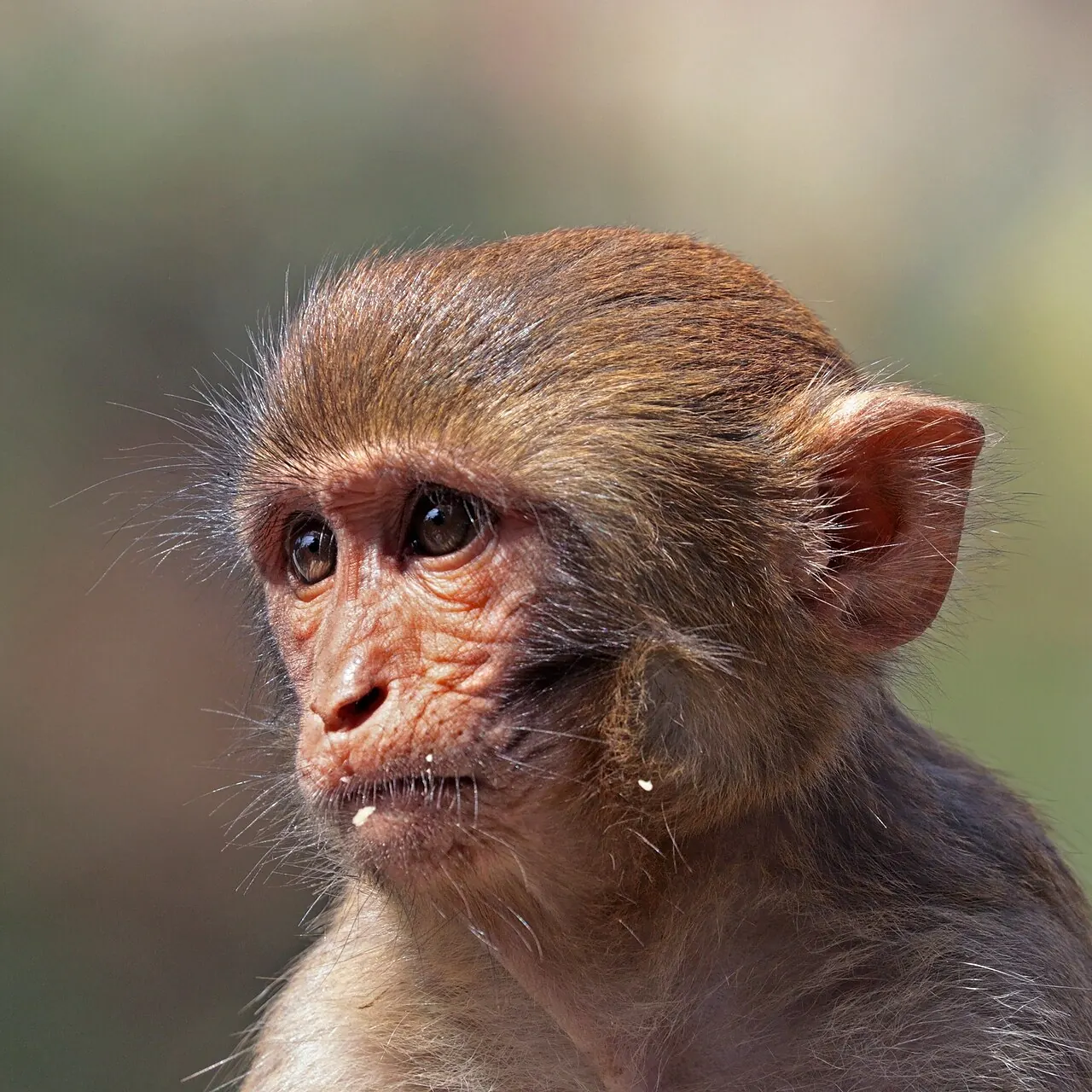
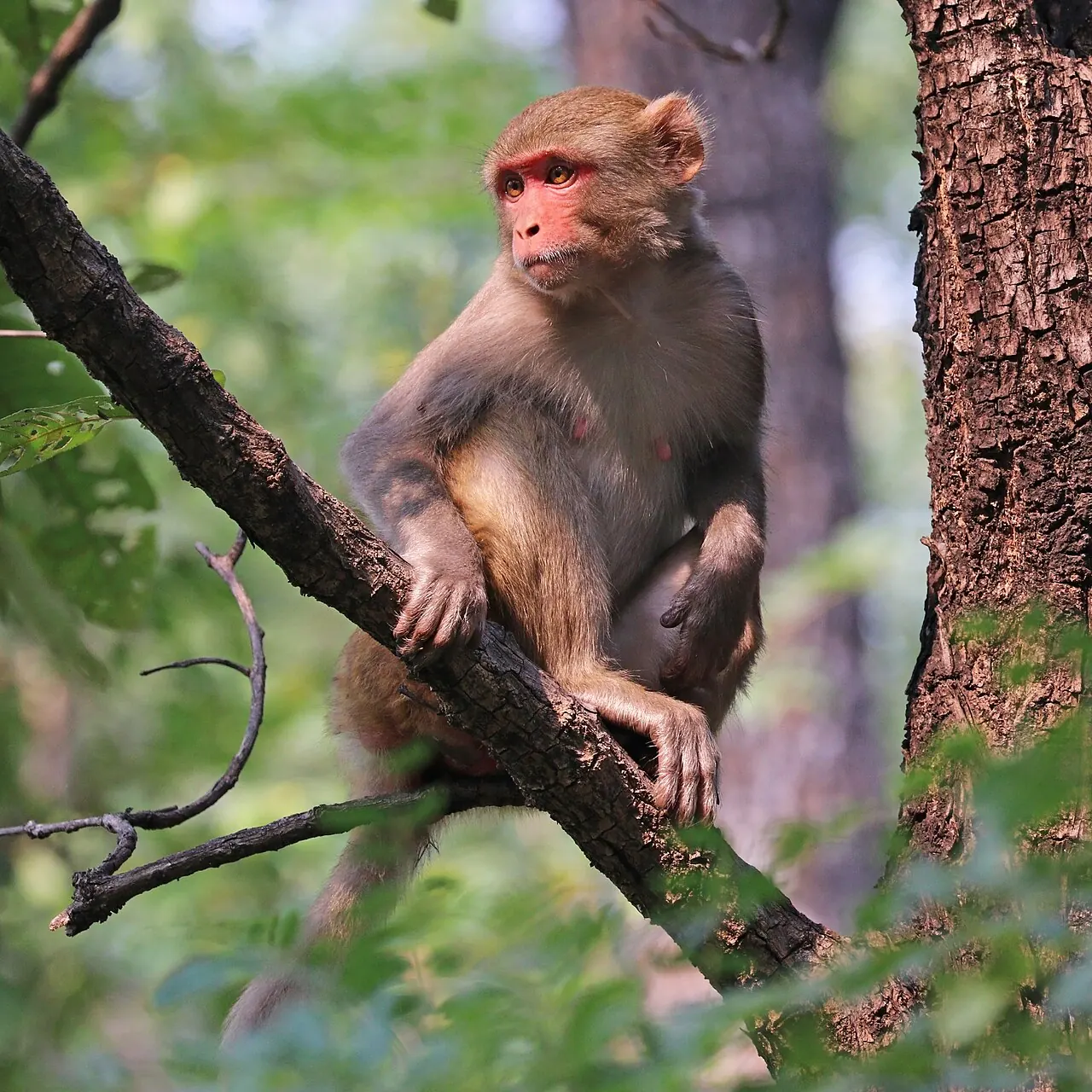
Photos are from Wikimedia Commons, used under the free licences shown. They have been resized, and cropped where they appear in link previews.
You will not need to look hard: in northern India and Nepal they sit on walls, roofs and temple steps. Keep food out of sight.
Do not feed wild monkeys. Fed monkeys become bold and get into trouble, and it is the monkeys that suffer for it.
Animals from other parts of the world live on their own pages: change area.
,_male,_Gokarna.jpg)
_juvenile_head_Kathmandu.jpg)
_female.jpg)