Living on top of the world
Yaks live higher than almost any other large mammal, up to 6,000 metres.
Asian mountains
Bos mutus
A huge, shaggy, dark-brown ox with a hump, long curved horns and a skirt of hair almost to the ground.
Plods after you, head low. Move your pointer and see.
Good to know
Yaks live higher than almost any other large mammal, up to 6,000 metres.
Their lungs and heart are far bigger than a cow's, to get enough oxygen from thin air.
A woolly undercoat and long outer hair keep it warm at minus 40 degrees.
A yak begins to suffer from heat above about 15 degrees.
Yaks grunt. The tame yak's Latin name means grunting ox.
Tame yaks give Tibetan people milk, butter, wool, transport and even fuel: dried dung for the fire.
The real thing
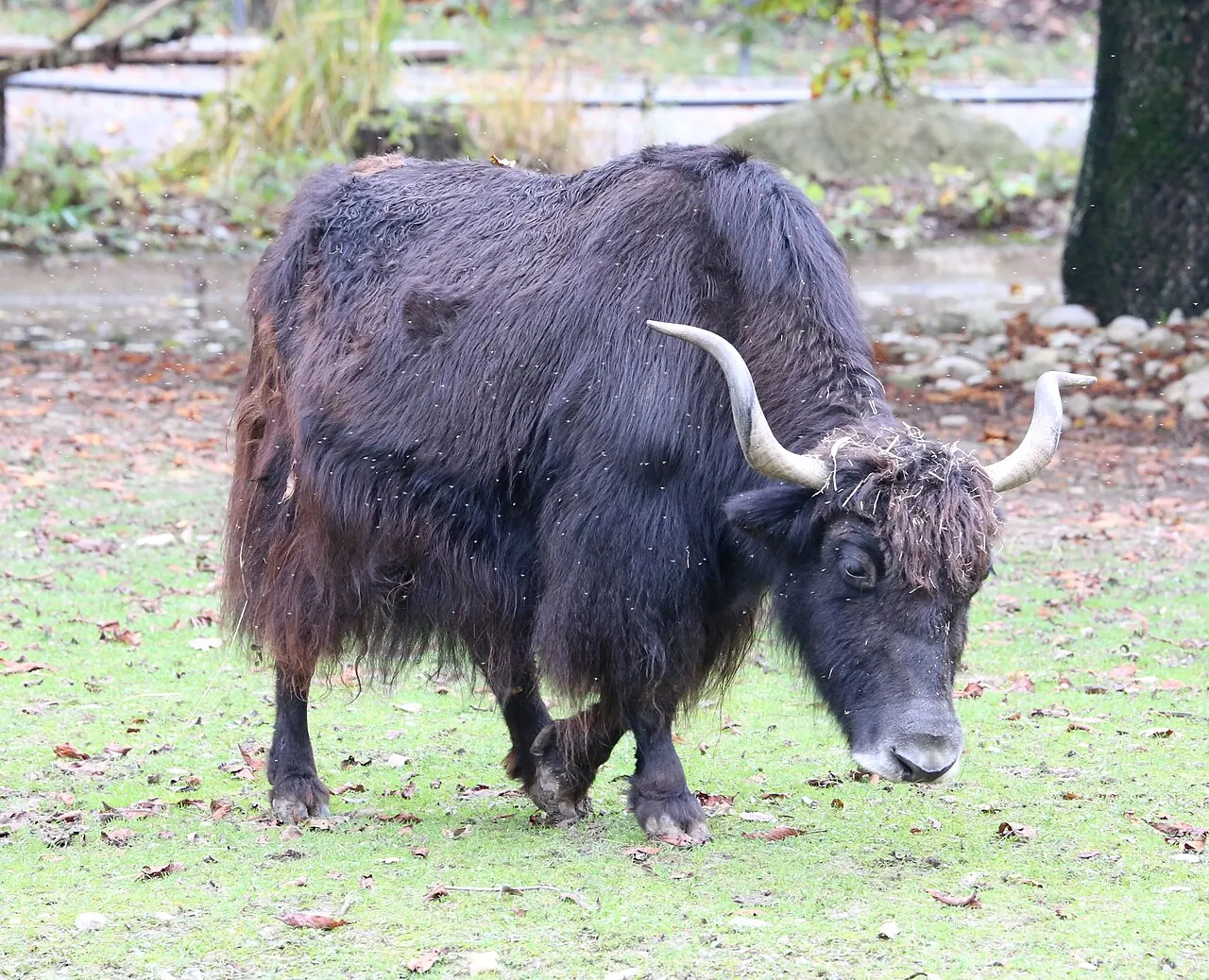
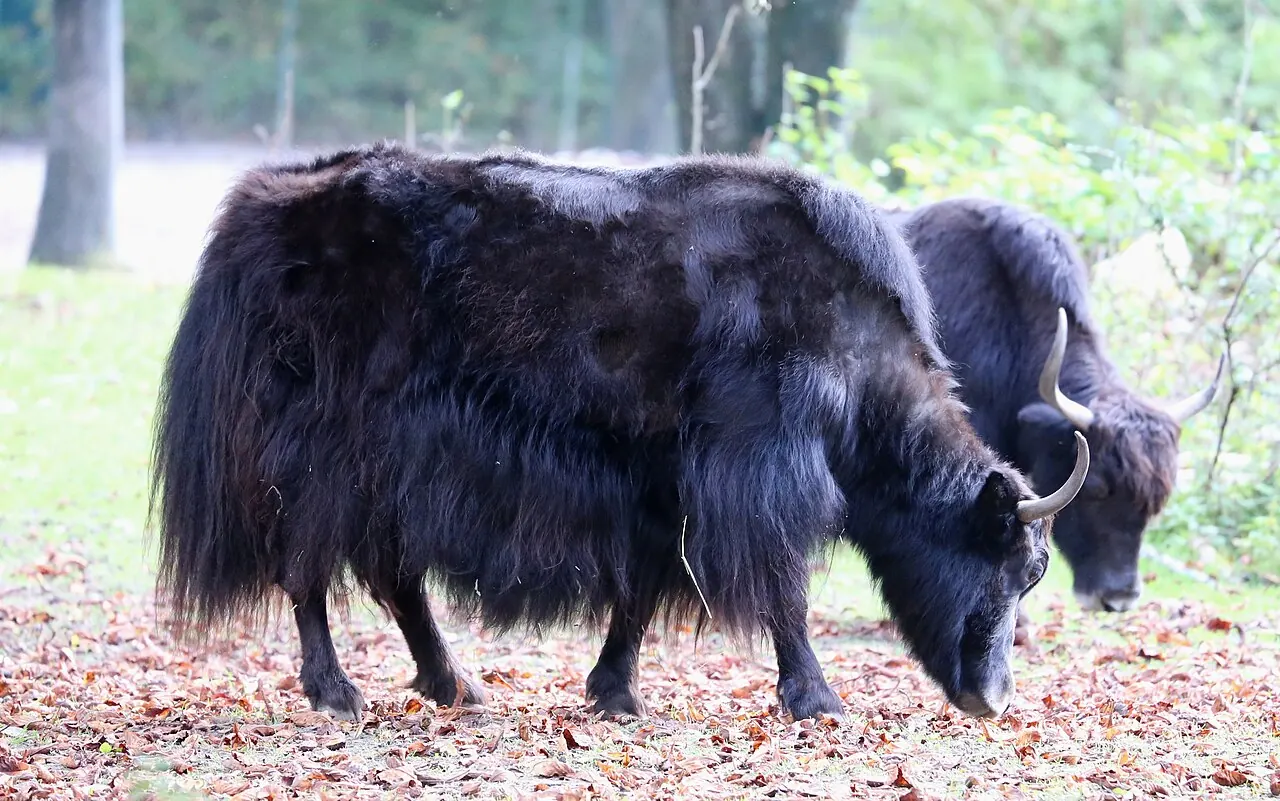
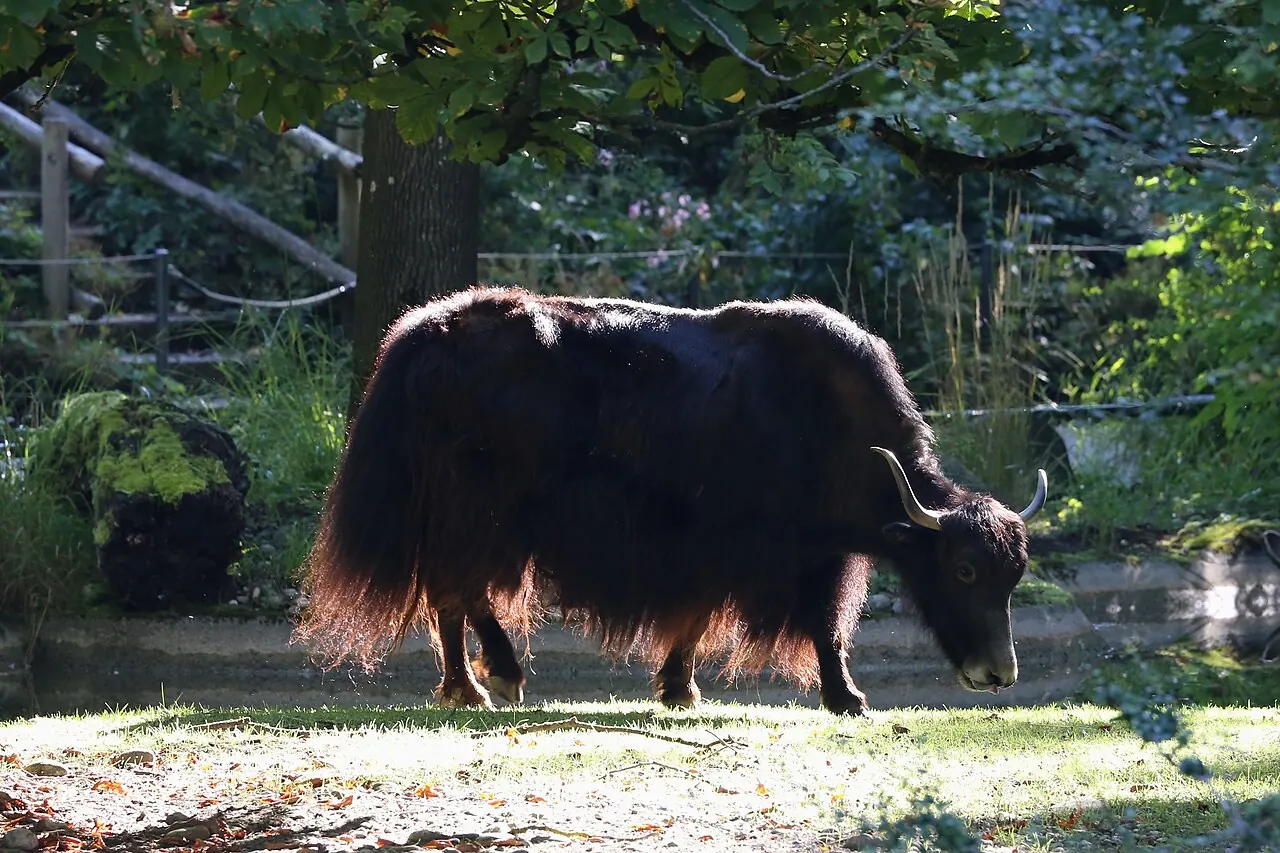
Photos are from Wikimedia Commons, used under the free licences shown. They have been resized, and cropped where they appear in link previews.
Tame yaks are everywhere in Tibet, Nepal and Bhutan. Wild ones are bigger, darker and much rarer, on remote parts of the plateau.
Wild yaks are vulnerable. Large protected areas on the Tibetan plateau, such as Chang Tang, are what keep them going.
Keep going
Animals from other parts of the world live on their own pages: change area.


