Why grizzly?
The pale tips to its brown hairs give it a frosted, grizzled look.
Northern forest
Ursus arctos horribilis
A big brown bear with a hump over its shoulders, a dished face and pale-tipped fur.
Lumbers after you, and can gallop. Move your pointer and see.
Good to know
The pale tips to its brown hairs give it a frosted, grizzled look.
The hump on its shoulders is muscle, which powers its front legs for digging.
It spends five to seven months in a den without eating or drinking, living on its fat.
For all its bulk, a grizzly can run at 35 miles an hour.
Its sense of smell is thought to be many times better than a bloodhound's.
Roots, berries, moths, nuts and salmon: a grizzly eats whatever is in season.
The real thing
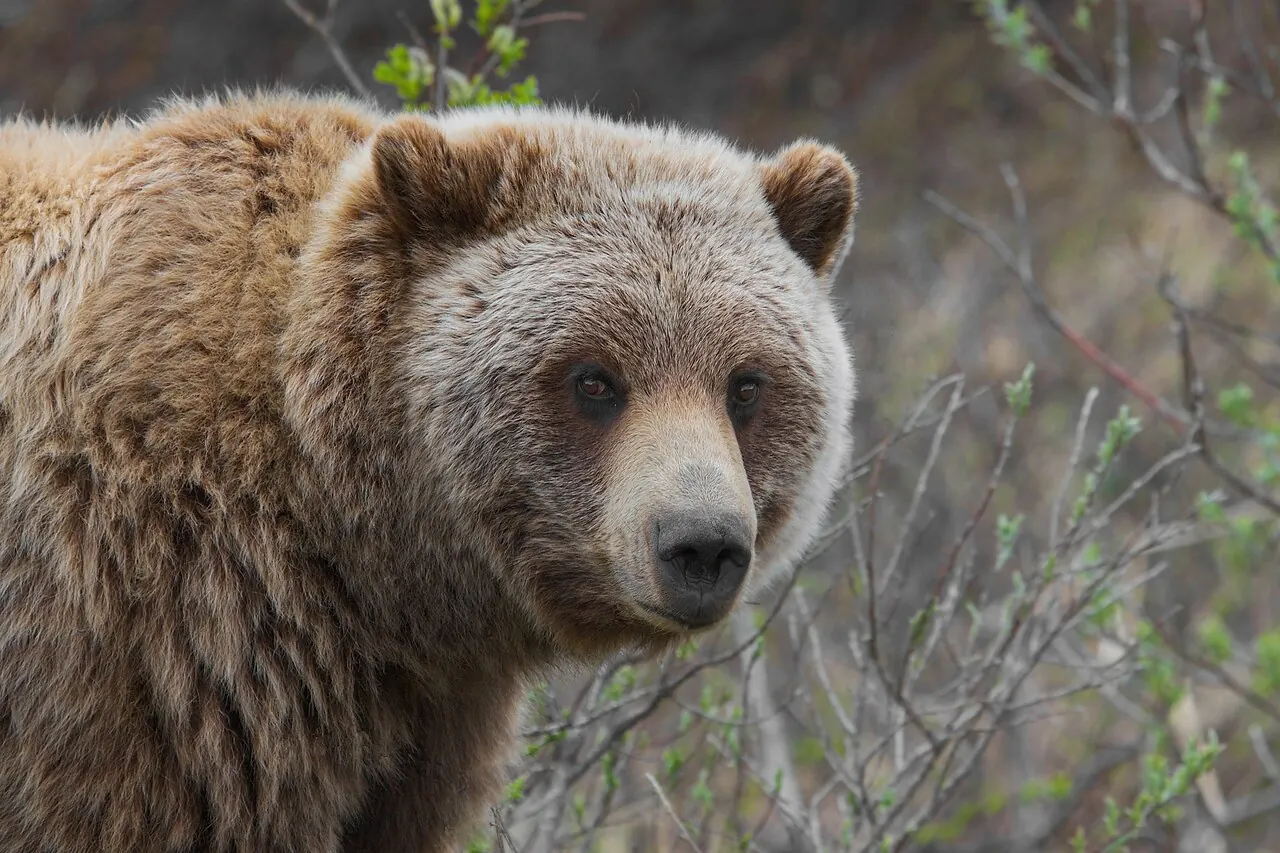
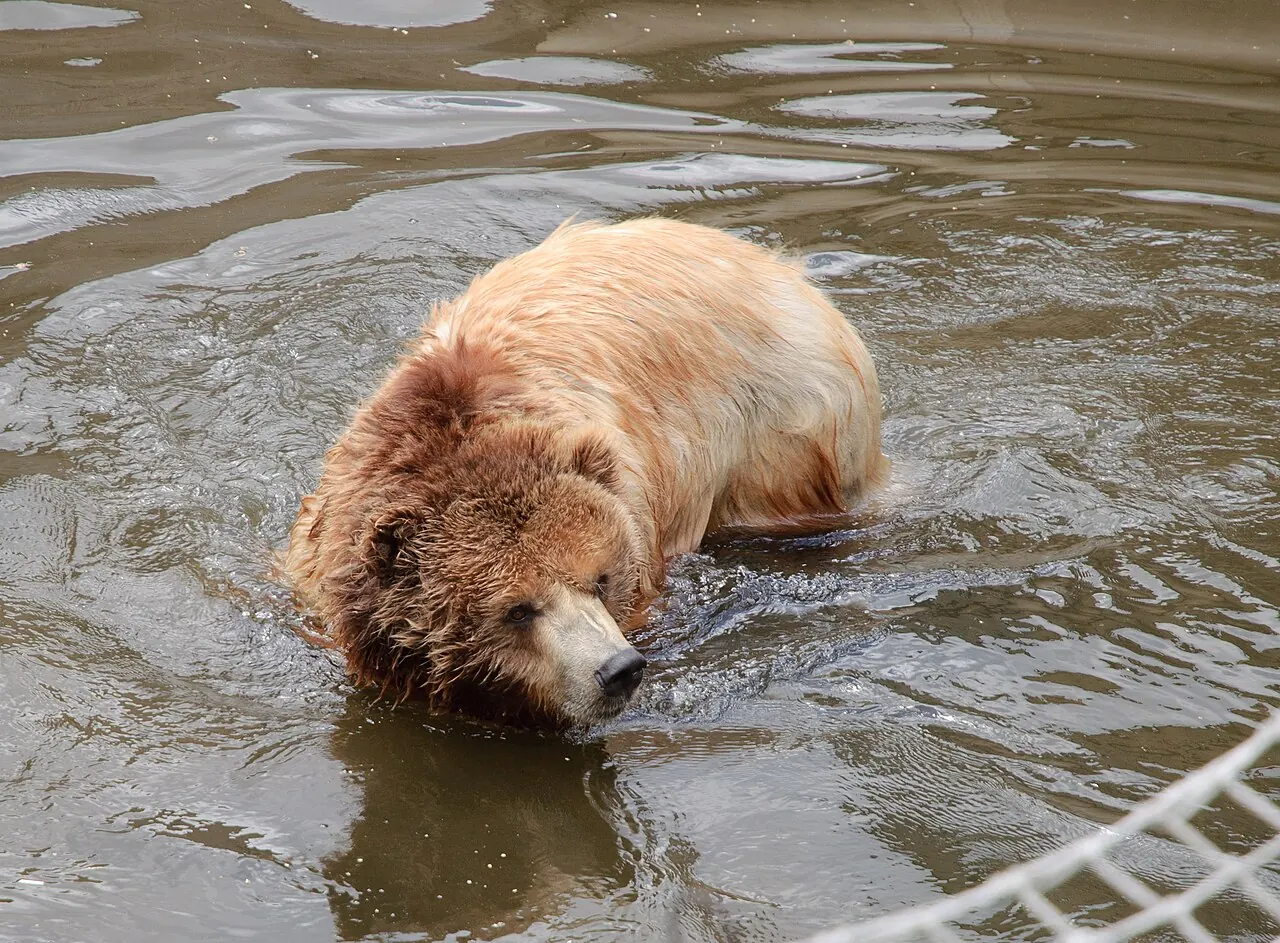
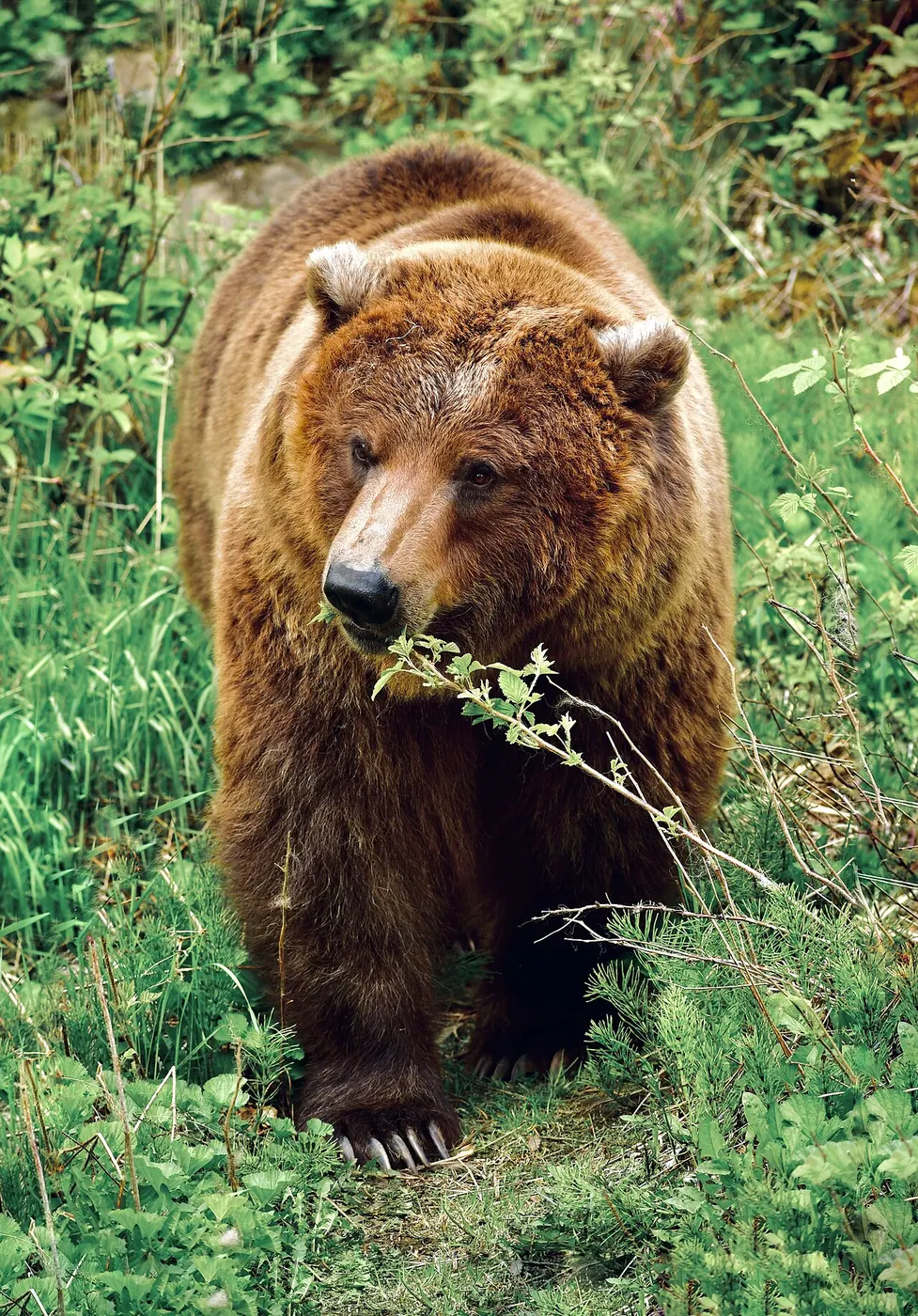
Photos are from Wikimedia Commons, used under the free licences shown. They have been resized, and cropped where they appear in link previews.
In Yellowstone, scan the open hillsides at dawn and dusk with binoculars. In Alaska, bears gather at salmon rivers in July.
In bear country, people keep food locked away so that bears never learn to raid camps. A bear that gets used to human food rarely survives.
Keep going
Animals from other parts of the world live on their own pages: change area.
.jpg)

