The bandit mask
The black mask may cut down glare and help it to see at night.
Northern forest
Procyon lotor
A grey, cat-sized animal with a black mask across its eyes and a bushy, ringed tail.
Scurries after you, stopping to feel about. Move your pointer and see.
Good to know
The black mask may cut down glare and help it to see at night.
Its front paws are almost like hands. They can open jars, latches, bins and doors.
A raccoon feels for food under water with its paws, which are even more sensitive when wet.
It looks as though it washes its food. It is really feeling it carefully.
Raccoons can remember how to solve a puzzle three years later.
Raccoons do very well in towns, where there are more of them than in the countryside.
The real thing
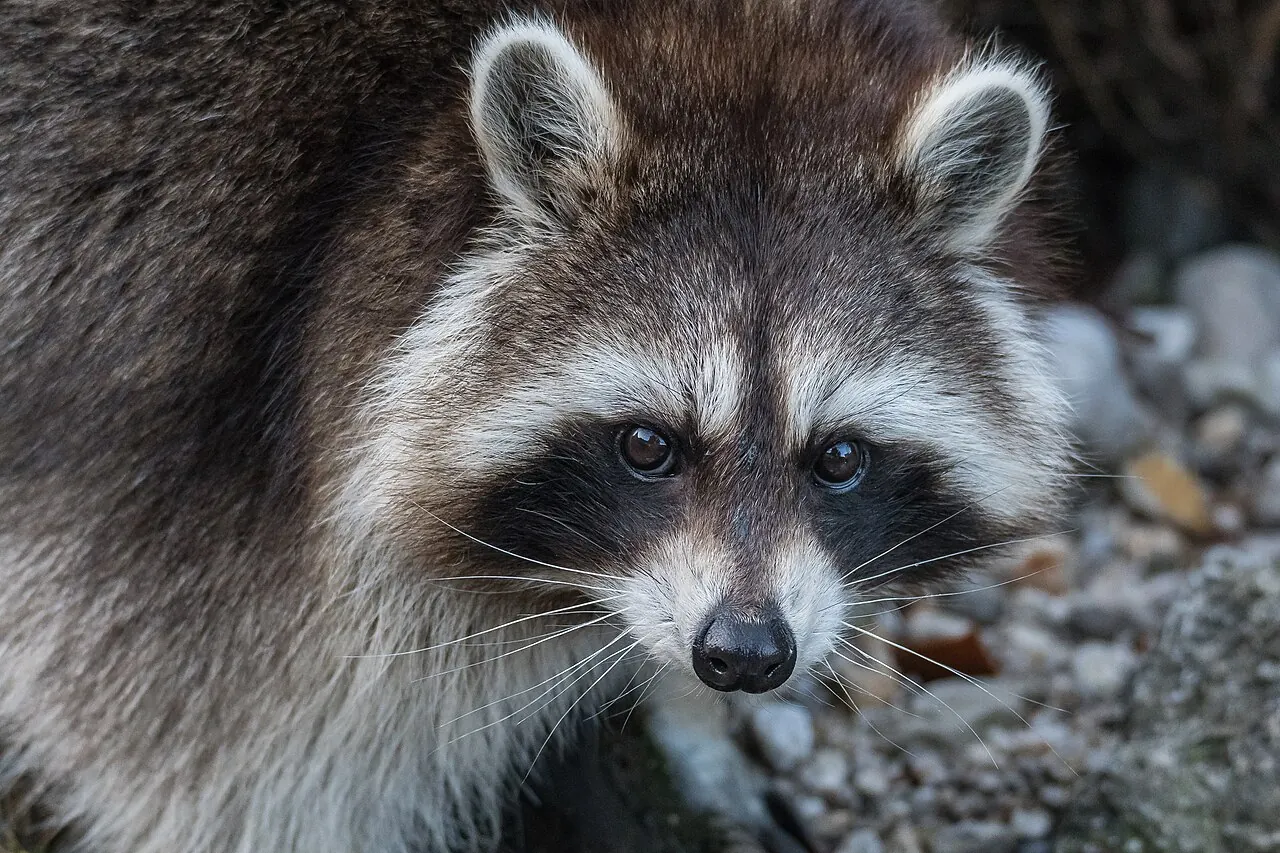
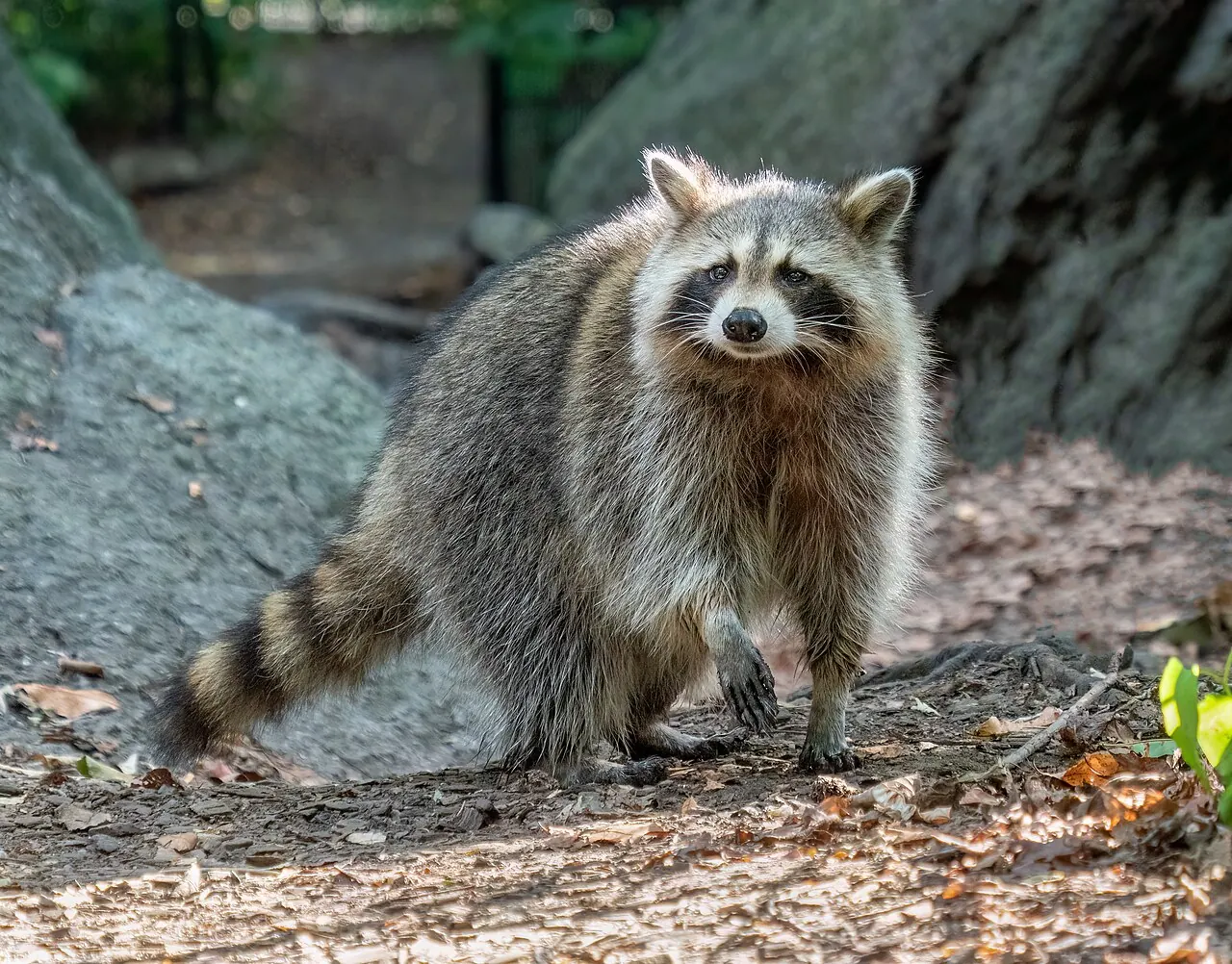
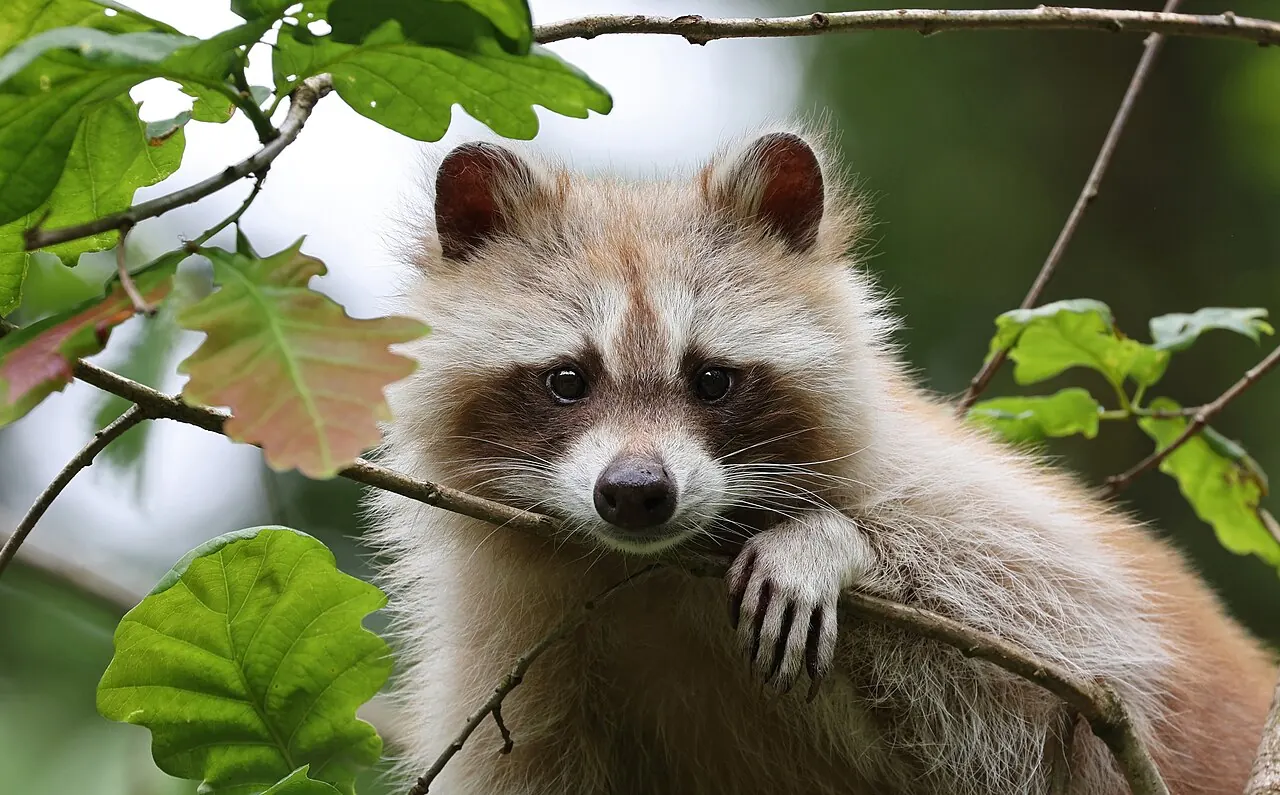
Photos are from Wikimedia Commons, used under the free licences shown. They have been resized, and cropped where they appear in link previews.
Raccoons come out at night. Look along streams and round bins, and for hand-shaped prints in mud.
In North America, people keep bins shut and pet food indoors so raccoons stay wild. Raccoons kept as pets in Europe have escaped and become a pest.
Keep going
Animals from other parts of the world live on their own pages: change area.

.jpg)
.jpg)