Skip to the content
Seashore
Shore crab
Carcinus maenas
The crab you're most likely to meet on a British beach: dark green, quick, and always walking sideways.
- Size
- Shell up to 8cm across
- Look for it
- All year round
- Where
- Rock pools, under seaweed and stones, harbours and estuaries
My spotter's list
Scuttles sideways after you and raises its claws if you rush it. Move your pointer and see.
Good to know
Six things about the shore crab
WalkingSideways is quicker
A crab's legs bend sideways, like our knees bend forwards, so scuttling sideways is the fastest way for it to move.
ShellGrowing out of its shell
A crab's shell can't grow, so it climbs out of the old one and puffs up a new, bigger one. For a few days the new shell is soft.
ColourNot always green
Young shore crabs can be green, brown, orange or patterned with white. Older ones are often redder underneath.
TeethCount the points
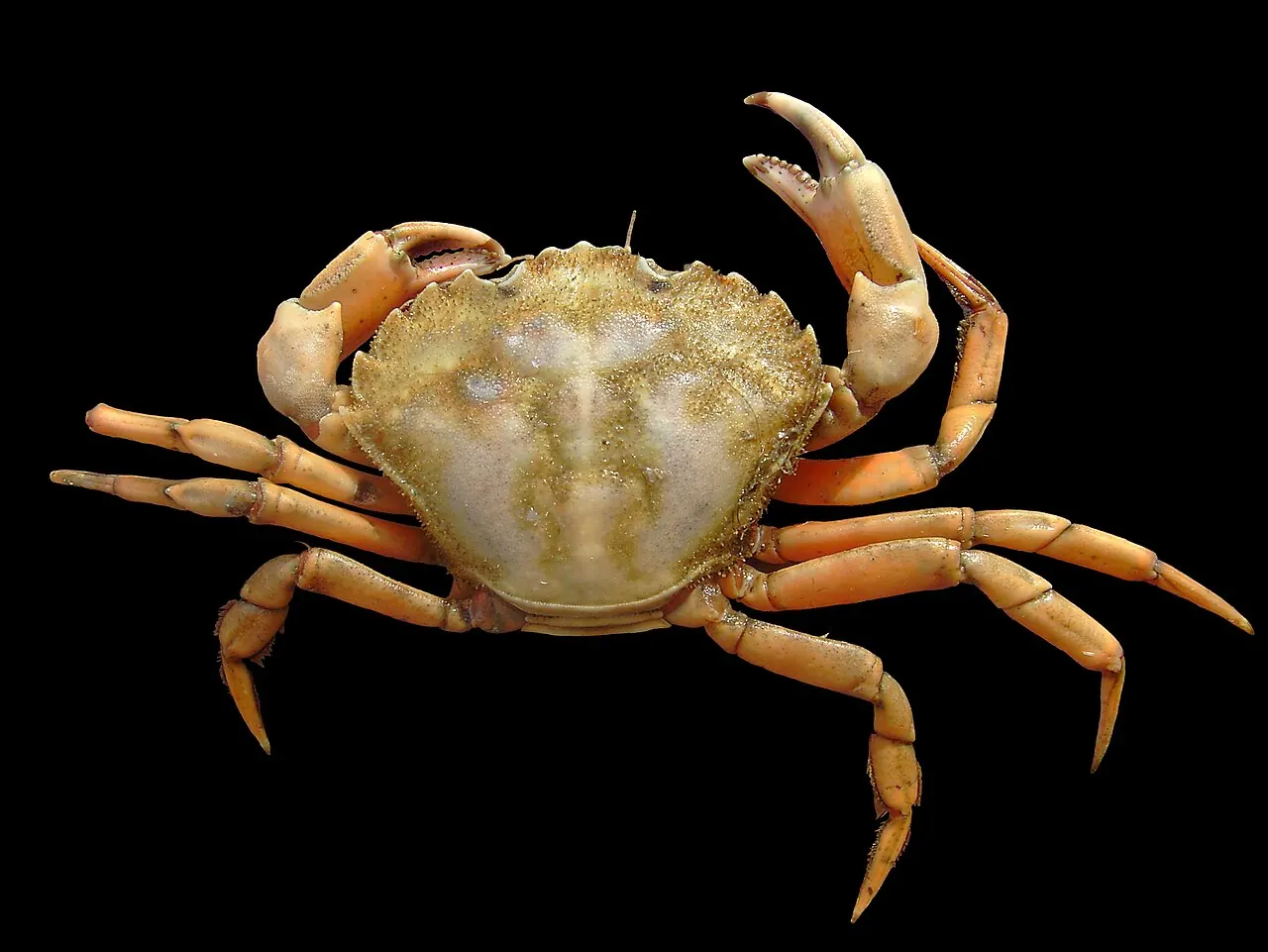
Look at the front edge of the shell: a shore crab has five points on each side of its eyes and three between them.
FoodEats almost anything
Shore crabs eat worms, shellfish, dead fish and seaweed. That's why they come so readily to crabbing lines.
ClawsA new claw
If a crab loses a leg or a claw, it can grow a new one over its next few moults.
The real thing
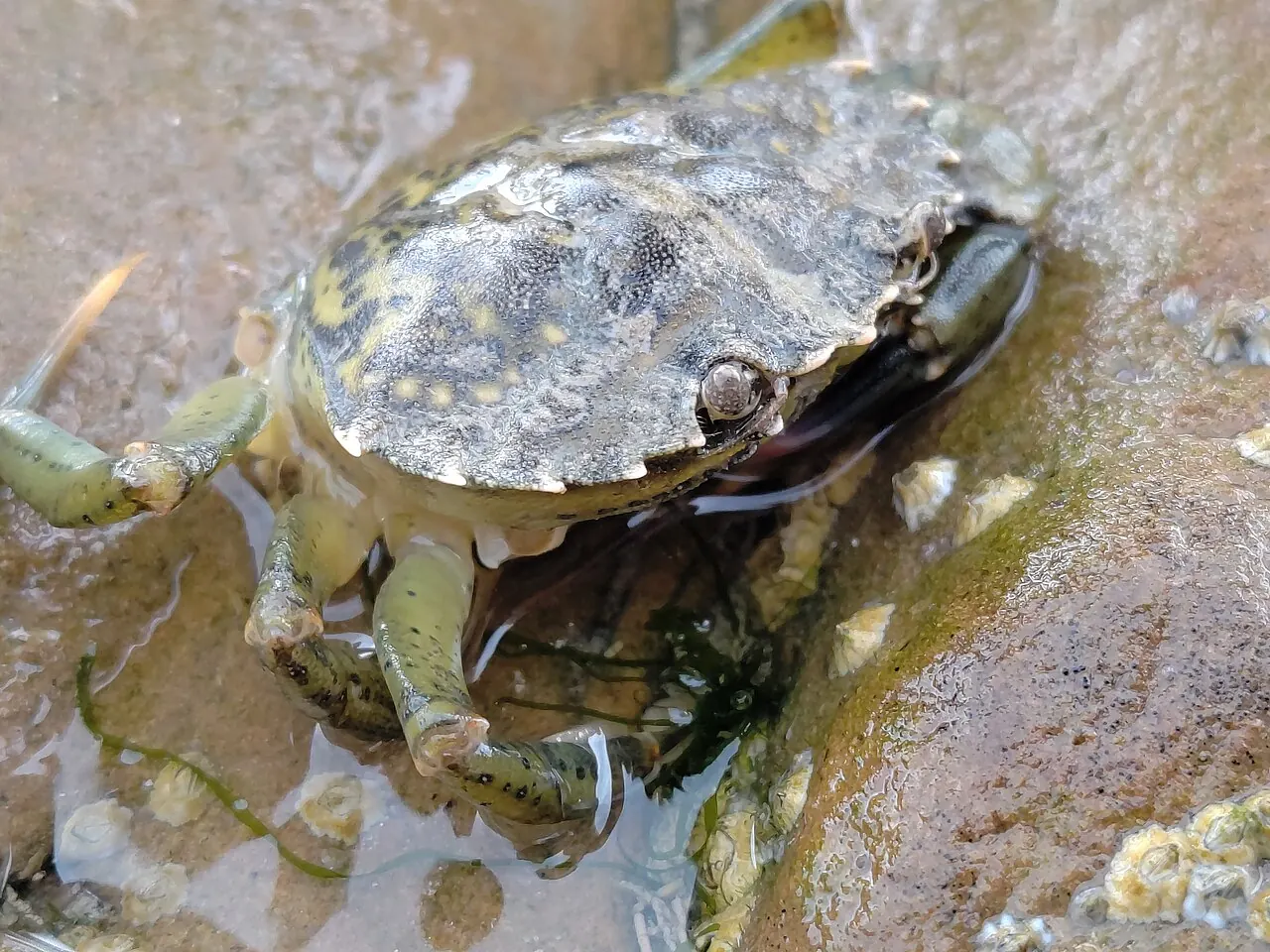
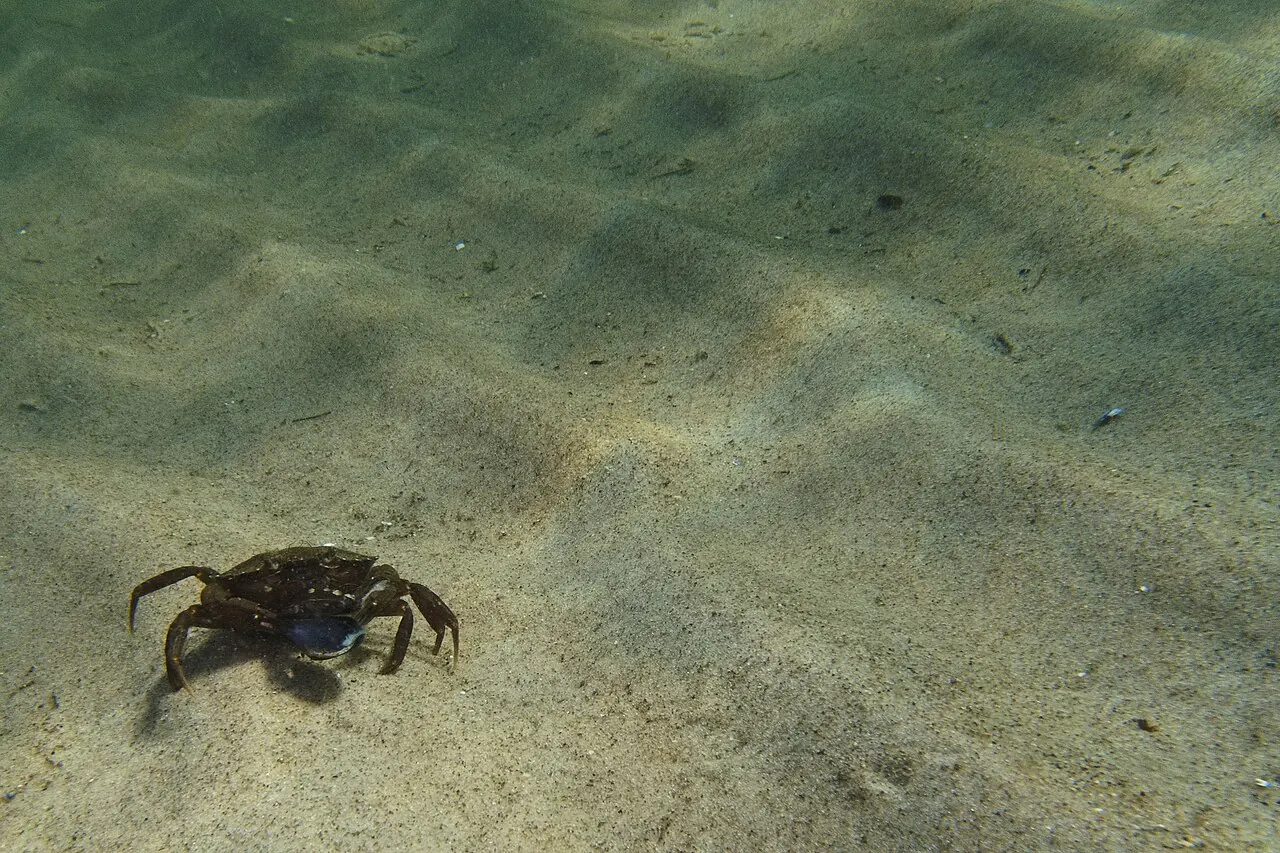
Photos of the shore crab
Out and aboutHow to spot one
At low tide, gently lift seaweed at the edge of a rock pool, or look under stones in the mud of a harbour. Watch for a sideways dash.
Lend a handHow to help
Put stones back exactly as you found them, and if you go crabbing, keep the bucket shaded with only a few crabs in it, and let them go quickly.
Following youLadybird
Who should follow you?
These live somewhere else: choosing one takes you to their page.
Bees and hoverflies
Butterflies and moths
Dragonflies and damselflies
Beetles, hoppers and ants
Not insects at all
Snails and spiders aren't insects: a snail is a mollusc, and spiders have eight legs.
These live somewhere else: choosing one takes you to their page.
Garden birds
Pond animals live on the Pond page: choosing one takes you there.
Pond life
These live somewhere else: choosing one takes you to their page.
Night garden
Rock pool life
These live somewhere else: choosing one takes you to their page.
Woodland animals
These live somewhere else: choosing one takes you to their page.
Under a log
These live somewhere else: choosing one takes you to their page.
Meadow life
River animals live on the River page: choosing one takes you there.
River life
These live somewhere else: choosing one takes you to their page.
Mountain and moor
These live somewhere else: choosing one takes you to their page.
Farmland
These live somewhere else: choosing one takes you to their page.
Town and city

.jpg)
.jpg)