Skip to the content
When to look
JFMAMJJASOND
Moon jellyfish
Good to know
Six things about the moon jellyfish
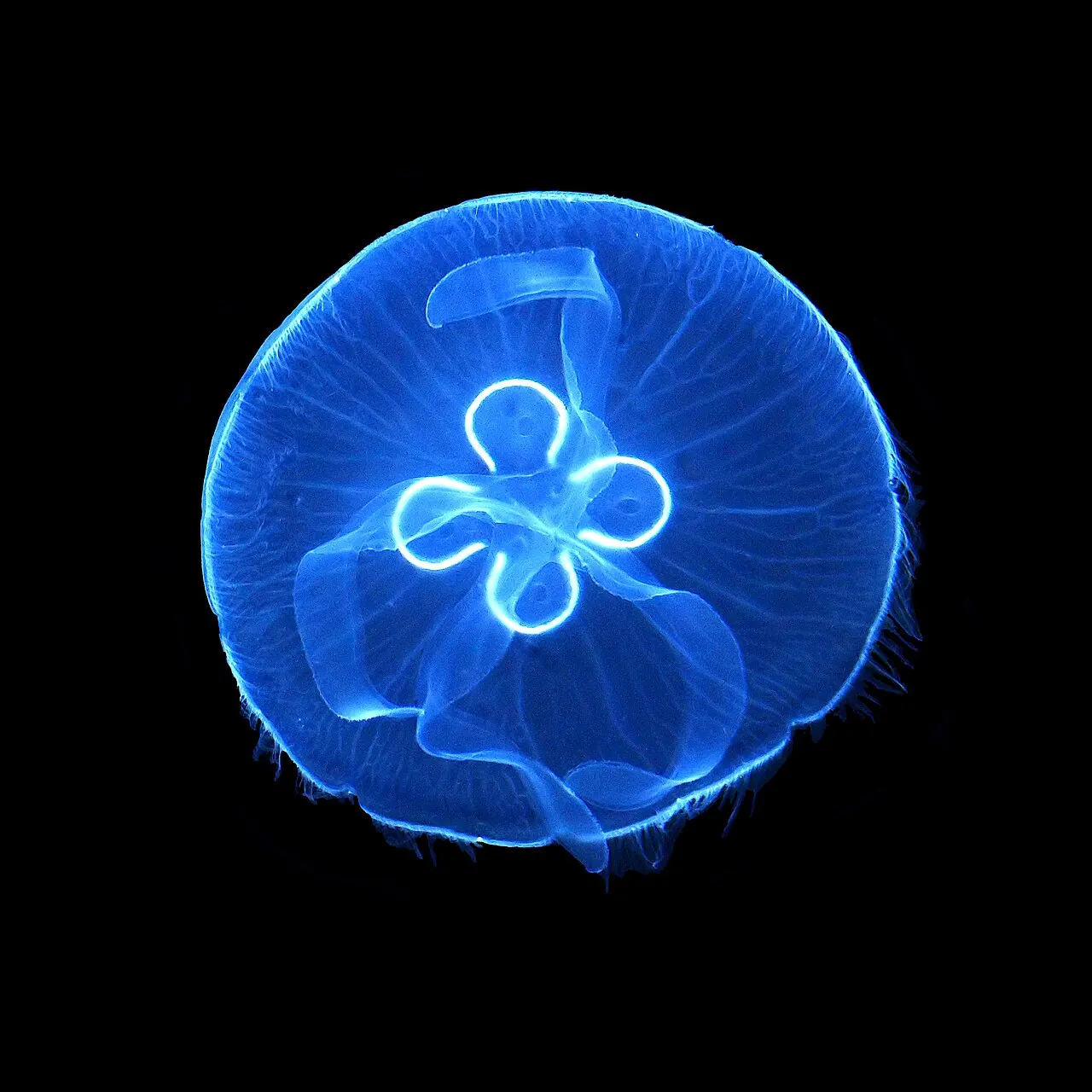
RingsFour rings
The four rings you can see through the top are where it makes its eggs. They make a moon jellyfish easy to recognise.
WaterMostly water
A jellyfish is about 95 per cent water. It has no brain, no heart and no bones.
StingA very mild sting
Its sting is too weak for most people to feel, but it's still best not to touch any jellyfish, even one on the beach.
MovingPulsing along
It swims by squeezing its bell, but it mostly goes wherever the tides and currents take it.
FoodA sticky net
Tiny animals stick to the slime on its bell and are passed along to its mouth underneath.
EatenTurtle food
Leatherback turtles visit British seas in summer to eat jellyfish.
The real thing
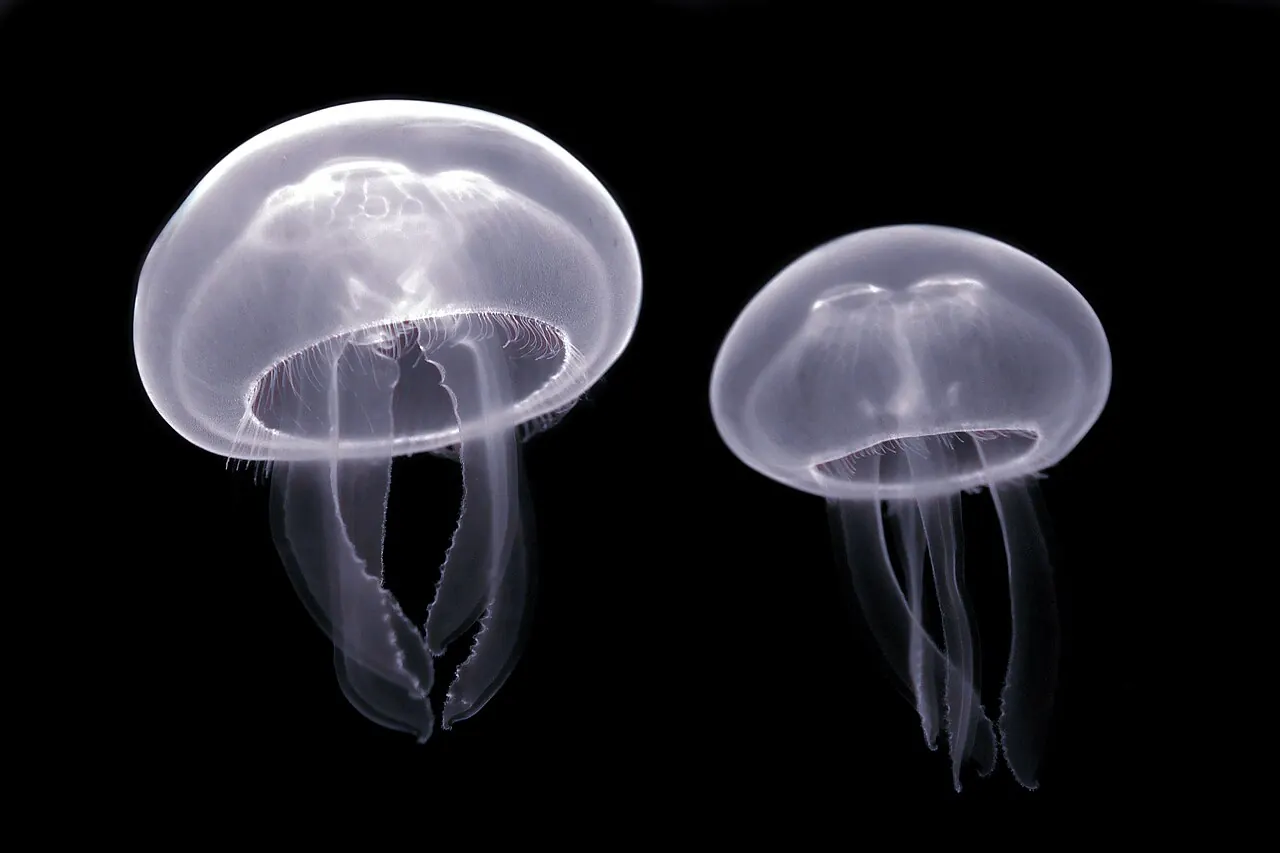
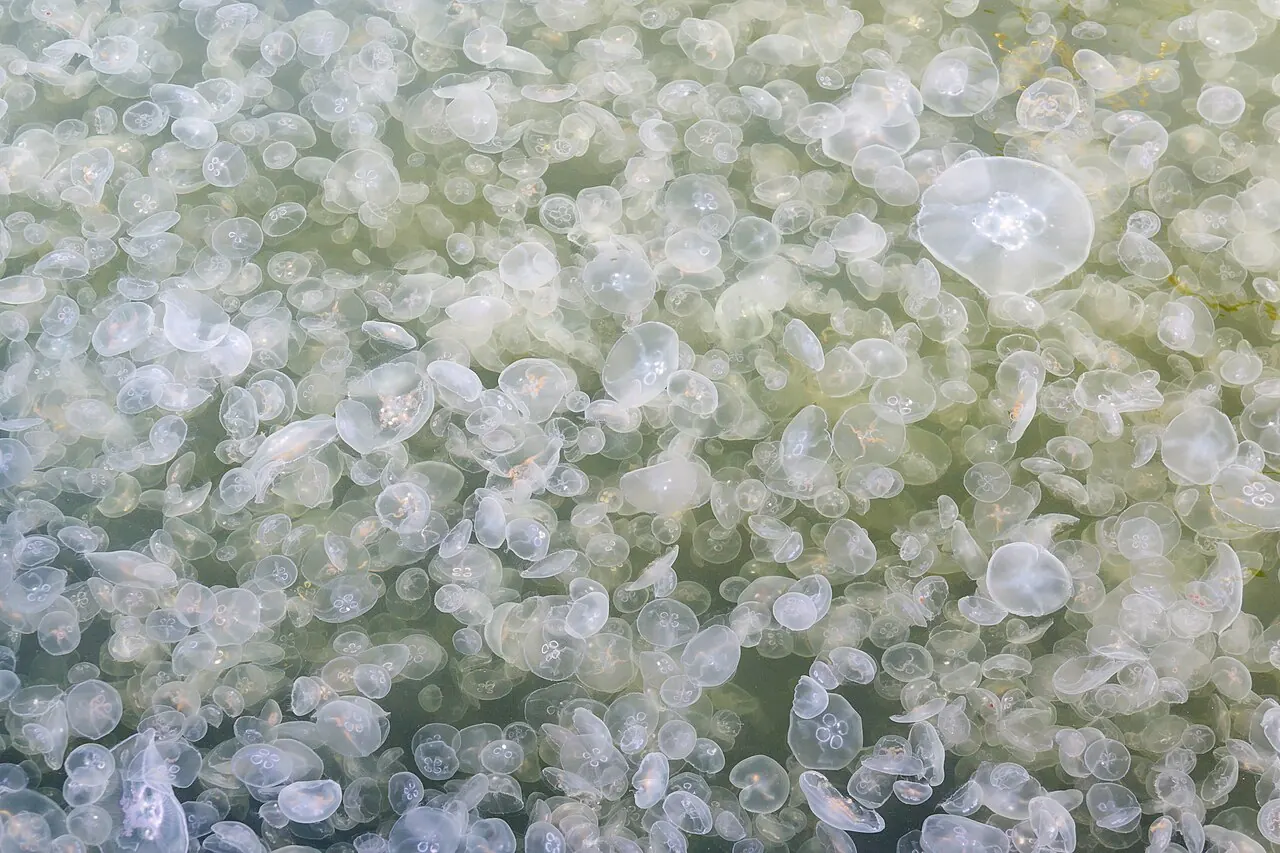
Photos of the moon jellyfish
Out and aboutHow to spot one
Look down from a harbour wall or pier on a calm summer day, or along the tideline after an onshore wind. Look for the four purple rings.
Lend a handHow to help
Never drop balloons or plastic bags: turtles and seabirds mistake them for jellyfish. Look, but do not touch.
Following youLadybird
Who should follow you?
These live somewhere else: choosing one takes you to their page.
Bees and hoverflies
Butterflies and moths
Dragonflies and damselflies
Beetles, hoppers and ants
Not insects at all
Snails and spiders aren't insects: a snail is a mollusc, and spiders have eight legs.
These live somewhere else: choosing one takes you to their page.
Garden birds
Pond animals live on the Pond page: choosing one takes you there.
Pond life
These live somewhere else: choosing one takes you to their page.
Night garden
Rock pool life
These live somewhere else: choosing one takes you to their page.
Woodland animals
These live somewhere else: choosing one takes you to their page.
Under a log
These live somewhere else: choosing one takes you to their page.
Meadow life
River animals live on the River page: choosing one takes you there.
River life
These live somewhere else: choosing one takes you to their page.
Mountain and moor
These live somewhere else: choosing one takes you to their page.
Farmland
These live somewhere else: choosing one takes you to their page.
Town and city
_Luc_Viatour.jpg)

