A camel without a hump
Llamas belong to the camel family, and came from wild guanacos tamed thousands of years ago.
The Andes
Lama glama
A long-necked, woolly relative of the camel, with upright ears. It comes in white, brown, black and patches.
Strides after you, ears up. Move your pointer and see.
Good to know
Llamas belong to the camel family, and came from wild guanacos tamed thousands of years ago.
Llamas spit mostly at each other, to settle arguments about food and rank.
The Inca had no wheels or horses. Llamas carried everything along their mountain roads.
Llamas hum to each other, in different tones for different moods.
Farmers use llamas to guard sheep: they chase off foxes and dogs.
Padded feet grip rock and do far less damage to mountain paths than hooves.
The real thing
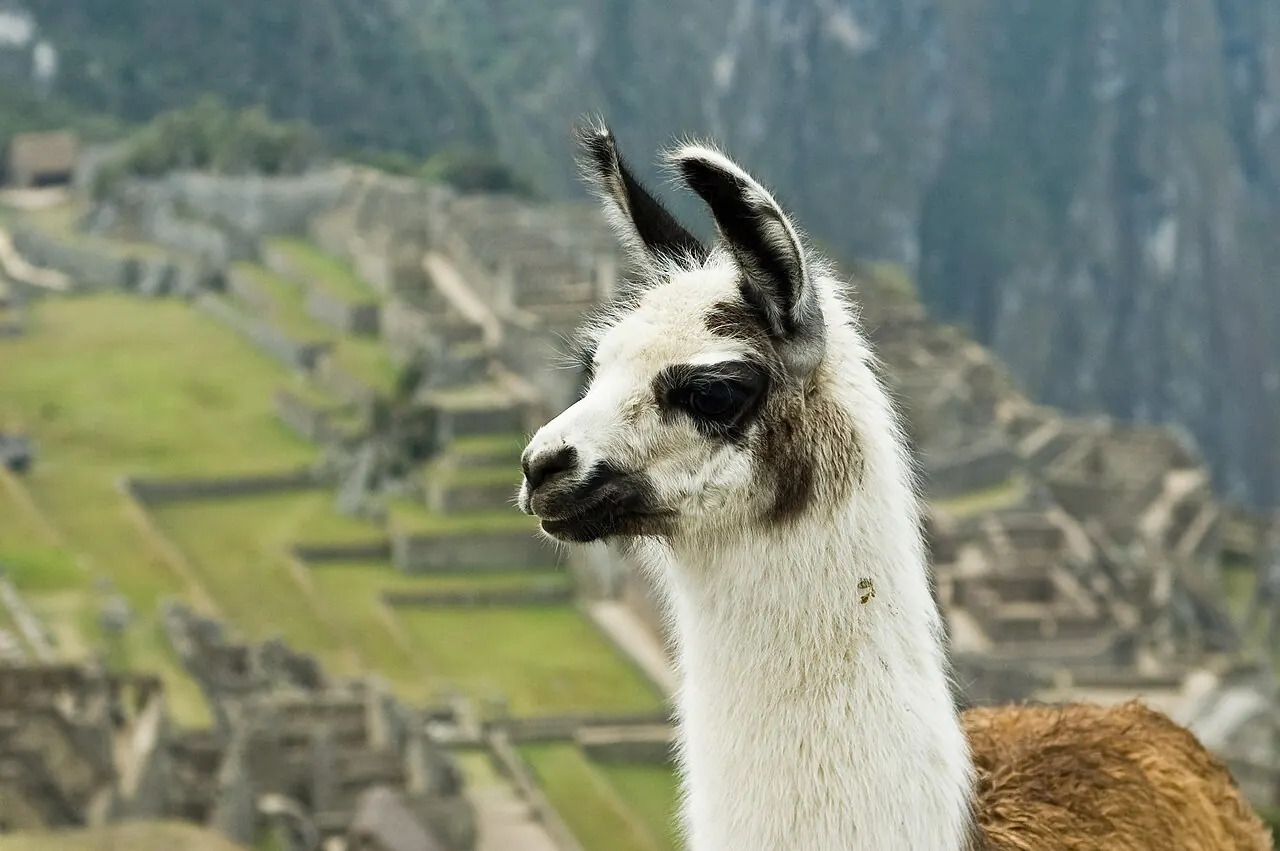
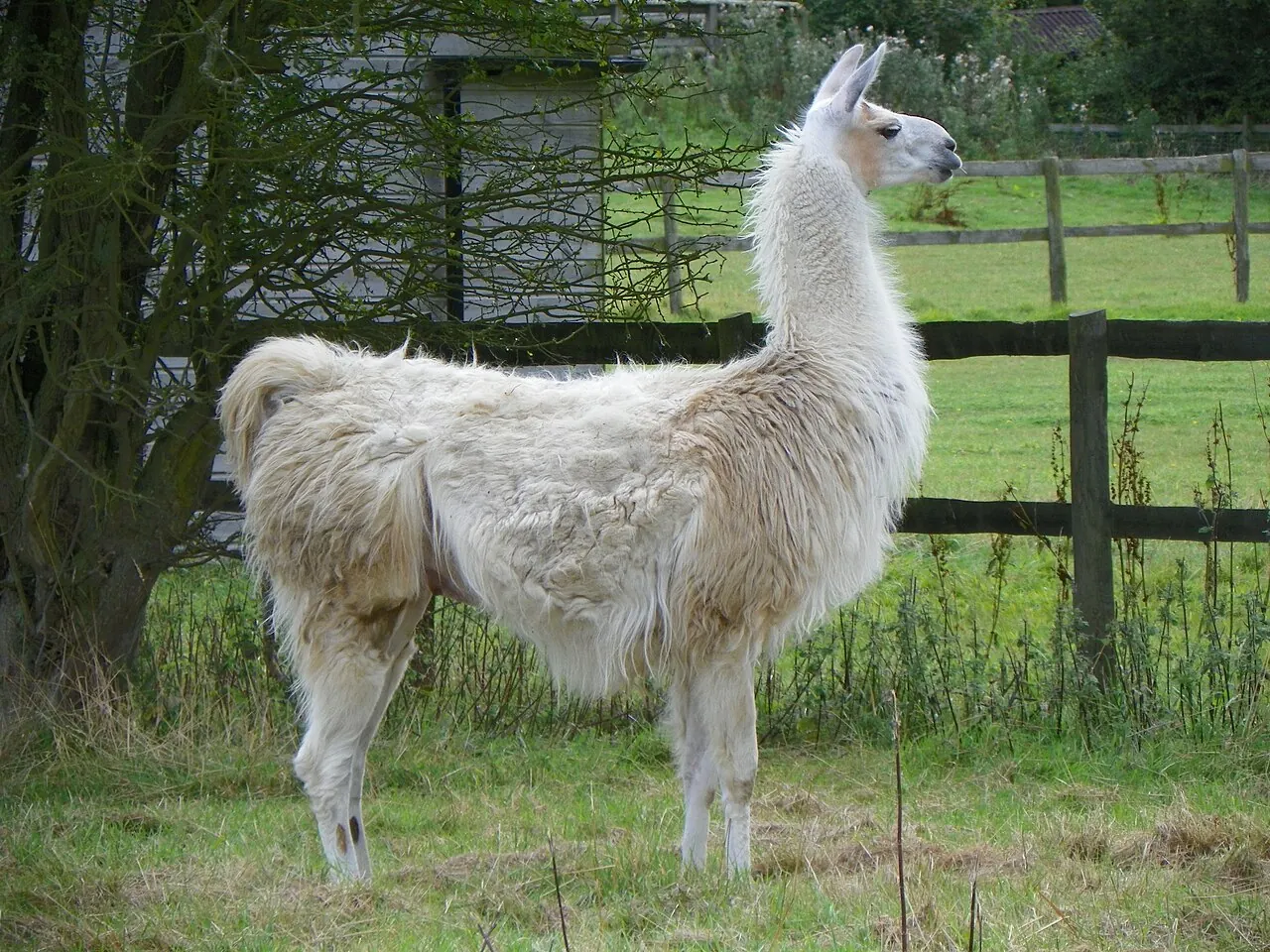
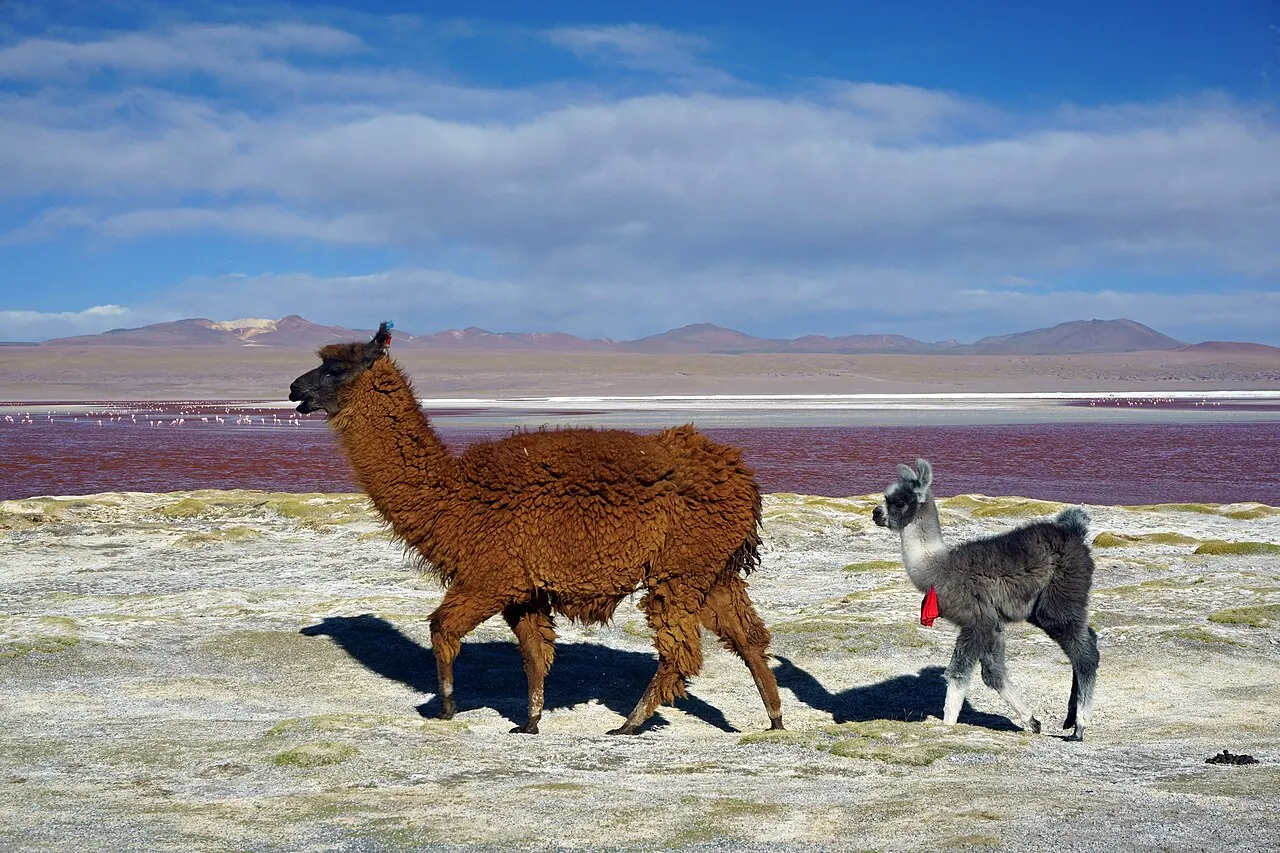
Photos are from Wikimedia Commons, used under the free licences shown. They have been resized, and cropped where they appear in link previews.
Llamas are everywhere in the high Andes of Peru and Bolivia, often wearing coloured ear tassels. Plenty of British farms keep them too.
Llamas are farm animals, and doing fine. Their wild cousin the vicuna was nearly lost, and was saved by letting villages earn money from its wool.
Keep going
Amazon river animals live on the Amazon river page: choosing one takes you there.
Animals from other parts of the world live on their own pages: change area.

_(19692833269).jpg)
