The cat of many names
Puma, cougar, mountain lion, panther and catamount are all the same animal.
The Andes
Puma concolor
A big, plain, sandy-brown cat with a small head and a long, heavy, dark-tipped tail.
Pads after you, and bounds to catch up. Move your pointer and see.
Good to know
Puma, cougar, mountain lion, panther and catamount are all the same animal.
No other wild land mammal in the Americas lives across so much of the two continents.
A puma can leap five metres straight up, and much further along the ground.
Pumas cannot roar. They purr, hiss, chirp and sometimes scream.
The cubs are born with spots and blue eyes, and lose both as they grow.
Pumas avoid people, and can live close to towns without ever being noticed.
The real thing
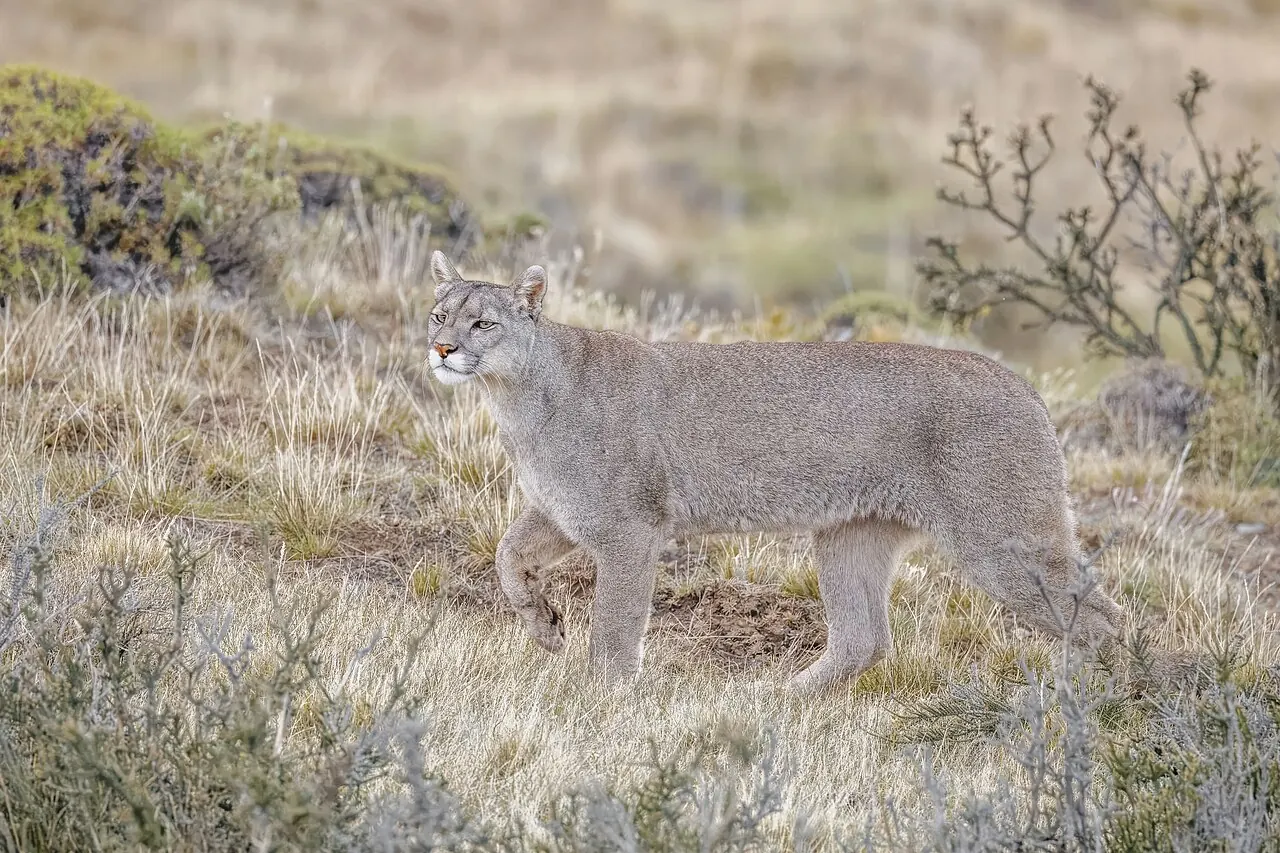
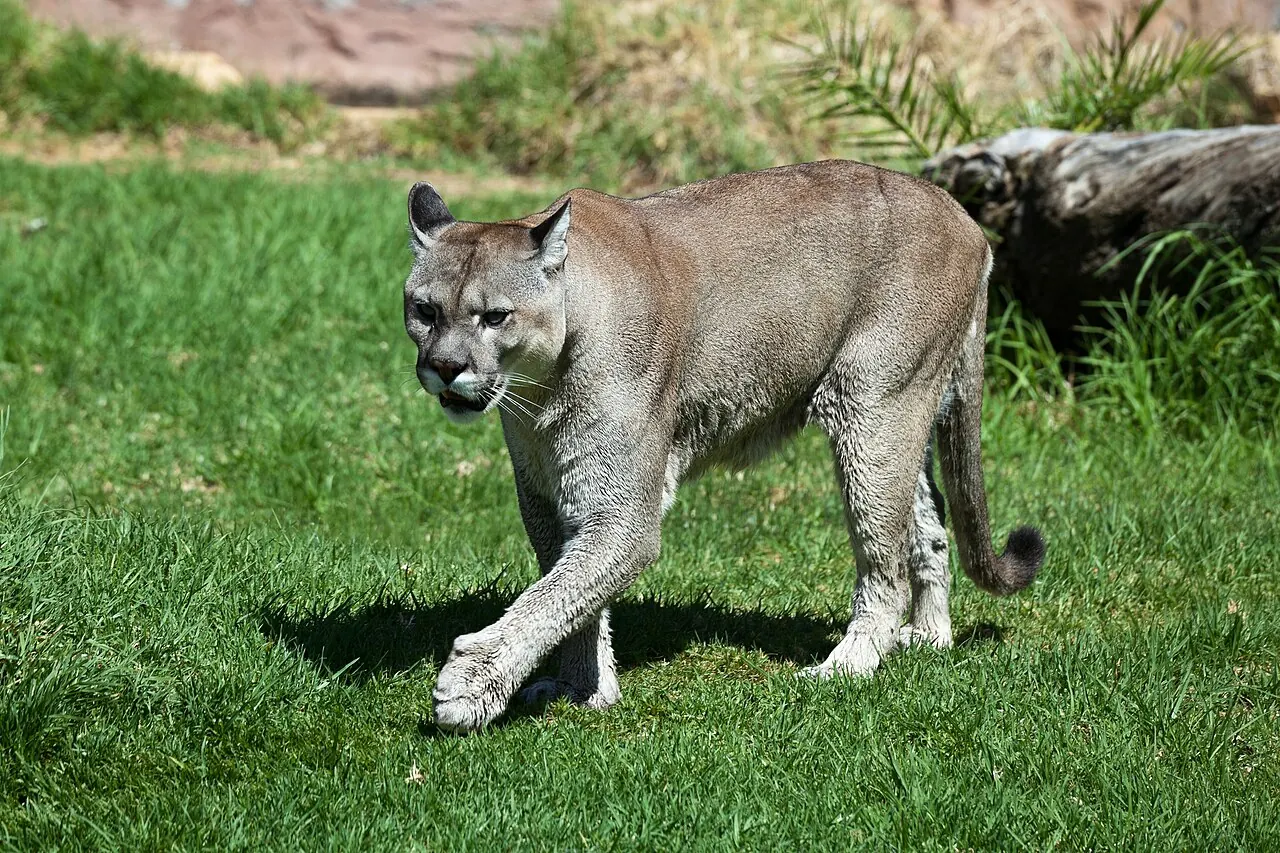
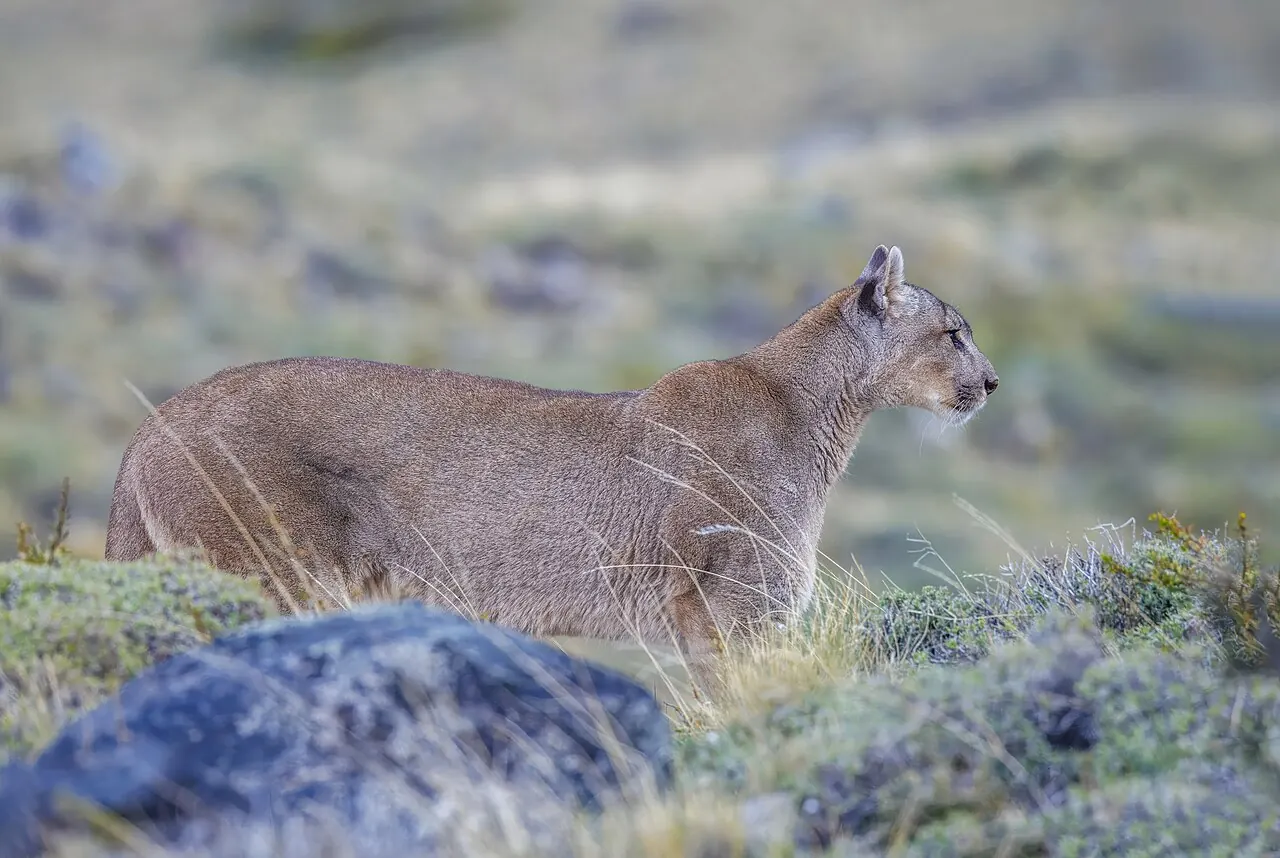
Photos are from Wikimedia Commons, used under the free licences shown. They have been resized, and cropped where they appear in link previews.
Torres del Paine in Chile is the best place in the world to see pumas. Guides watch where the guanacos are staring.
Pumas are killed where they take livestock. Guard dogs and night pens for sheep let ranchers and pumas share the land.
Keep going
Amazon river animals live on the Amazon river page: choosing one takes you there.
Animals from other parts of the world live on their own pages: change area.
_female_Leona_Amarga.jpg)

_female_Leona_Amarga_3.jpg)