Skip to the content
Town
Feral pigeon
Columba livia
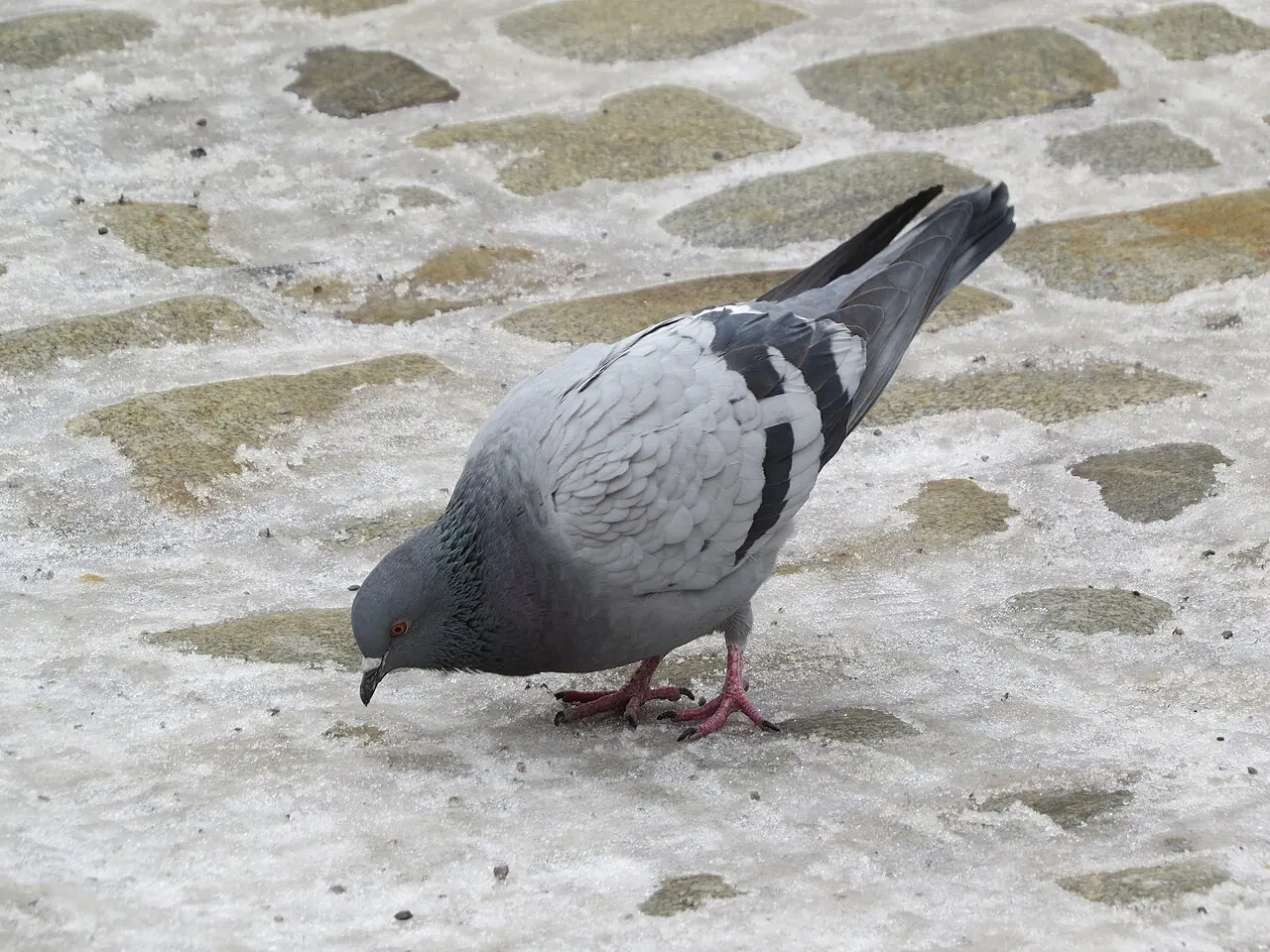
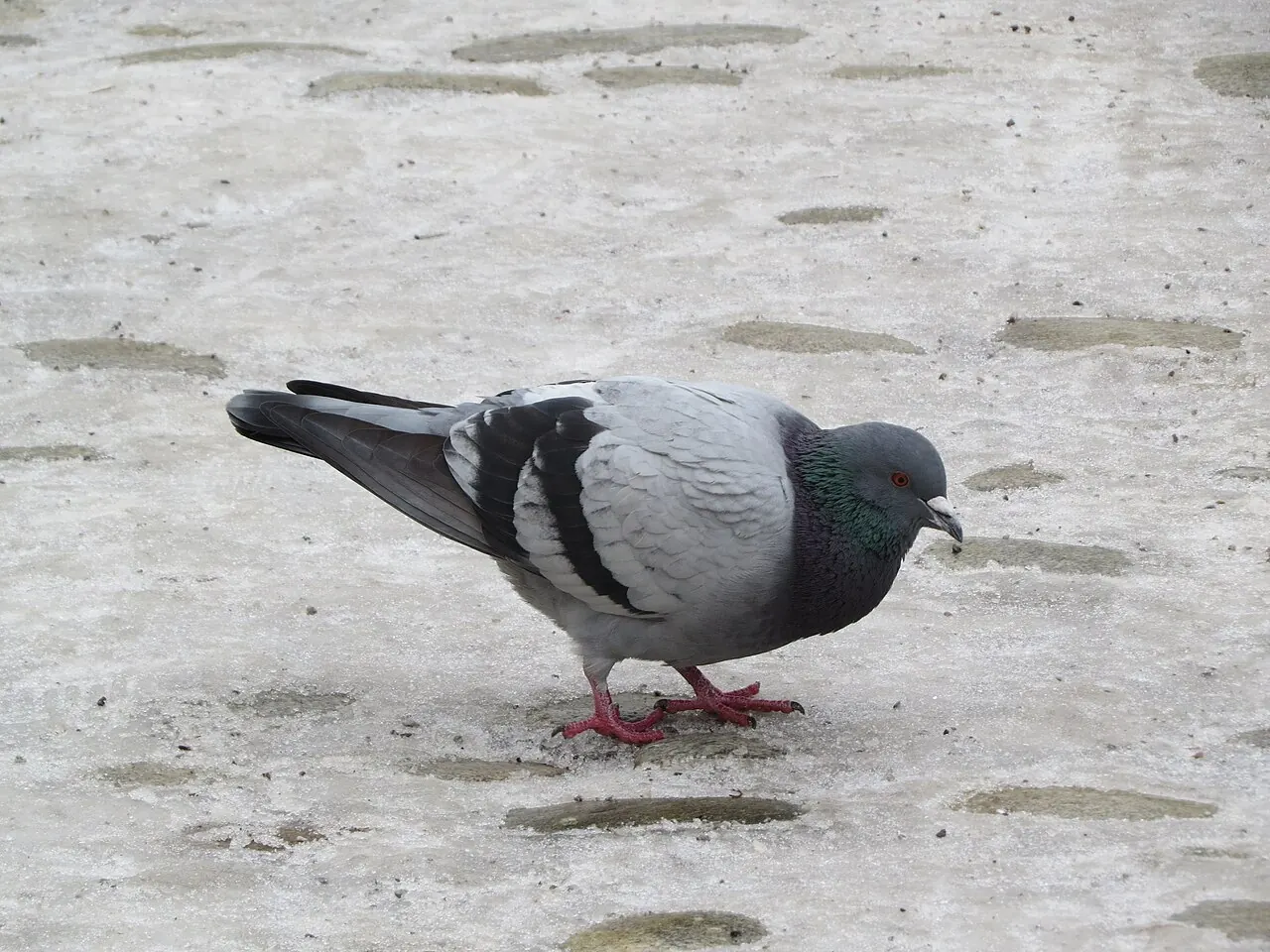
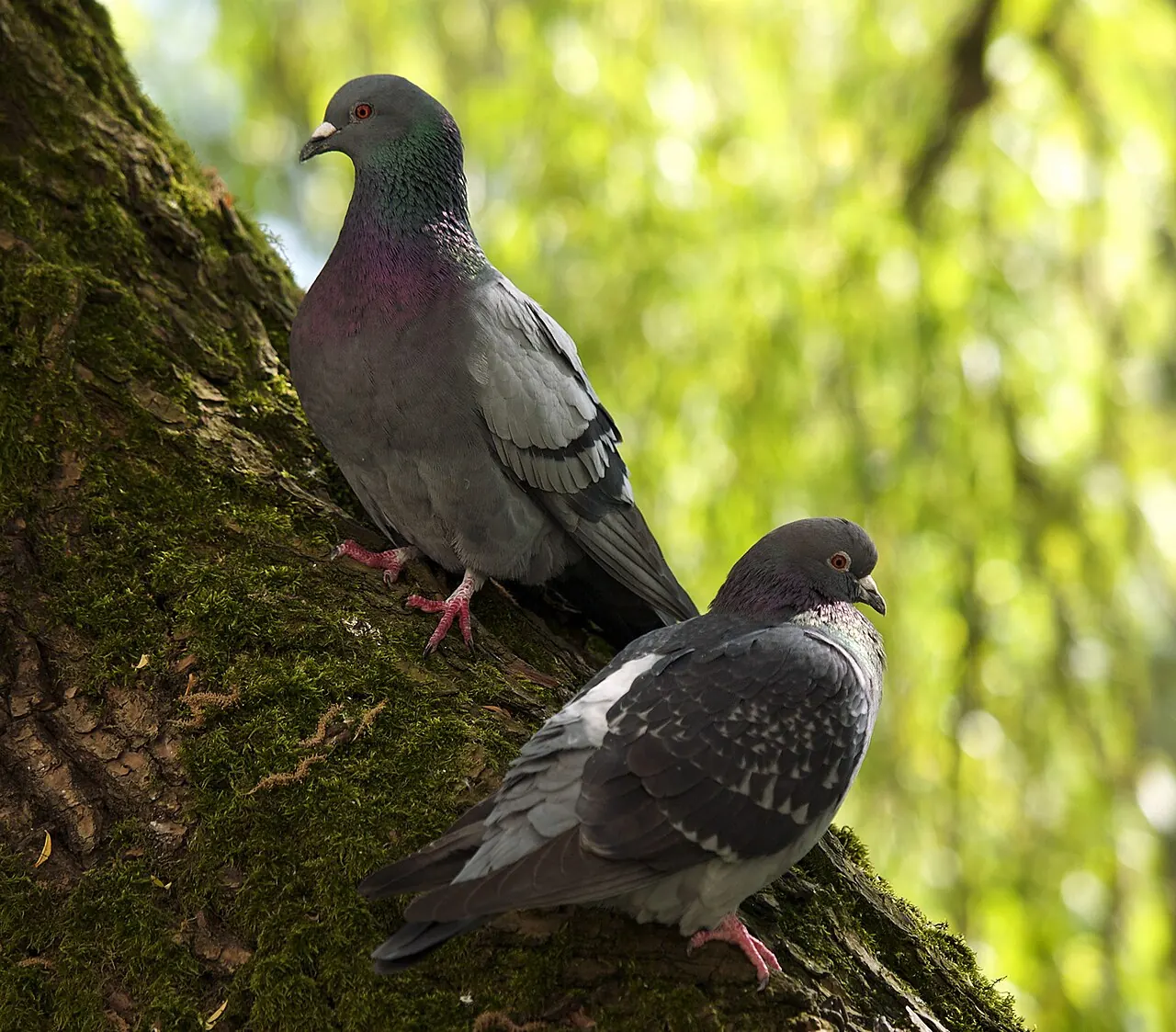
The bird of every town centre: grey, with a shiny green and purple neck and two black bars on each wing.
- Size
- About 32cm long
- Look for it
- All year round
- Where
- Town squares, stations, bridges and rooftops
My spotter's list
Walks after you, bobbing its head with every step. Move your pointer and see.
Good to know
Six things about the pigeon
FamilyA wild ancestor
Town pigeons are descended from the wild rock dove, which nests on sea cliffs. Buildings make good cliffs.
HomingFinding the way home
Pigeons can find their way home from hundreds of miles away, using the sun and the Earth's magnetic field.
WarWar heroes
Pigeons carried messages in both World Wars, and some were given medals for bravery.
HeadThe head bob
A pigeon's head is not really bobbing. It holds its head still while its body catches up, so it can see clearly.
MilkPigeon milk
Both parents feed their chicks a rich, milky food made in their crop.
ColoursAll sorts of colours
Because their ancestors were bred by people, town pigeons come in grey, white, brown, black and mixtures.
The real thing
Photos of the pigeon
Out and aboutHow to spot one
Look in any town square, railway station or park. Watch for the differences between birds: no two flocks have quite the same mix of colours.
Lend a handHow to help
It is best not to feed them in town centres, where large flocks cause problems. Clean water in a park or garden is more useful.
Following youLadybird
Who should follow you?
Bees and hoverflies
Butterflies and moths
Dragonflies and damselflies
Beetles, hoppers and ants
Not insects at all
Snails and spiders aren't insects: a snail is a mollusc, and spiders have eight legs.
Garden birds
Pond animals live on the Pond page: choosing one takes you there.
Pond life
Night garden
Seashore animals live on the Seashore page: choosing one takes you there.
Rock pool life
Woodland animals
Under a log
Meadow life
River animals live on the River page: choosing one takes you there.
River life
Mountain and moor
Farmland
Town and city
_Columba_livia_domestica_(city_dove)_at_N%C3%A1m%C4%9Bst%C3%AD_Svornosti_in_%C4%8Cesk%C3%BD_Krumlov.jpg)
_Columba_livia_domestica_(city_dove)_at_N%C3%A1m%C4%9Bst%C3%AD_Svornosti_in_%C4%8Cesk%C3%BD_Krumlov.jpg)
