Skip to the content
When to look
JFMAMJJASOND
Horned viper
Good to know
Six things about the horned viper
HornsHorns over the eyes
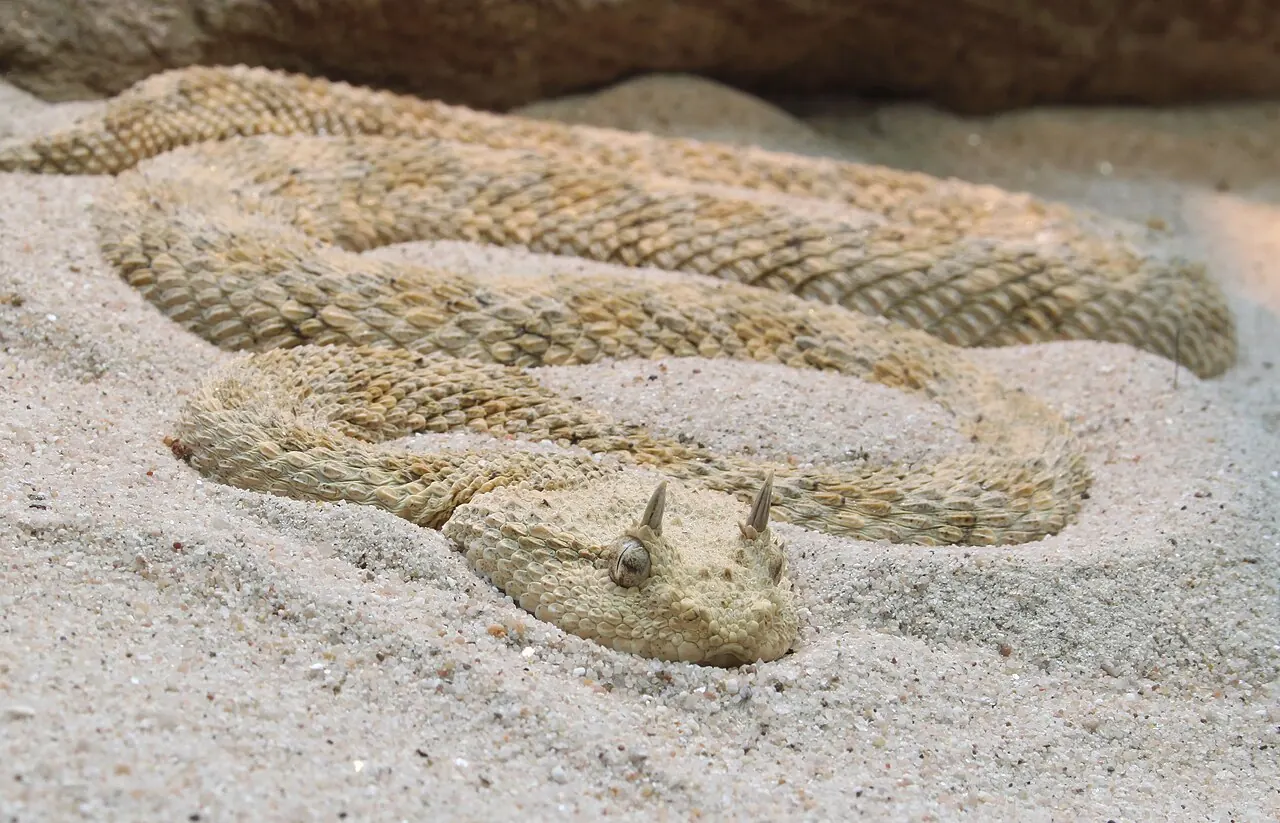
Most have a pointed scale like a horn above each eye. It may help to keep sand out of their eyes.
MovingSidewinding
On loose sand it throws its body sideways in loops, leaving a row of J-shaped tracks.
HidingBuried to the eyes
It shuffles down into the sand until only its eyes and horns show, and waits for prey to come past.
WarningA rasping warning
Instead of hissing, it rubs its rough scales together to make a rasping sound.
VenomLeave it alone
Its bite is venomous and needs medical help, but like most snakes it would rather stay hidden.
FoodLizards and mice
It hunts lizards, small rodents and birds, mostly at night.
The real thing
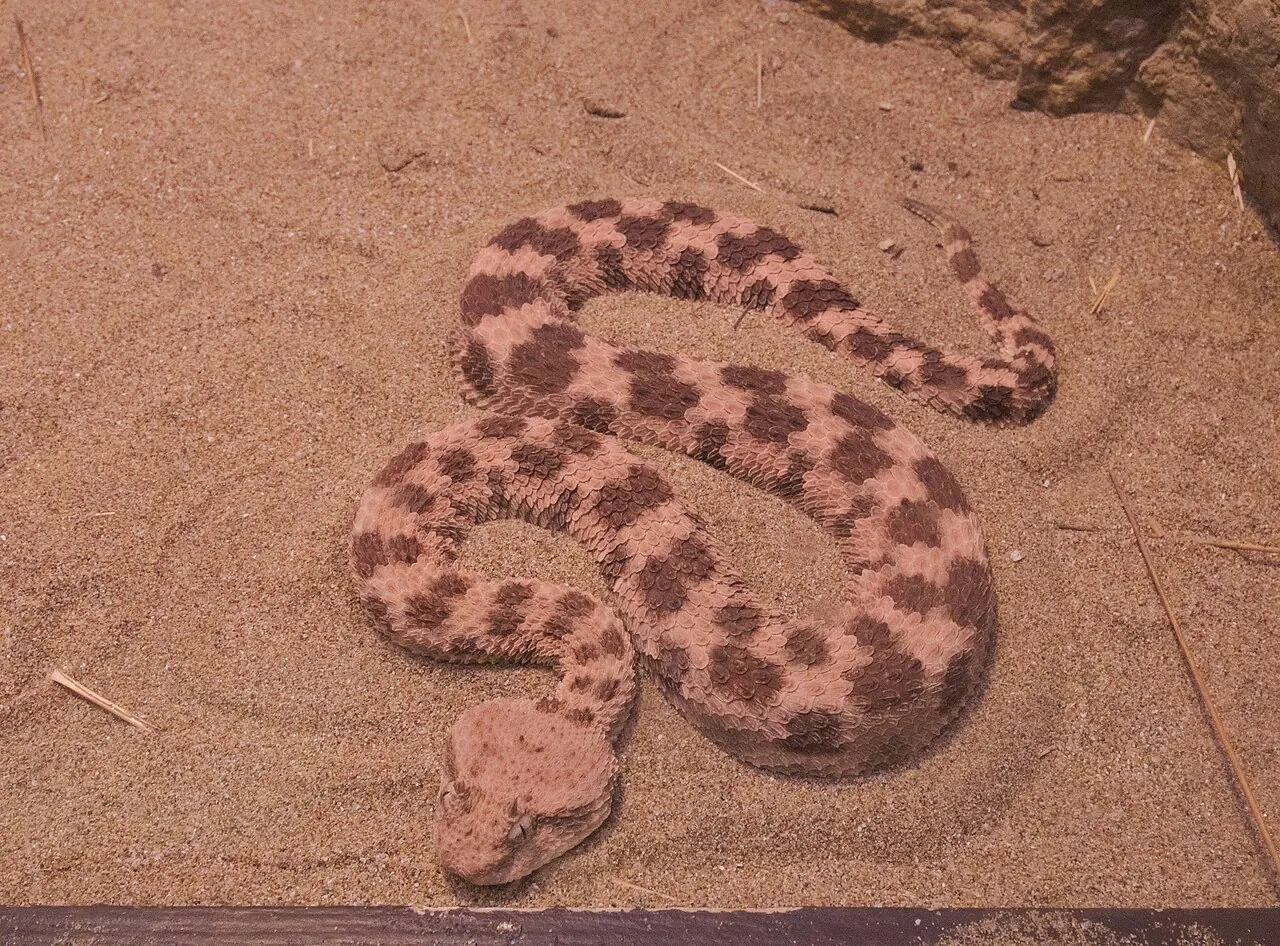
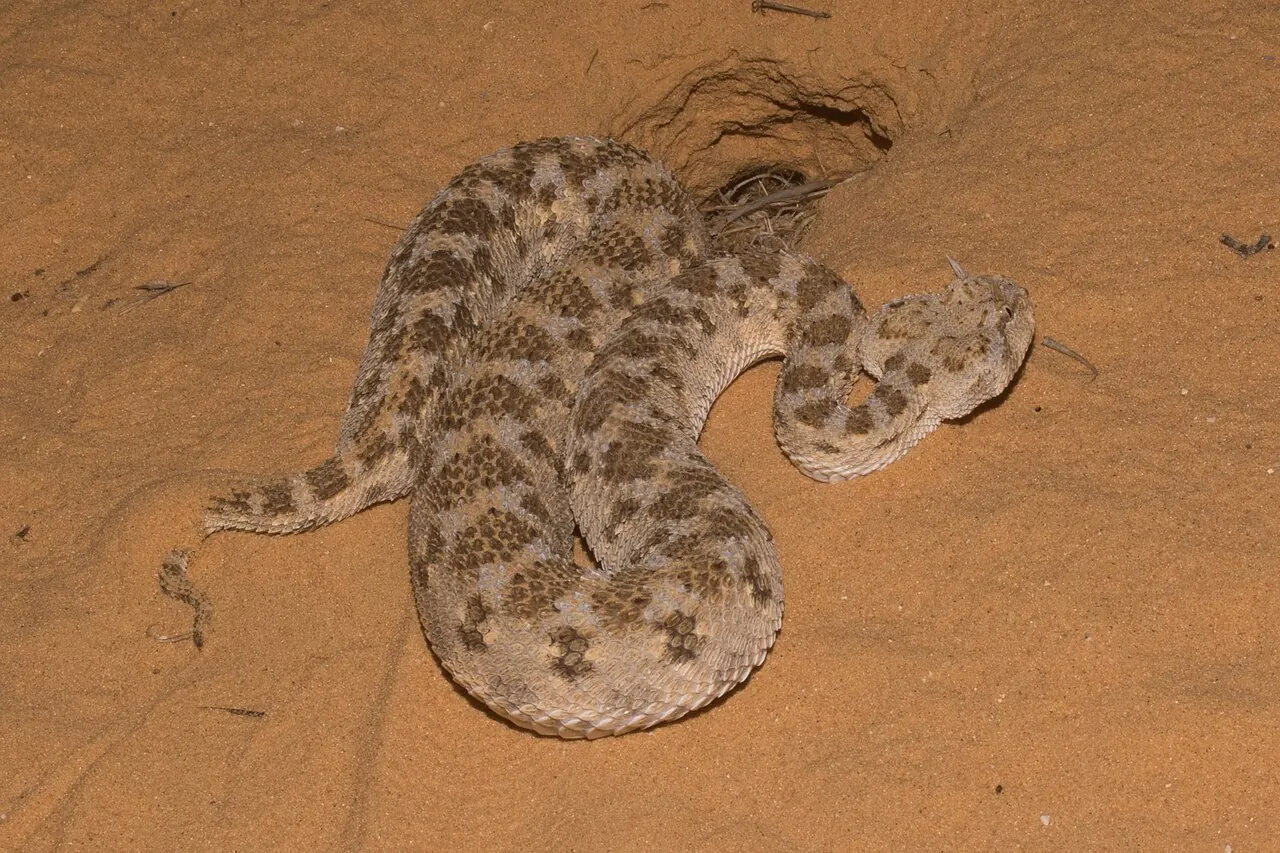
Photos of the horned viper
Photos are from Wikimedia Commons, used under the free licences shown. They have been resized, and cropped where they appear in link previews.
![]()
Out and aboutHow to spot one
Look for J-shaped tracks in a row across a dune at dawn. The snake itself is usually buried, with only its eyes and horns showing.
Lend a handHow to help
Leave snakes alone and they will stay hidden. Watch where you put your hands and feet in sandy desert.
Following youLadybird
Who should follow you?
African savanna
African river animals live on the African river page: choosing one takes you there.
African river
African rainforest
African desert
Animals from other parts of the world live on their own pages: change area.


,_Israel_02.jpg)