An amazing journey
Each autumn, monarchs fly up to 3,000 miles south to a few mountain forests in Mexico.
The Great Plains
Danaus plexippus
A big orange butterfly with black veins and a black border dotted with white.
Flutters after you, gliding between flaps. Move your pointer and see.
Good to know
Each autumn, monarchs fly up to 3,000 miles south to a few mountain forests in Mexico.
No butterfly makes the whole round trip. It takes four or five generations to get back north.
In winter so many cluster together that branches bend under their weight.
The caterpillars eat milkweed, which makes them, and the butterflies, taste foul to birds.
The bright orange tells birds to leave it alone. Other butterflies copy the pattern.
A few monarchs are blown across the Atlantic and turn up in south-west England in autumn.
The real thing
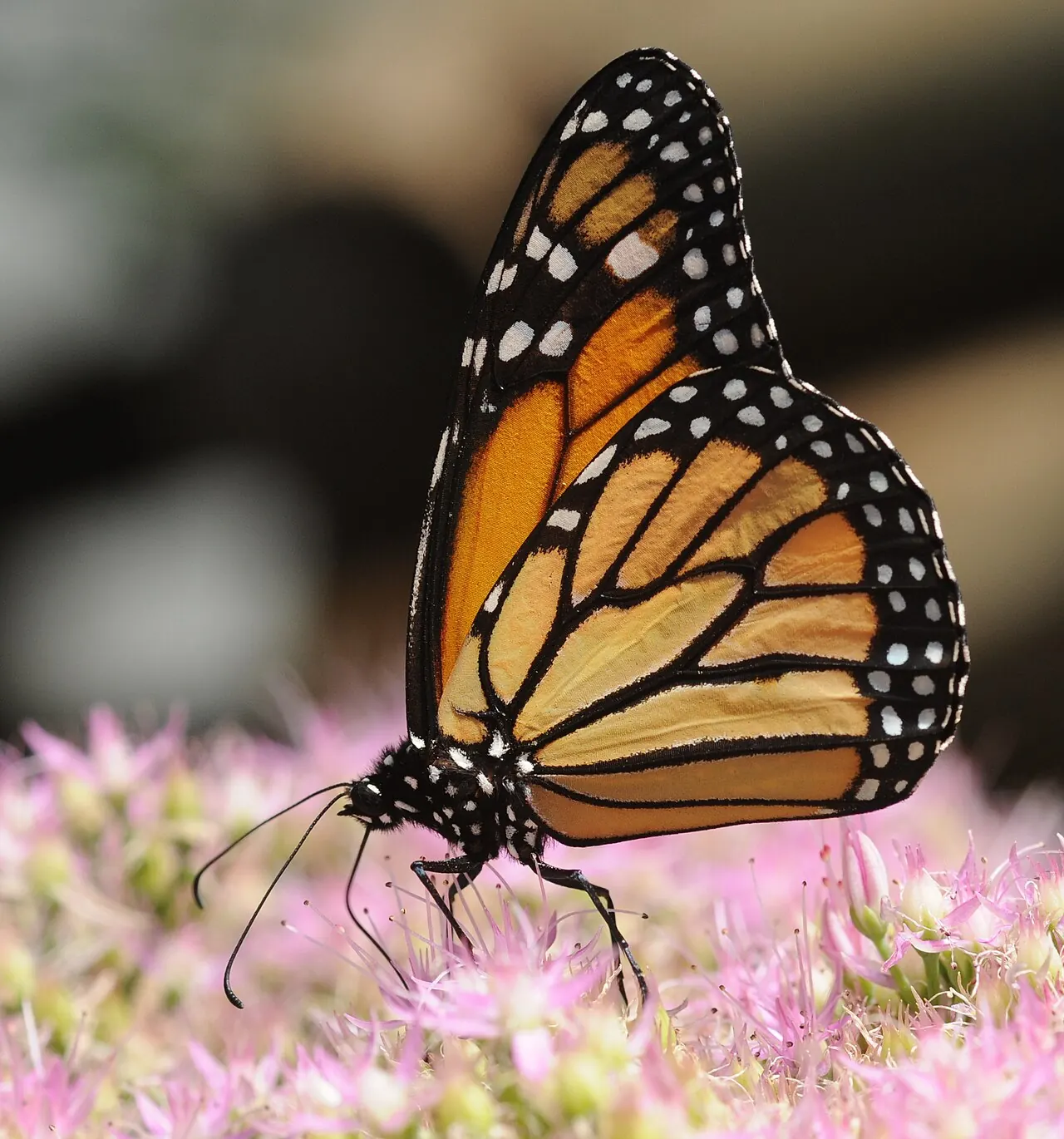
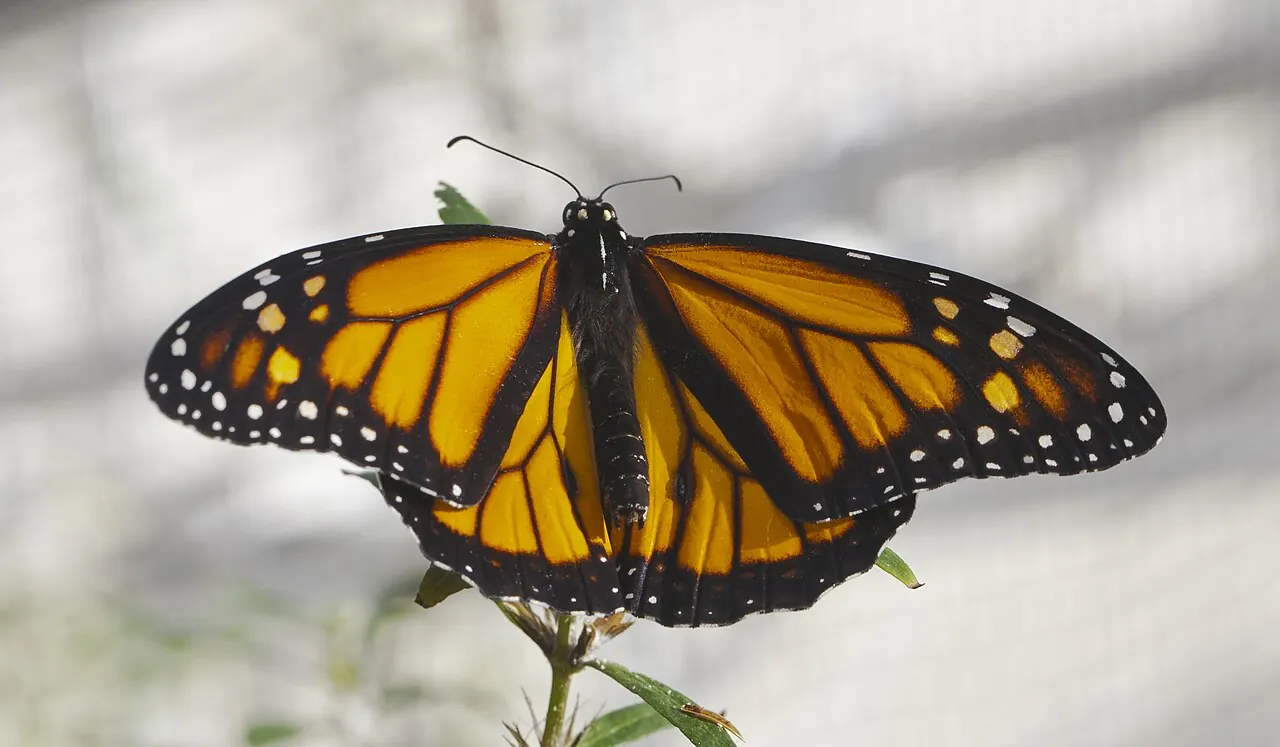
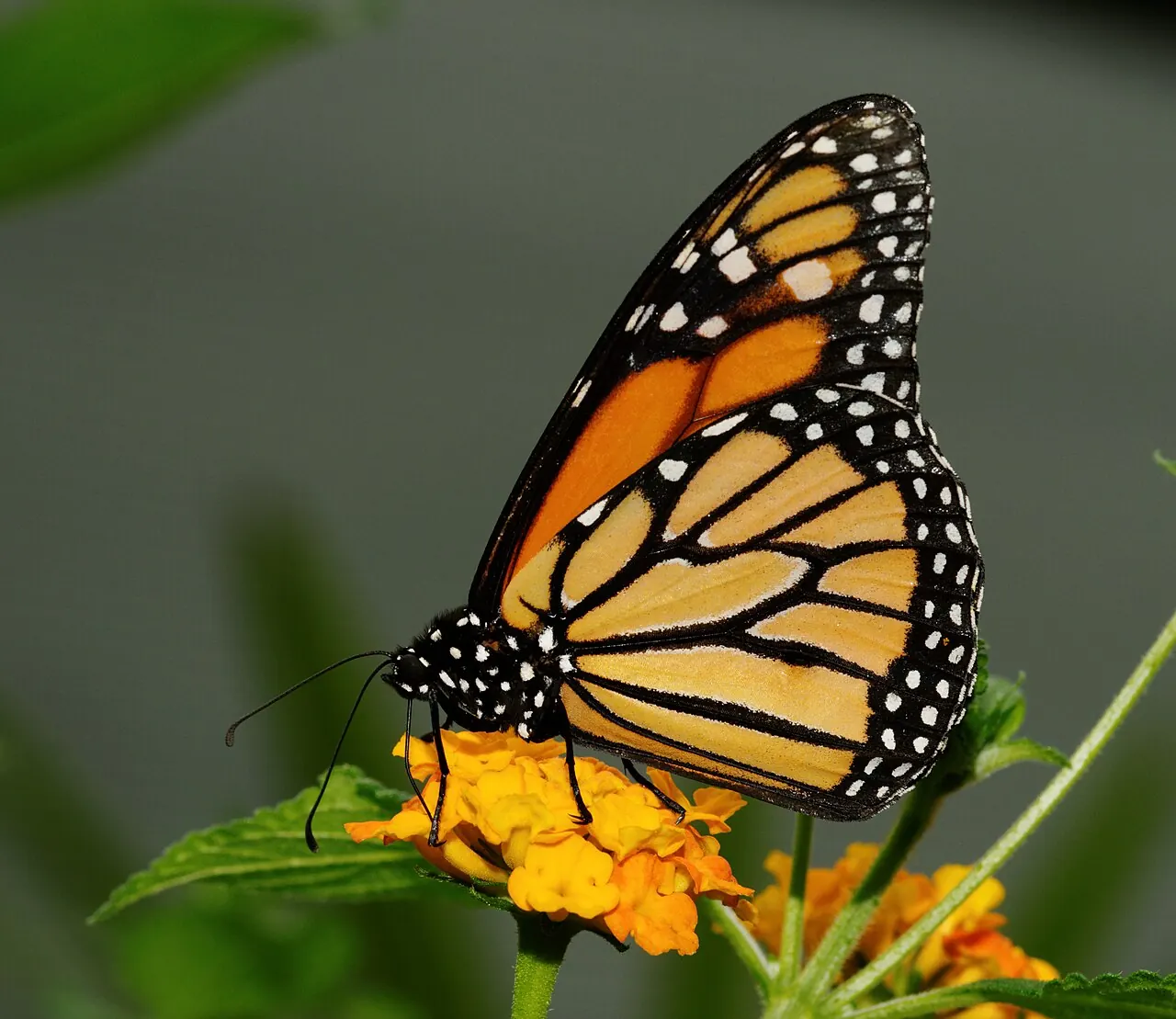
Photos are from Wikimedia Commons, used under the free licences shown. They have been resized, and cropped where they appear in link previews.
Look on milkweed and other flowers in summer. In autumn, watch for them gliding steadily south, one after another.
Monarch numbers have fallen sharply. In North America, people plant milkweed in gardens and along roads to give the caterpillars food.
Keep going
Animals from other parts of the world live on their own pages: change area.
_(3).jpg)
,_Jard%C3%ADn_Bot%C3%A1nico_de_M%C3%BAnich,_Alemania,_2013-01-27,_DD_01.JPG)
