How the rattle works
The rattle is a chain of hollow, dry scales that click together when the snake shakes its tail.
The Great Plains
Crotalus viridis
A thick, sandy-brown snake with dark blotches down its back and a rattle on the end of its tail.
Winds after you, rattle raised. Move your pointer and see.
Good to know
The rattle is a chain of hollow, dry scales that click together when the snake shakes its tail.
It shakes its rattle about fifty times a second. It is a warning: keep away.
Every time it sheds its skin, it adds one more ring to the rattle.
A pit between each eye and nostril senses warmth, so it can find a mouse in total darkness.
Rattlesnakes do not lay eggs. The babies are born alive, each with a single button for a rattle.
Dozens, sometimes hundreds, spend the winter together in one den below the frost.
The real thing
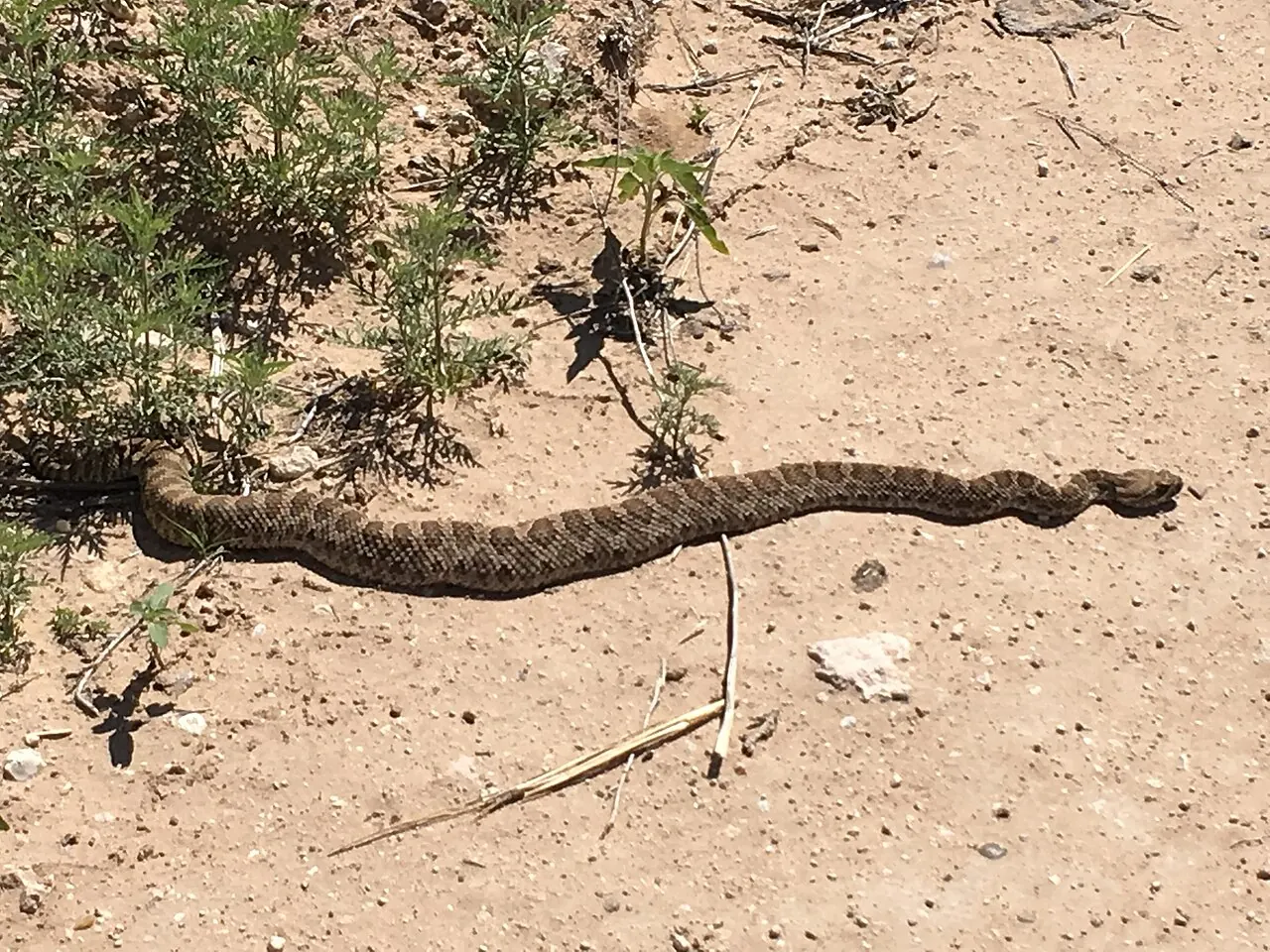
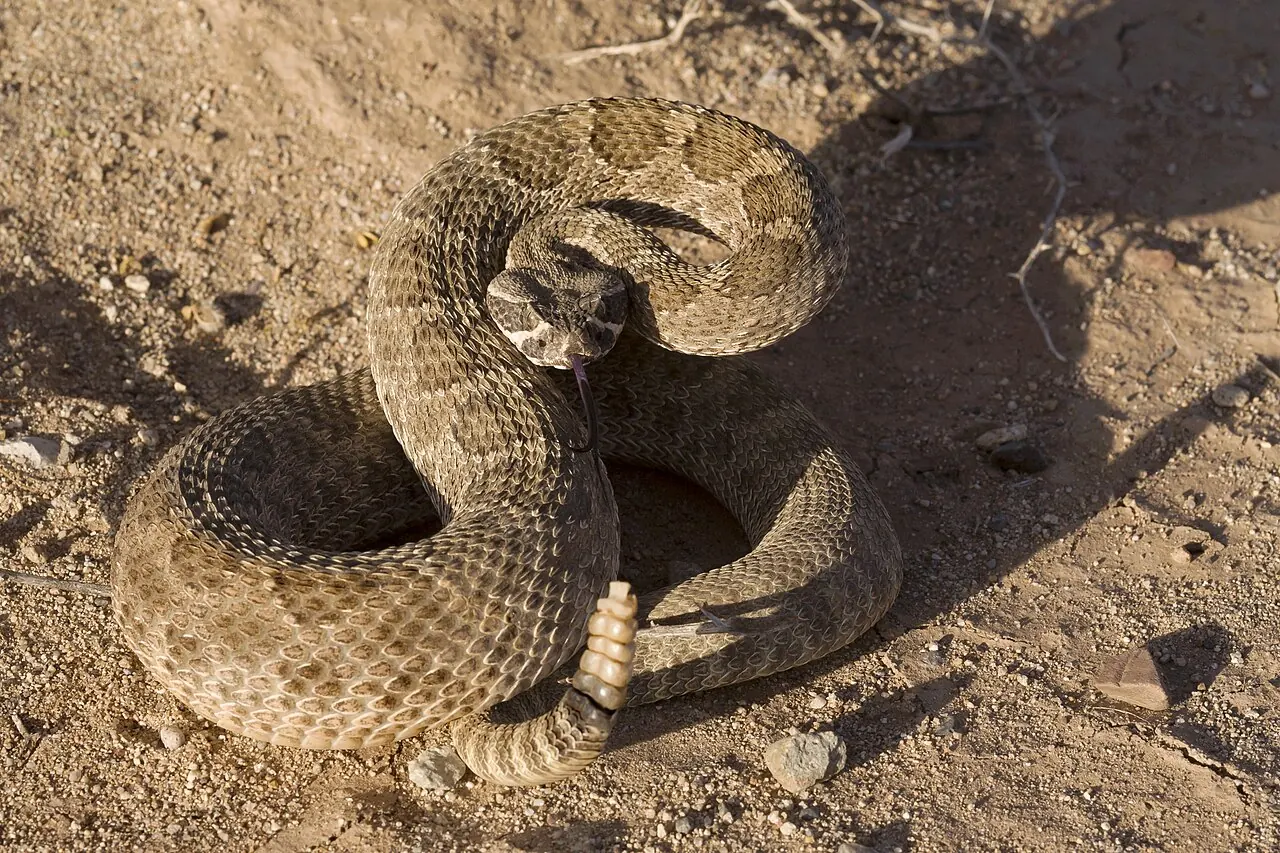
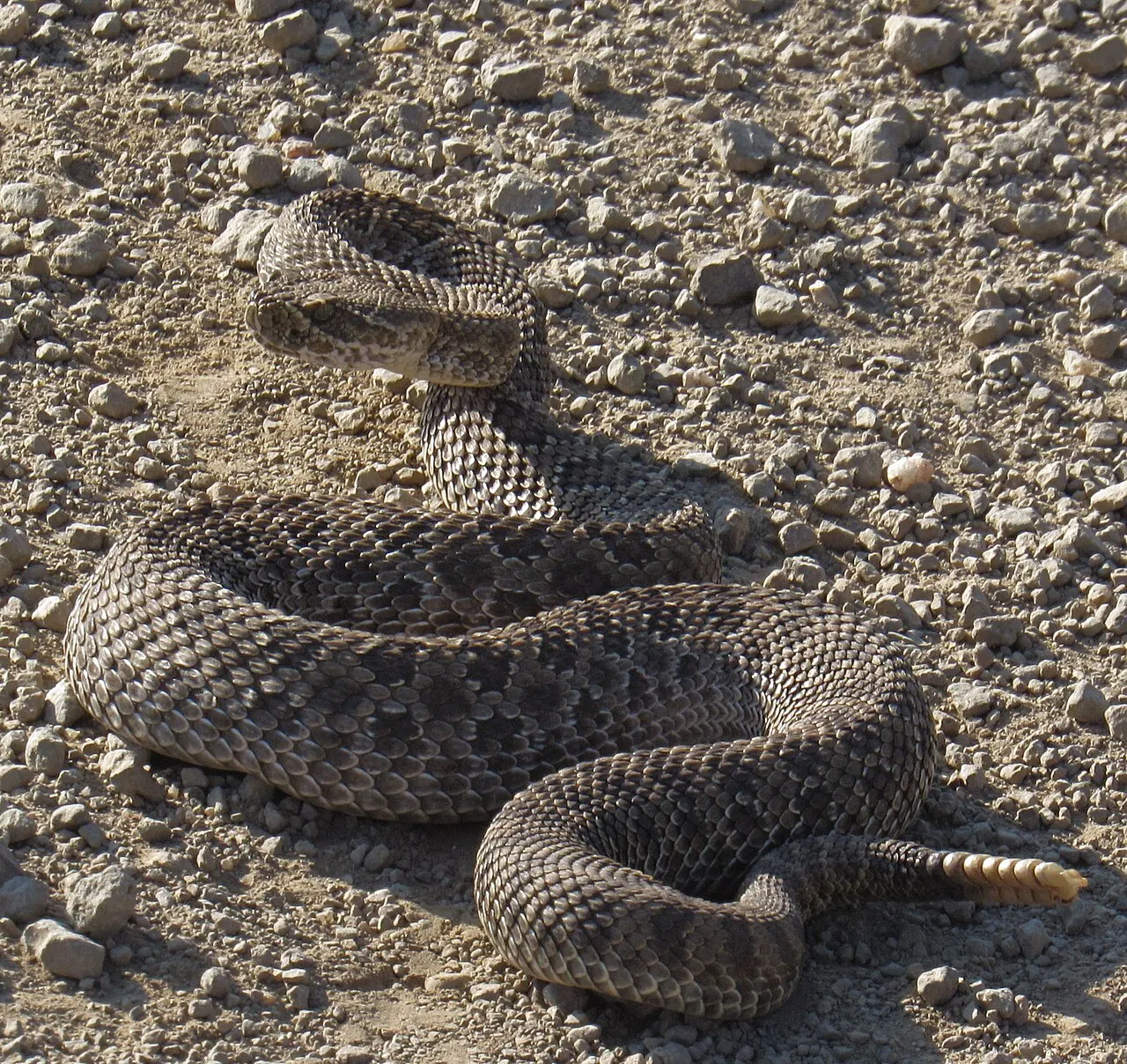
Photos are from Wikimedia Commons, used under the free licences shown. They have been resized, and cropped where they appear in link previews.
If you hear a dry buzzing, stop, find where it is, and back away slowly. Rattlesnakes bask on rocks and tracks on warm mornings.
Rattlesnakes keep mice and rats in check. Leave them alone and they will do the same for you: most bites happen when people try to kill or move one.
Keep going
Animals from other parts of the world live on their own pages: change area.

.jpg)
