Two coats a year
It is white in winter and brown-grey in summer, so it matches the ground all year.
Arctic tundra
Vulpes lagopus
A small, round fox with short ears and a very thick coat: white in winter, grey-brown in summer.
Trots after you with its brush out behind. Move your pointer and see.
Good to know
It is white in winter and brown-grey in summer, so it matches the ground all year.
Its fur keeps it comfortable down to about minus 50 degrees. It only starts to shiver below that.
It curls up and wraps its bushy tail over its nose and feet to sleep.
In winter, arctic foxes follow polar bears across the ice and eat what they leave.
It listens for lemmings moving under the snow, then leaps up and dives in head first.
The soles of its feet are covered in fur, like a hare's. Its Latin name means hare-footed fox.
The real thing
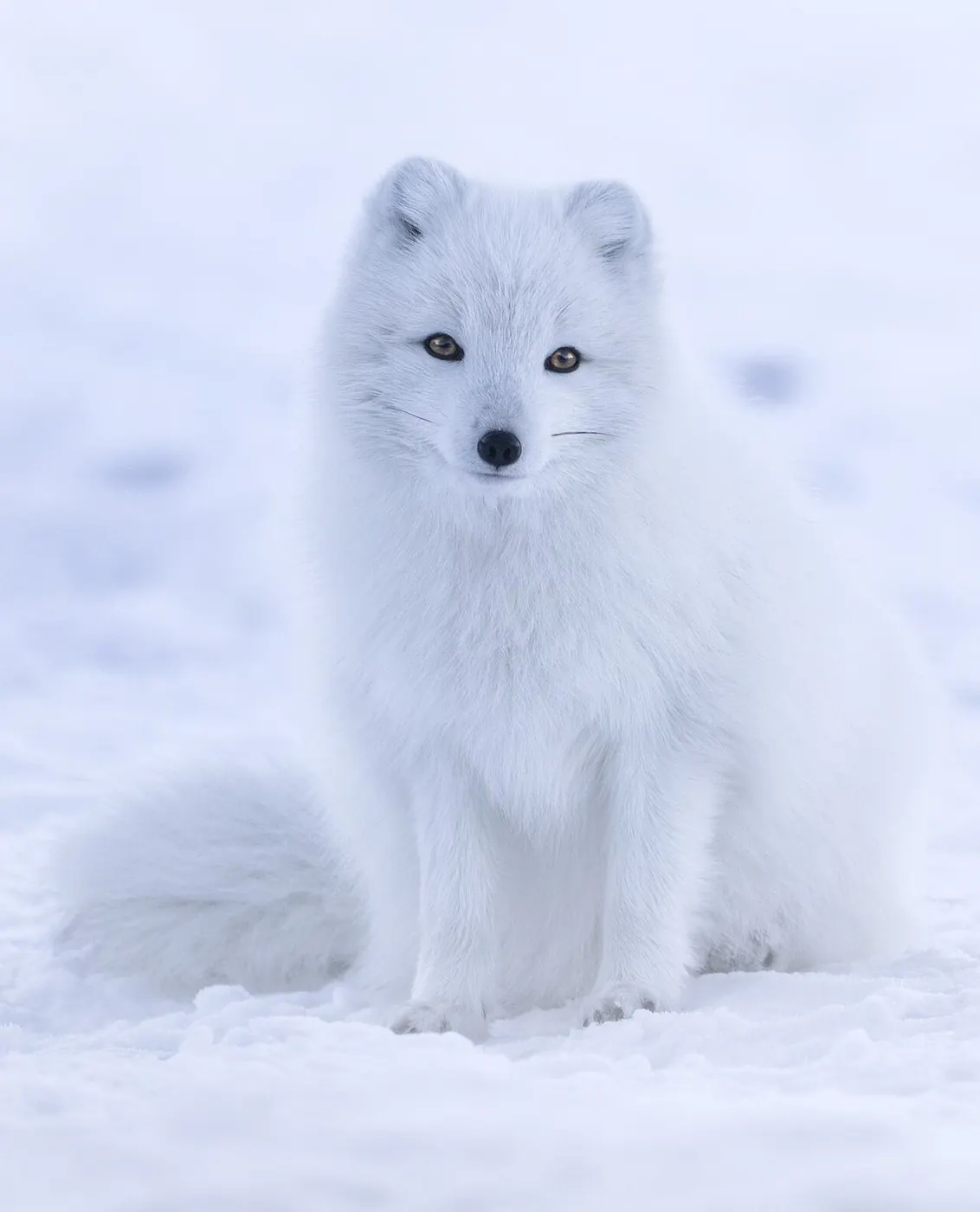
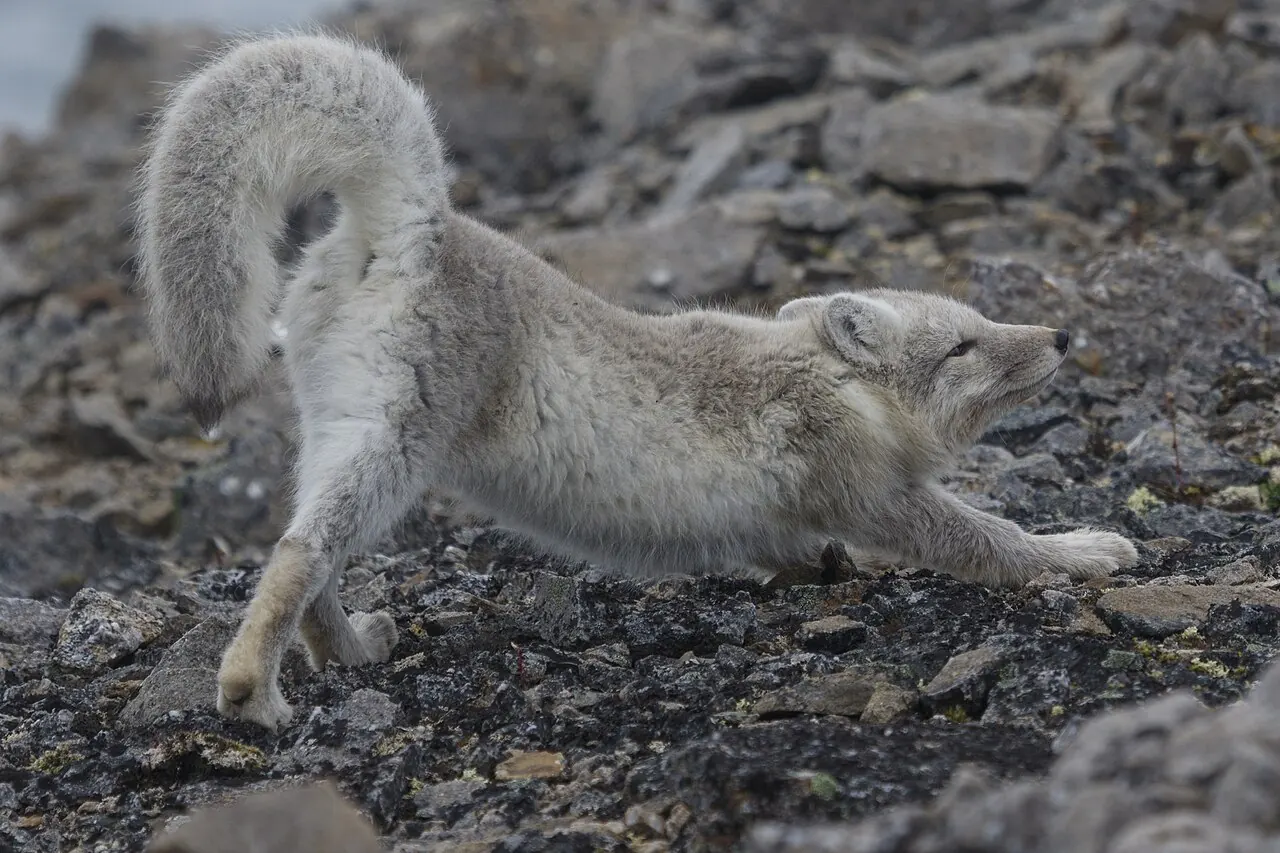
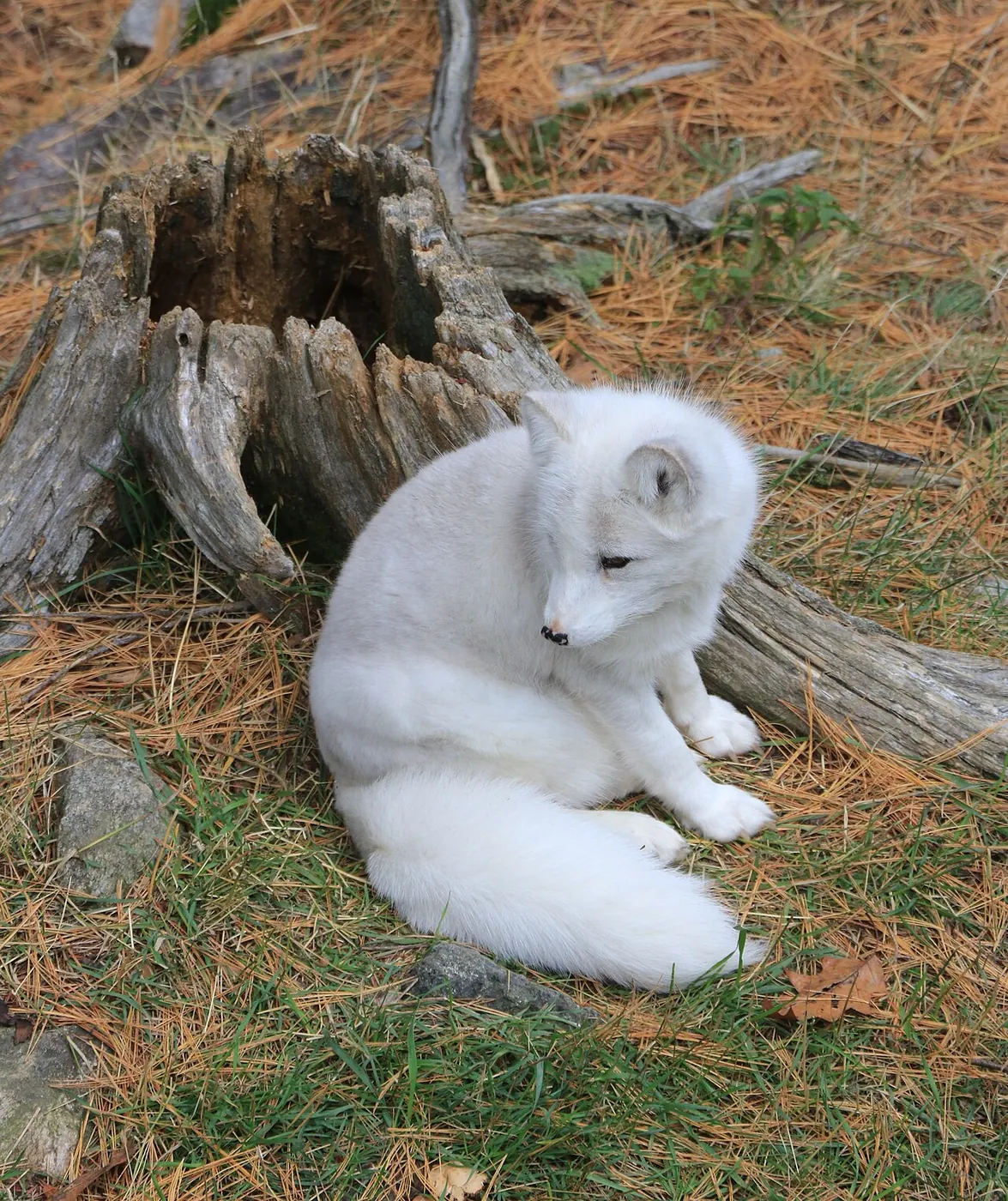
Photos are from Wikimedia Commons, used under the free licences shown. They have been resized, and cropped where they appear in link previews.
Arctic foxes are curious and will come close to camps. In Iceland and Svalbard, look near seabird cliffs in summer.
As the Arctic warms, bigger red foxes move north and push them out. Supporting action on climate change helps the arctic fox.
Keep going
Polar seas animals live on the Polar seas page: choosing one takes you there.
Animals from other parts of the world live on their own pages: change area.
.jpg)

_2434.jpg)