Antlers for all
Reindeer are the only deer in which the females grow antlers too.
Arctic tundra
Rangifer tarandus
A sturdy grey-brown deer with a pale neck. Both males and females grow antlers.
Trots after you, and breaks into a run. Move your pointer and see.
Good to know
Reindeer are the only deer in which the females grow antlers too.
The nose warms the freezing air before it reaches the lungs. It is full of tiny blood vessels.
Their eyes are gold in summer and turn blue in winter, which helps them to see in the dark months.
Some herds travel 5,000 kilometres in a year, further than any other land mammal.
A tendon in each foot clicks as it walks. It may help the herd keep together in a blizzard.
In winter they dig through snow for lichen, which few other animals can digest.
The real thing
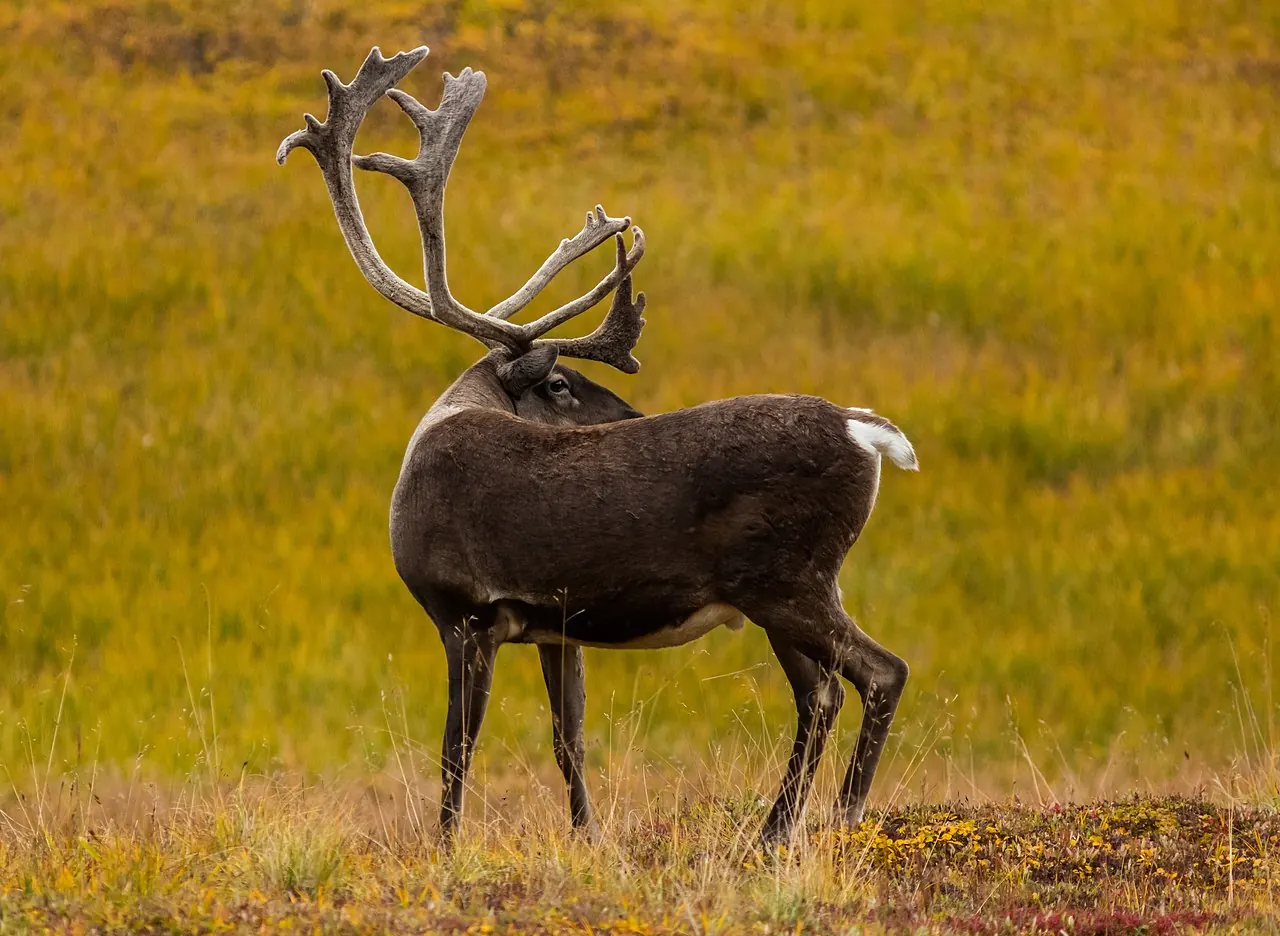
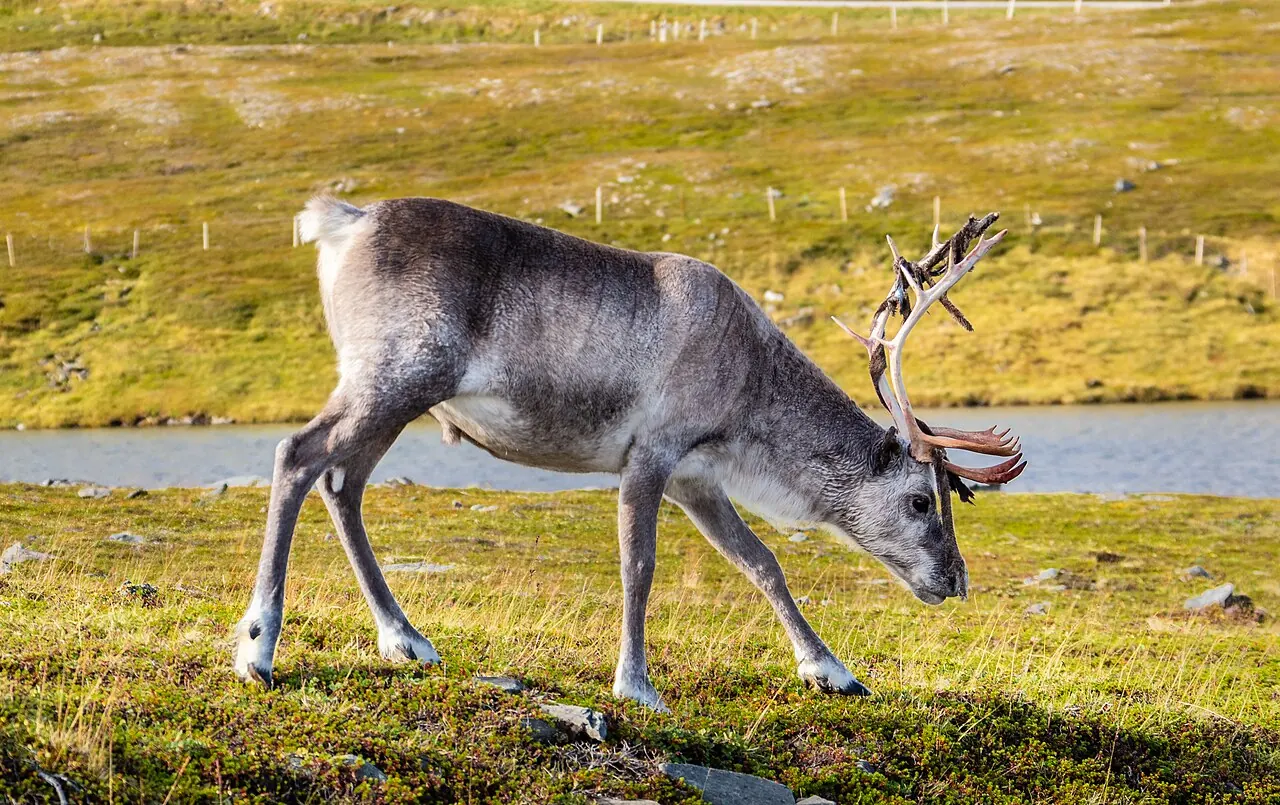
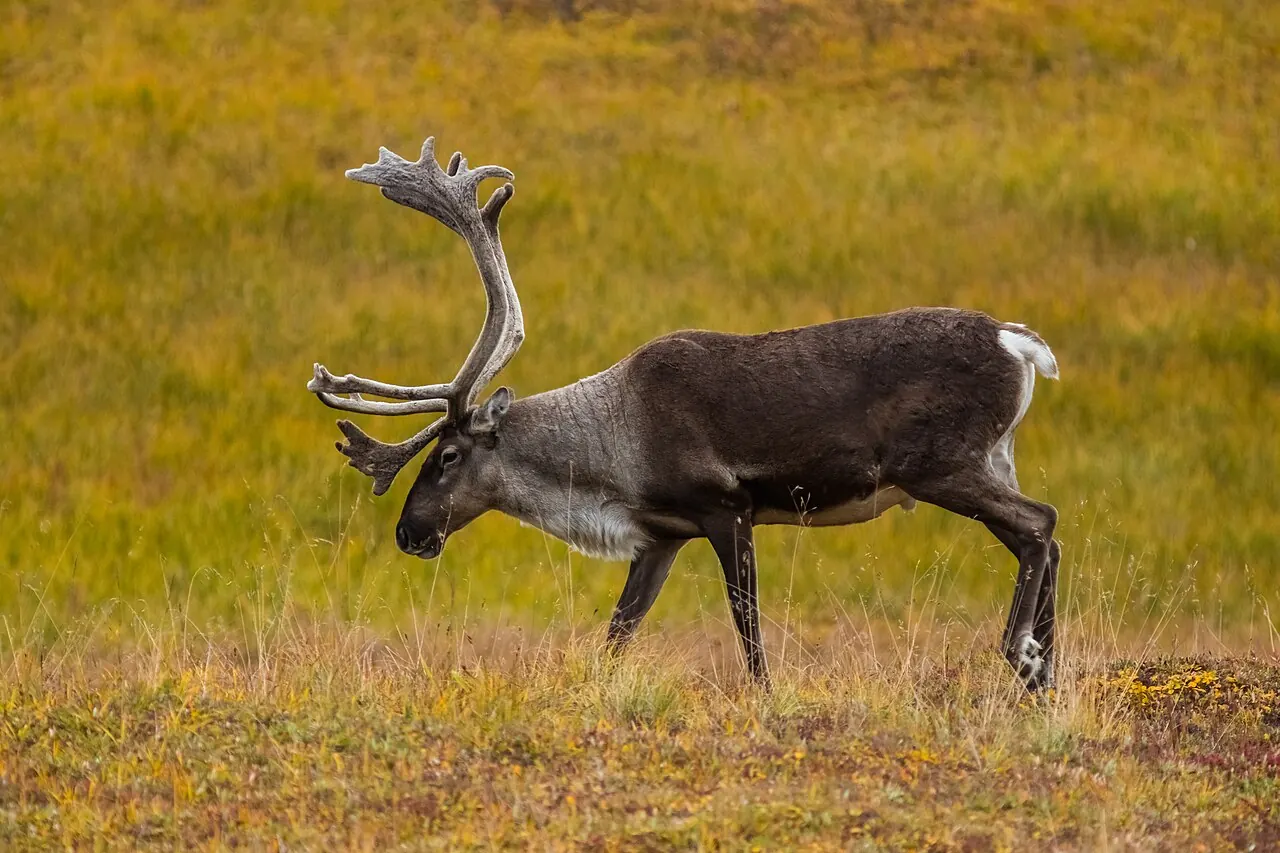
Photos are from Wikimedia Commons, used under the free licences shown. They have been resized, and cropped where they appear in link previews.
Britain has one free-living herd, in the Cairngorms in Scotland. In Norway, Sweden and Finland, herds wander across the open fells.
Wild reindeer need to move freely. Roads, pipelines and warmer winters all make that harder, so support groups that keep their routes open.
Keep going
Polar seas animals live on the Polar seas page: choosing one takes you there.
Animals from other parts of the world live on their own pages: change area.
,_Parque_nacional_y_reserva_Denali,_Alaska,_Estados_Unidos,_2017-08-30,_DD_39.jpg)
,_Honningsv%C3%A5g,_Noruega,_2019-09-03,_DD_15.jpg)
,_Parque_nacional_y_reserva_Denali,_Alaska,_Estados_Unidos,_2017-08-30,_DD_40.jpg)