Tooth-walkers
Both males and females have tusks. They use them to haul themselves out onto the ice.
Arctic tundra
Odobenus rosmarus
A huge, wrinkled, cinnamon-brown seal with long white tusks and a bristly moustache.
Heaves itself after you on its flippers. Move your pointer and see.
Good to know
Both males and females have tusks. They use them to haul themselves out onto the ice.
About 400 stiff whiskers feel for clams on the dark sea bed.
A walrus sucks the soft part of a clam out of its shell, and can eat thousands in one meal.
In cold water a walrus looks pale. In the sun, blood returns to the skin and it turns pink-brown.
Walruses rest packed tightly together, in groups that can be thousands strong.
The blubber under its skin can be 10 centimetres thick.
The real thing
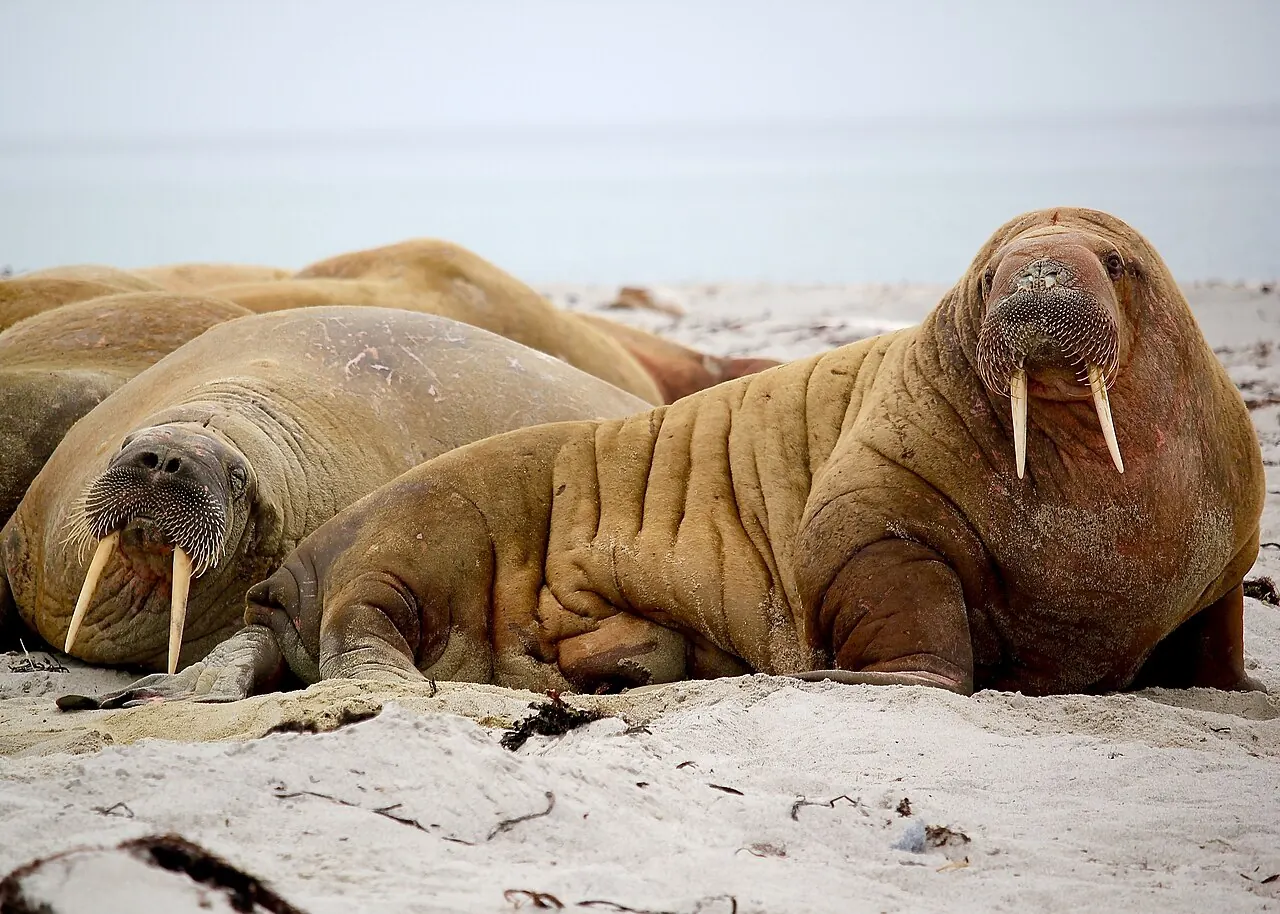
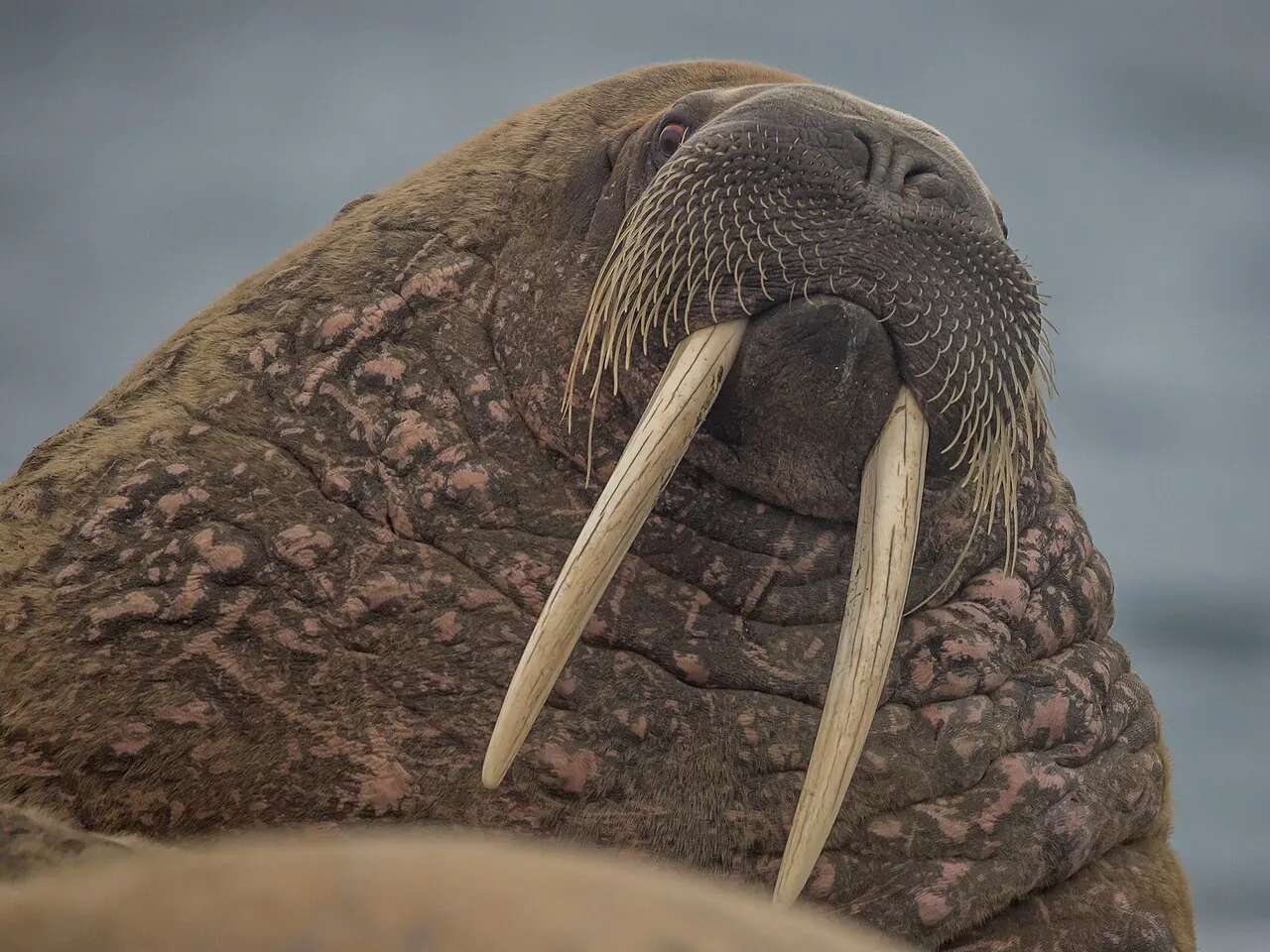
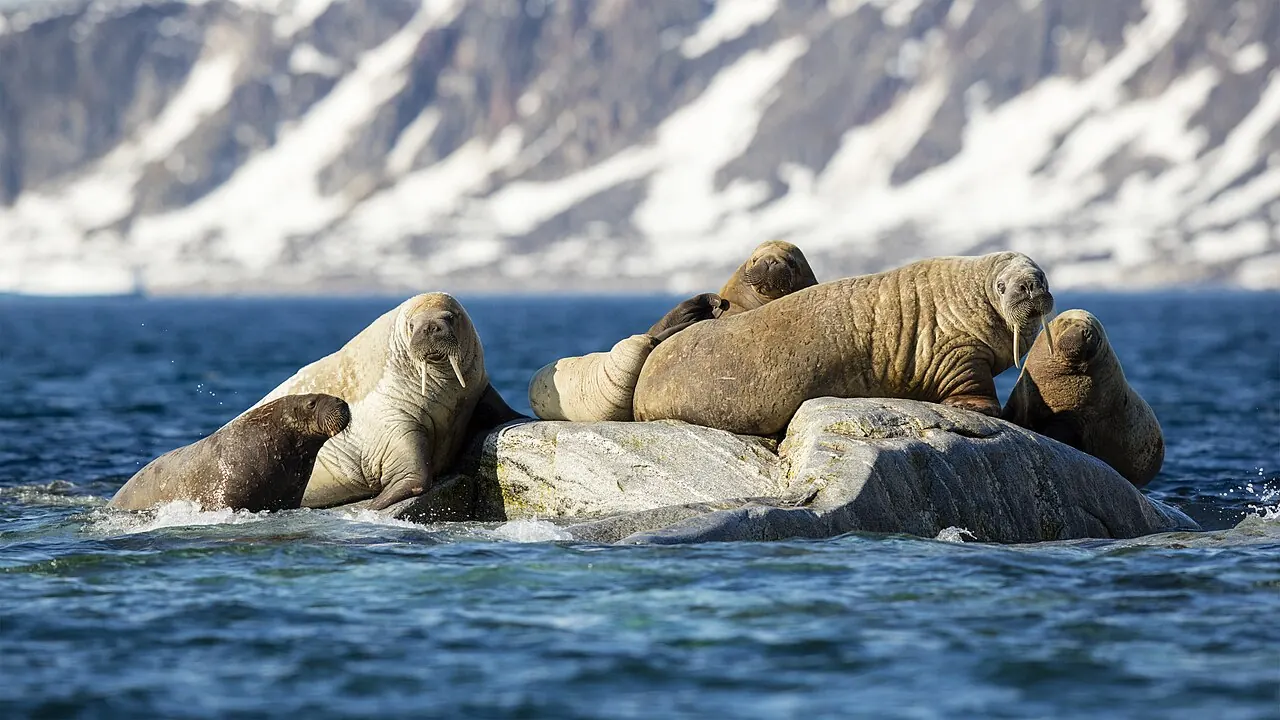
Photos are from Wikimedia Commons, used under the free licences shown. They have been resized, and cropped where they appear in link previews.
Walruses haul out at the same beaches every year. In Svalbard, boat trips watch them from a distance. One or two reach Britain most years.
Walruses panic easily and can crush each other in a rush for the sea. If one turns up on a British beach, stay well back and keep dogs away.
Keep going
Polar seas animals live on the Polar seas page: choosing one takes you there.
Animals from other parts of the world live on their own pages: change area.

_on_Svalbard.jpg)
_03.jpg)