Skip to the content
Farmland
Pheasant
Phasianus colchicus
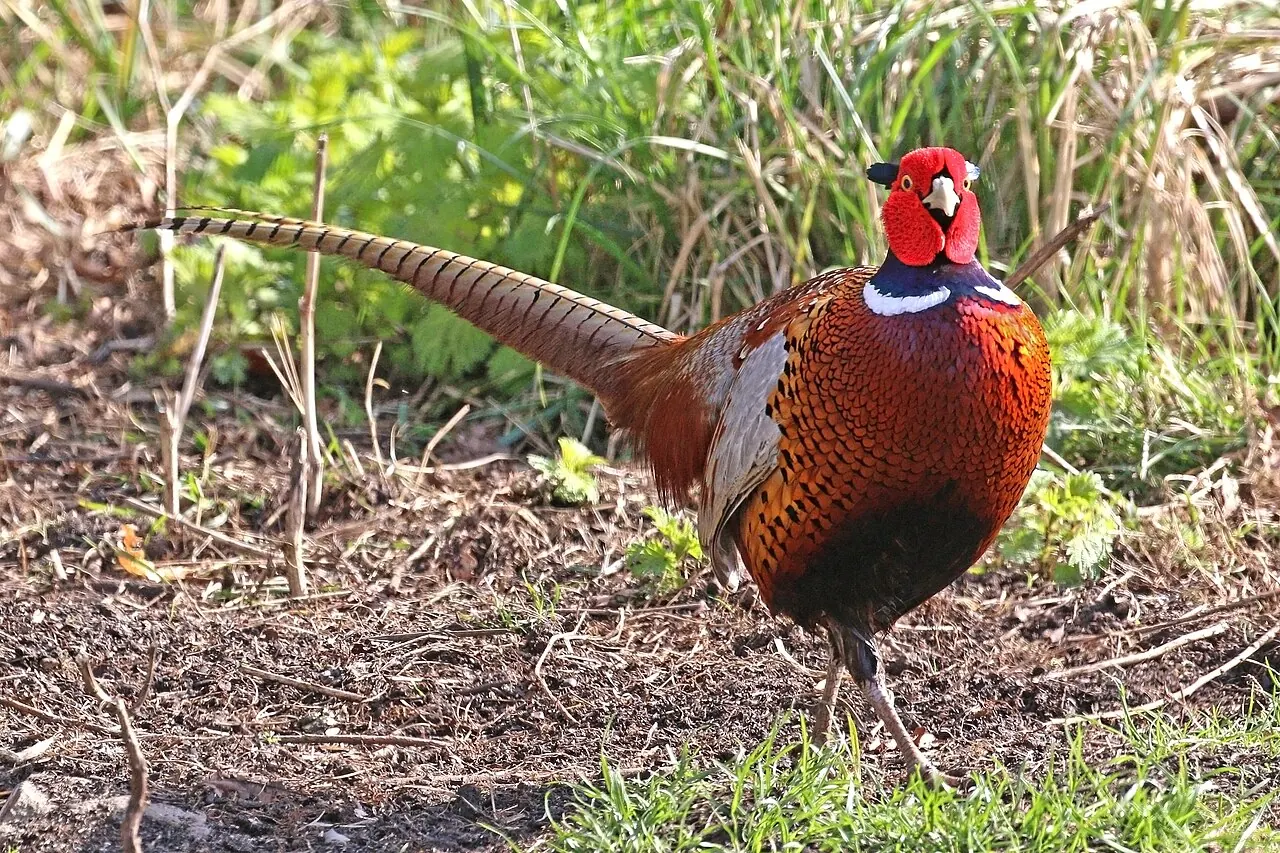
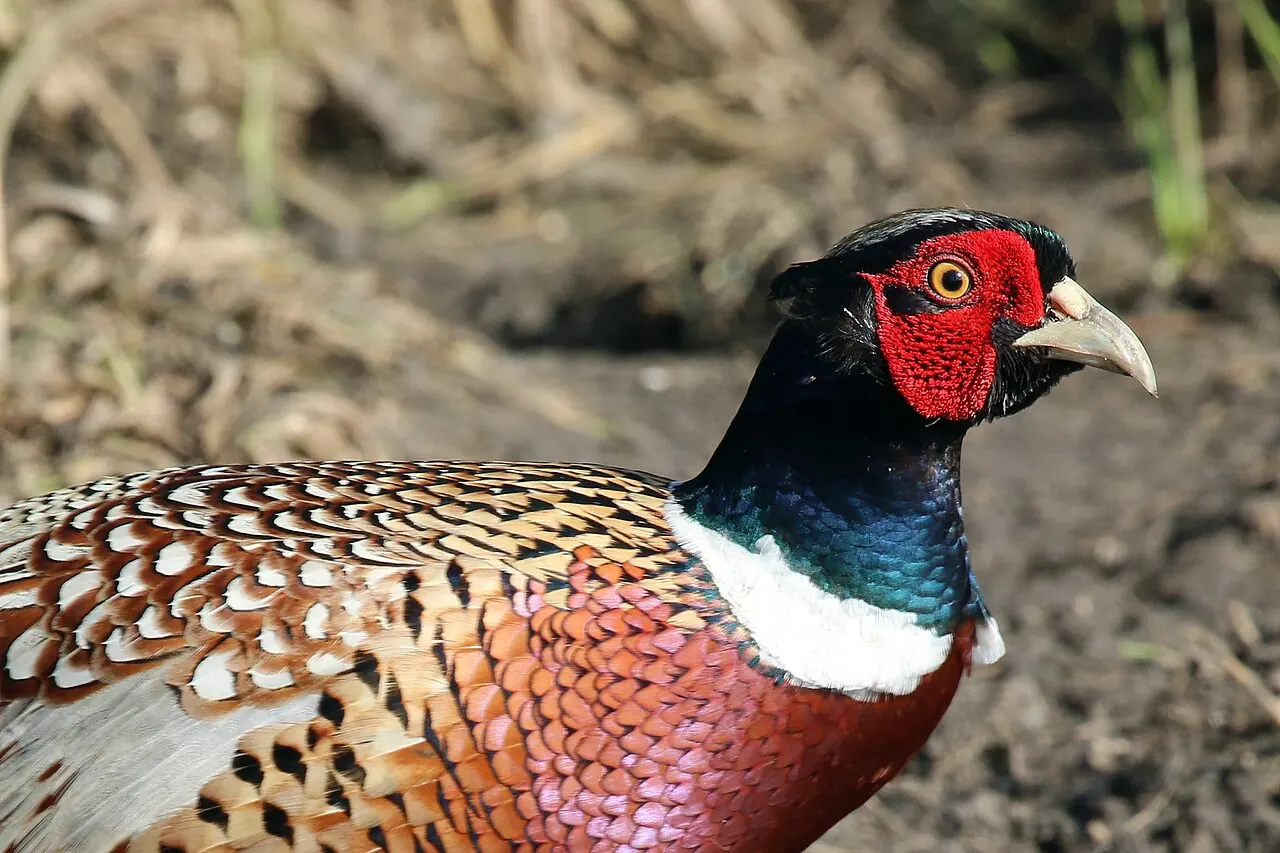
The male is hard to miss: copper-coloured, with a dark green head, red face and a very long tail.
- Size
- Males up to 85cm long, half of it tail
- Look for it
- All year round
- Where
- Farmland, woodland edges and hedgerows
My spotter's list
Struts after you, and clatters into the air if you get far ahead. Move your pointer and see.
Good to know
Six things about the pheasant
ArrivalNot a native
Pheasants come from Asia. They were brought to Britain around a thousand years ago.
ColourHim and her
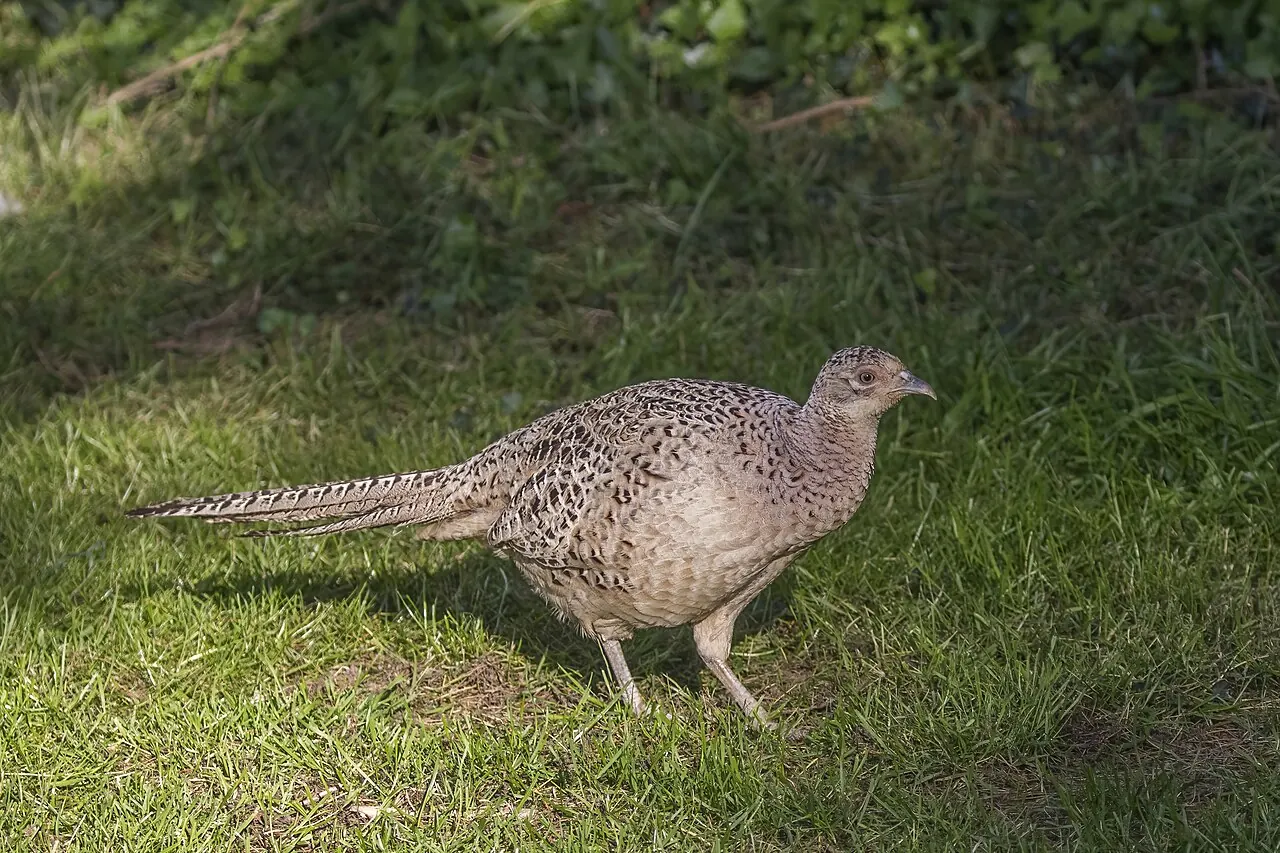
Only the male is brightly coloured. The female is mottled pale brown, to stay hidden on her nest.
Take-offA noisy take-off
A startled pheasant bursts into the air with a clatter of wings and a loud, croaking call.
RoostUp to bed
Pheasants feed on the ground but fly up into trees at night to sleep safely.
NumbersMillions released
Tens of millions of pheasants are bred and released in Britain every year for shooting.
RunningRather run than fly
A pheasant would rather run than fly, and can sprint surprisingly fast.
The real thing
Photos of the pheasant
Out and aboutHow to spot one
Look along field edges and woodland rides, especially in the morning. The male's loud, two-note croak followed by a whirr of wings gives him away.
Lend a handHow to help
Drive slowly on country lanes in autumn and winter, when young pheasants wander into the road with very little road sense.
Following youLadybird
Who should follow you?
Bees and hoverflies
Butterflies and moths
Dragonflies and damselflies
Beetles, hoppers and ants
Not insects at all
Snails and spiders aren't insects: a snail is a mollusc, and spiders have eight legs.
Garden birds
Pond animals live on the Pond page: choosing one takes you there.
Pond life
Night garden
Seashore animals live on the Seashore page: choosing one takes you there.
Rock pool life
Woodland animals
Under a log
Meadow life
River animals live on the River page: choosing one takes you there.
River life
Mountain and moor
Farmland
Town and city
_male_2.jpg)
_male.jpg)
_female.jpg)