Skip to the content
Farmland
Rabbit
Oryctolagus cuniculus
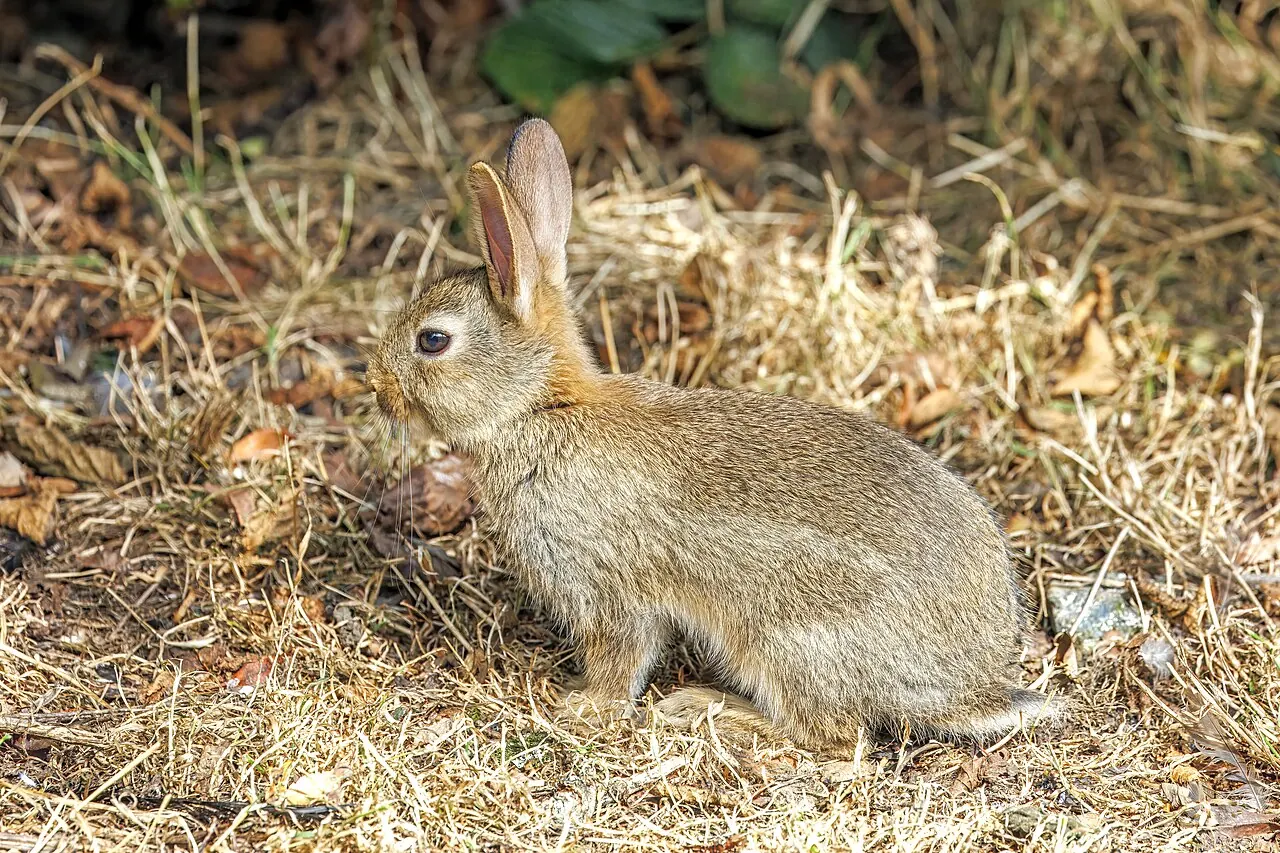
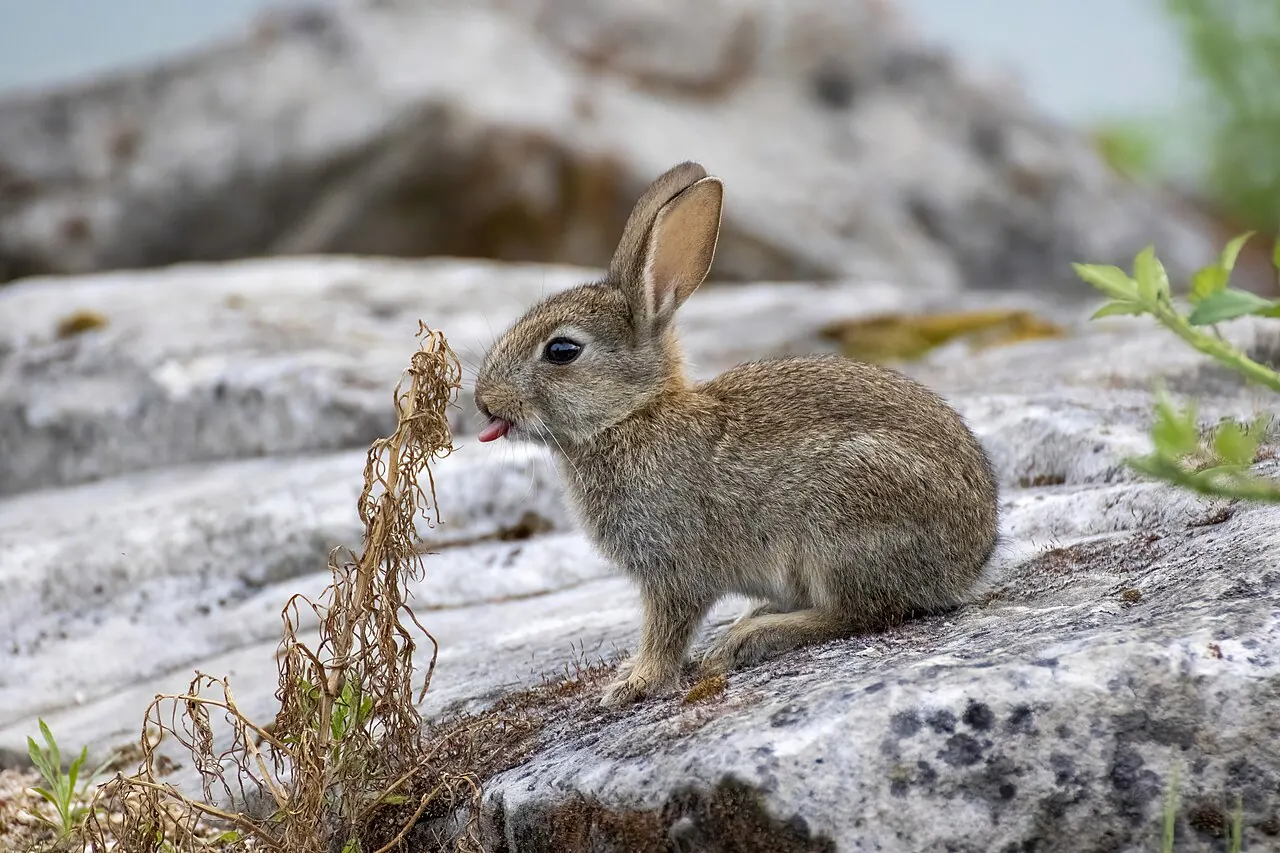
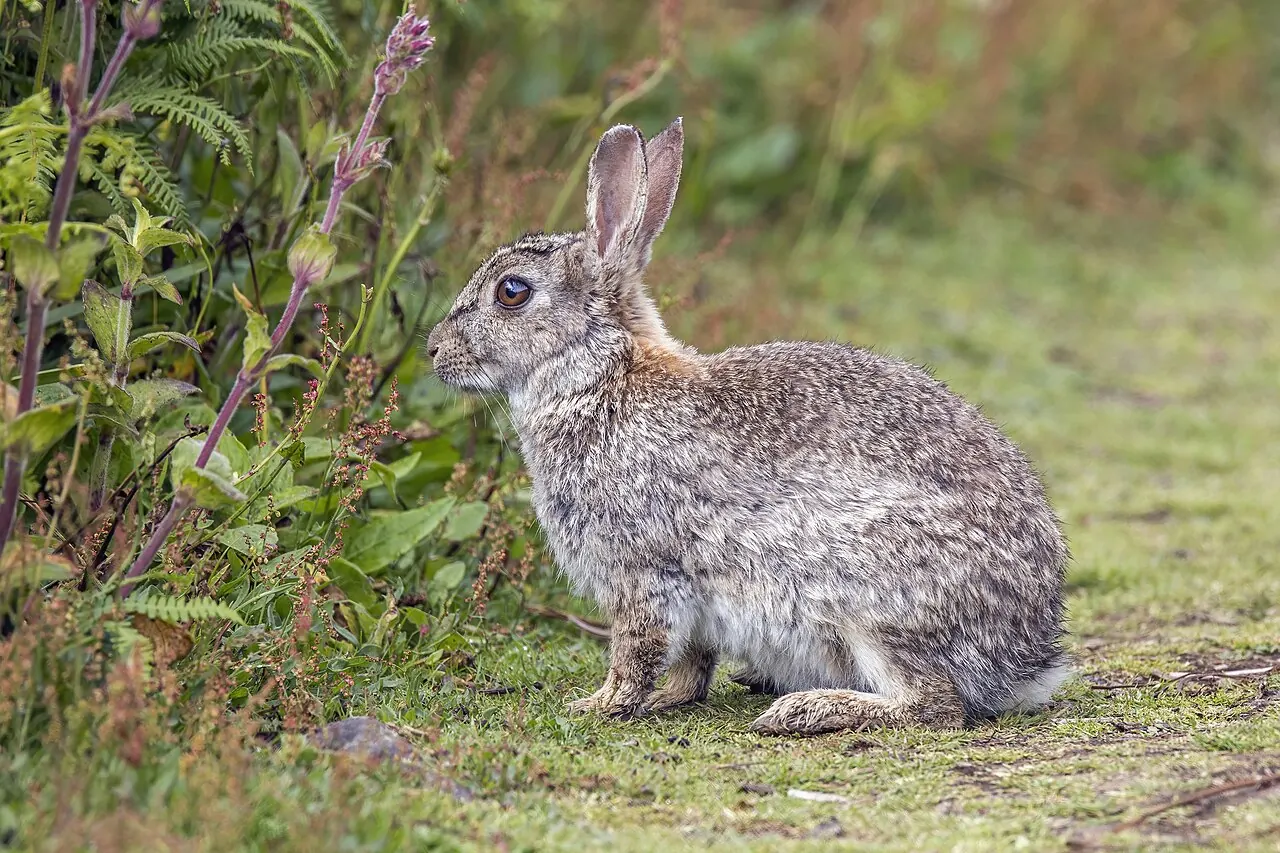
Grey-brown, with long ears, big back feet and a fluffy white tail that flashes as it runs.
- Size
- About 40cm long
- Look for it
- All year round
- Where
- Field edges, hedge banks, heaths and dunes
My spotter's list
Hops after you, sits up to look and washes its ears. Move your pointer and see.
Good to know
Six things about the rabbit
HomeA warren
Rabbits live together in a network of burrows called a warren.
WarningA thump and a flash
A rabbit that senses danger thumps the ground with a back foot. The white tail flashing as it runs warns the others.
ArrivalBrought by the Normans
Rabbits were brought to Britain for their meat and fur, probably by the Normans in the 1100s.
BabiesKittens
Baby rabbits are called kittens. They are born blind and without fur, deep in a burrow.
EatingEating it twice
Rabbits eat their own soft droppings, so the grass goes through them twice and they get more goodness from it.
HareRabbit or hare?
A rabbit is smaller than a hare, with shorter ears and no black tips to them.
The real thing
Photos of the rabbit
Out and aboutHow to spot one
Look at field edges, grassy banks and sand dunes at dawn and dusk. Signs include neat round droppings, closely nibbled turf and burrow entrances.
Lend a handHow to help
Rabbits keep grass short, which many wild flowers and butterflies depend on. Leave warrens undisturbed, and keep dogs under control.
Following youLadybird
Who should follow you?
Bees and hoverflies
Butterflies and moths
Dragonflies and damselflies
Beetles, hoppers and ants
Not insects at all
Snails and spiders aren't insects: a snail is a mollusc, and spiders have eight legs.
Garden birds
Pond animals live on the Pond page: choosing one takes you there.
Pond life
Night garden
Seashore animals live on the Seashore page: choosing one takes you there.
Rock pool life
Woodland animals
Under a log
Meadow life
River animals live on the River page: choosing one takes you there.
River life
Mountain and moor
Farmland
Town and city
_Heligan.jpg)
_kitten.jpg)
_Skomer.jpg)